

Self Employed Tax Preparation in Orange County

Jeff Pachuilo, EA
Managing Partner, Orange Coast Tax.
When you work for yourself, your tax return usually involves more than entering a few 1099 forms. You need to report all business income, identify allowable expenses, calculate net profit, account for self-employment tax, and determine whether estimated payments are needed.
At Orange Coast Tax, we prepare self employed tax returns for sole proprietors, independent contractors, freelancers, gig workers, and many single-member LLC owners. We help organize the details, prepare the required schedules, and explain how the numbers affect your federal and California returns.

Tax Preparation for Sole Proprietors, Freelancers, and Independent Contractors
A self employed tax return starts with the activity behind the income. Your work may be reported on Form 1099 NEC, Form 1099 K, another information return, or no form at all.
The tax reporting requirement generally depends on the income you received, not on whether a customer sent you a tax form.
For many sole proprietors and single member LLC owners, business income and expenses are reported on Schedule C and filed with Form 1040. The net profit or loss then flows into the individual return. Other forms may also be required for items such as self employment tax, depreciation, a home office deduction, vehicle expenses, health insurance, retirement contributions, or qualified business income.
If your business is taxed as a partnership, S corporation, or C corporation, a separate business return is generally required.
We can help identify the correct filing path before the return is prepared.
What Income Goes on Schedule C
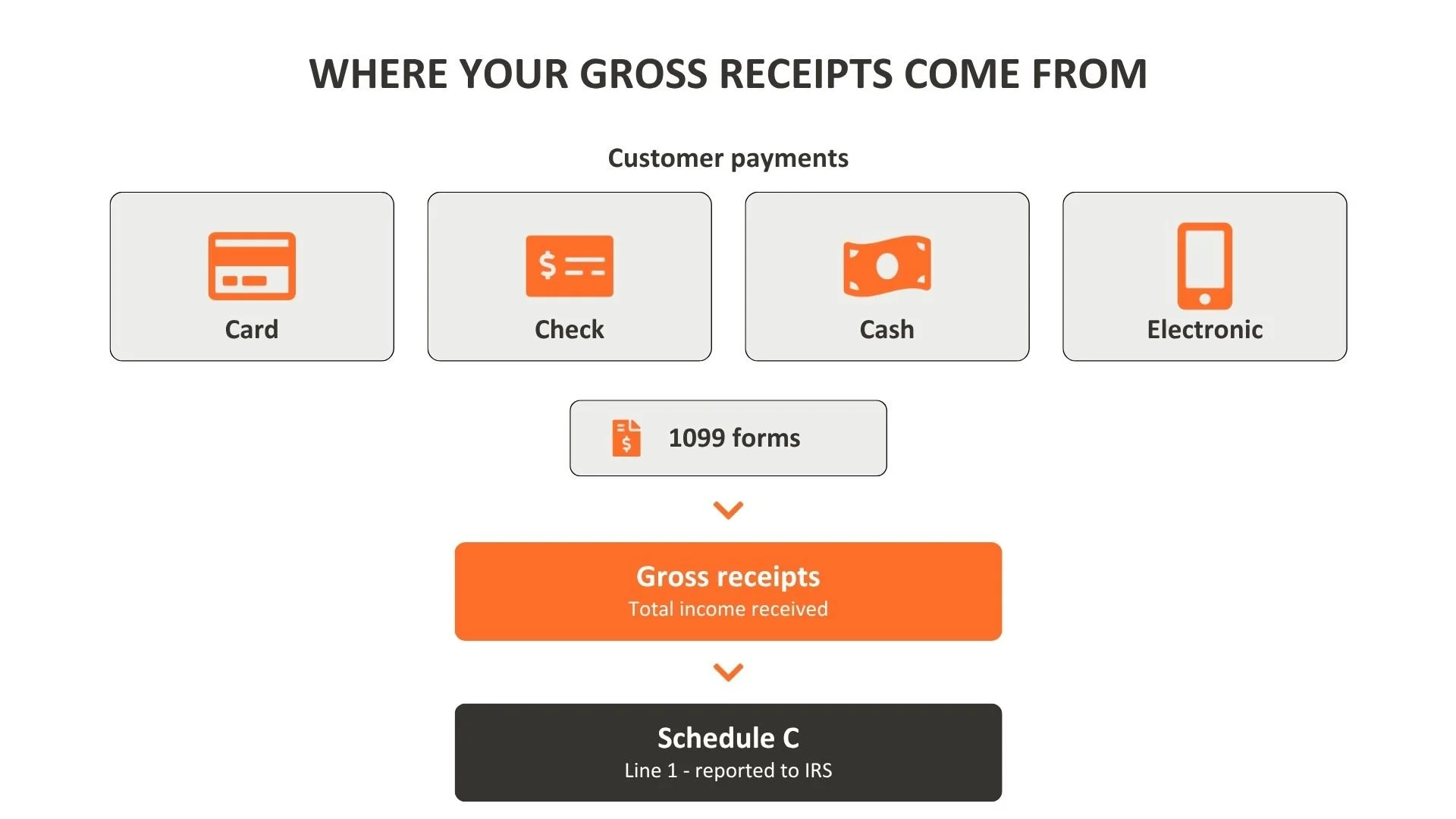
Schedule C generally includes gross receipts from the business, whether customers paid by cash, check, card, electronic transfer, payment app, or barter. Your records should reconcile the amounts reported on information forms with your actual business receipts.
Income commonly reviewed includes:
Form 1099 NEC payments
Form 1099 K payment transactions
Form 1099 MISC income connected with the business
Cash, checks, ACH transfers, and direct deposits
Online marketplace and payment app receipts
Tips and other customer payments
The fair market value of goods or services received through barter
A missing or incorrect 1099 does not automatically remove the reporting obligation. We compare the forms with bank deposits, invoices, sales reports, and bookkeeping records so the return reflects the business activity.
Common Schedule C Deductions for Self Employed Taxpayers
Vehicle and Travel Costs

Depending on the facts and records, deductible costs may include business mileage or the business portion of actual vehicle expenses. Business travel may include transportation, lodging, and qualifying meal costs.
Commuting between home and a regular work location is generally personal, so accurate mileage records matter.
Home Office and Operating Expenses
A qualifying home office generally must be used regularly and exclusively for business, subject to specific exceptions and limits. Other operating costs may include rent, utilities, software, subscriptions, telephone service, internet service, and insurance, based on their business use.
Equipment, Supplies, and Professional Services
Common categories include supplies, small tools, advertising, merchant fees, contract labor, payroll, legal fees, bookkeeping, tax preparation, equipment, and cost of goods sold. The correct treatment depends on what was purchased, how it was used, and whether inventory or capitalization rules apply.
A deduction should be supported by the facts and records. We review the categories with you instead of assuming every payment is deductible.
How Self Employment Tax Affects Your Return
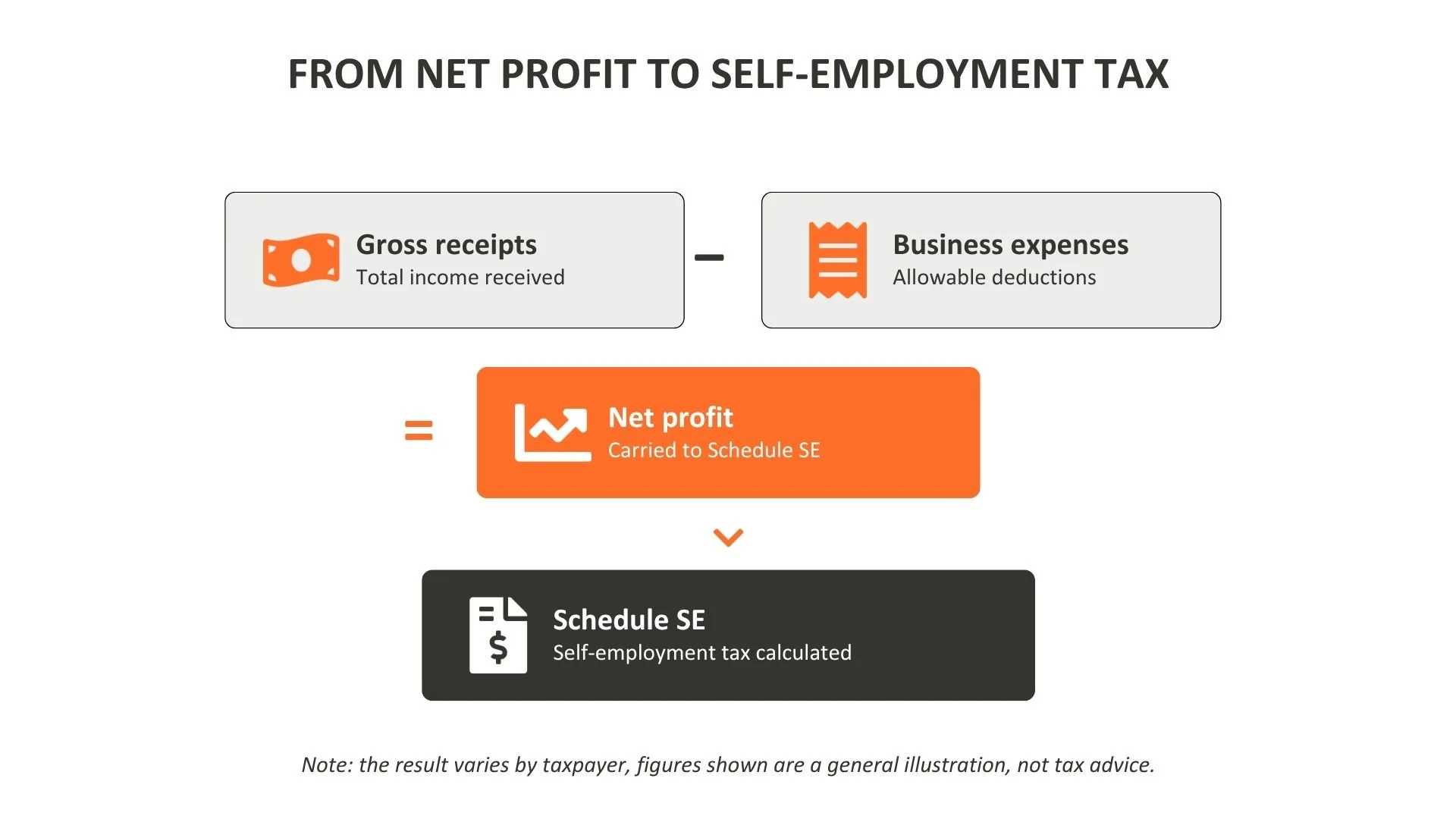
Self employment tax generally covers Social Security and Medicare taxes on net earnings from self employment. Schedule SE is used to calculate the amount. The combined rate is generally 15.3 percent, subject to the Social Security wage base, the Medicare rules, and any wages already subject to Social Security tax.
Additional Medicare Tax may also apply at higher income levels.
The calculation is not simply 15.3 percent of gross revenue. Business expenses reduce Schedule C net profit, and Schedule SE generally applies its own net earnings calculation. One half of the self employment tax is generally allowed as an adjustment to income, but it does not reduce the self employment tax itself.
Estimated Tax Payments for Self Employed Individuals
Self employed individuals often make estimated payments because no employer is withholding federal or California income tax from their business earnings. For federal purposes, an individual generally needs estimated payments when the expected balance due is at least $1,000 after withholding and refundable credits, and the applicable safe payment threshold is not met.
Federal estimated tax periods generally have due dates in April, June, September, and January. A weekend or legal holiday can move a deadline. California has its own estimated tax rules and payment schedule, so federal and state amounts should be reviewed separately.
We can use the current return, prior year information, withholding, and expected income to help calculate practical estimates. An estimate is based on information available at the time and may need to be updated if income or deductions change.
Records to Gather Before We Prepare Your Return
Good preparation begins with complete records. The exact documents depend on the business, but the following checklist is a useful starting point:
Prior year federal and California tax returns
Forms 1099 NEC, 1099 K, 1099 MISC, and other income statements
A profit and loss statement or a categorized income and expense summary
Business bank and credit card records used to verify totals
Vehicle mileage logs and vehicle expense records
Inventory and cost of goods sold information
Equipment and asset purchases, including purchase dates and costs
Home office measurements and related expense information
Health insurance and self employed retirement contribution records
Estimated tax payment confirmations
Notices from the IRS or California tax agencies
Do not send original documents unless requested. Keep the supporting records used to prepare the return for the period required under the applicable tax and documentation rules.
Our Self Employed Tax Preparation Process
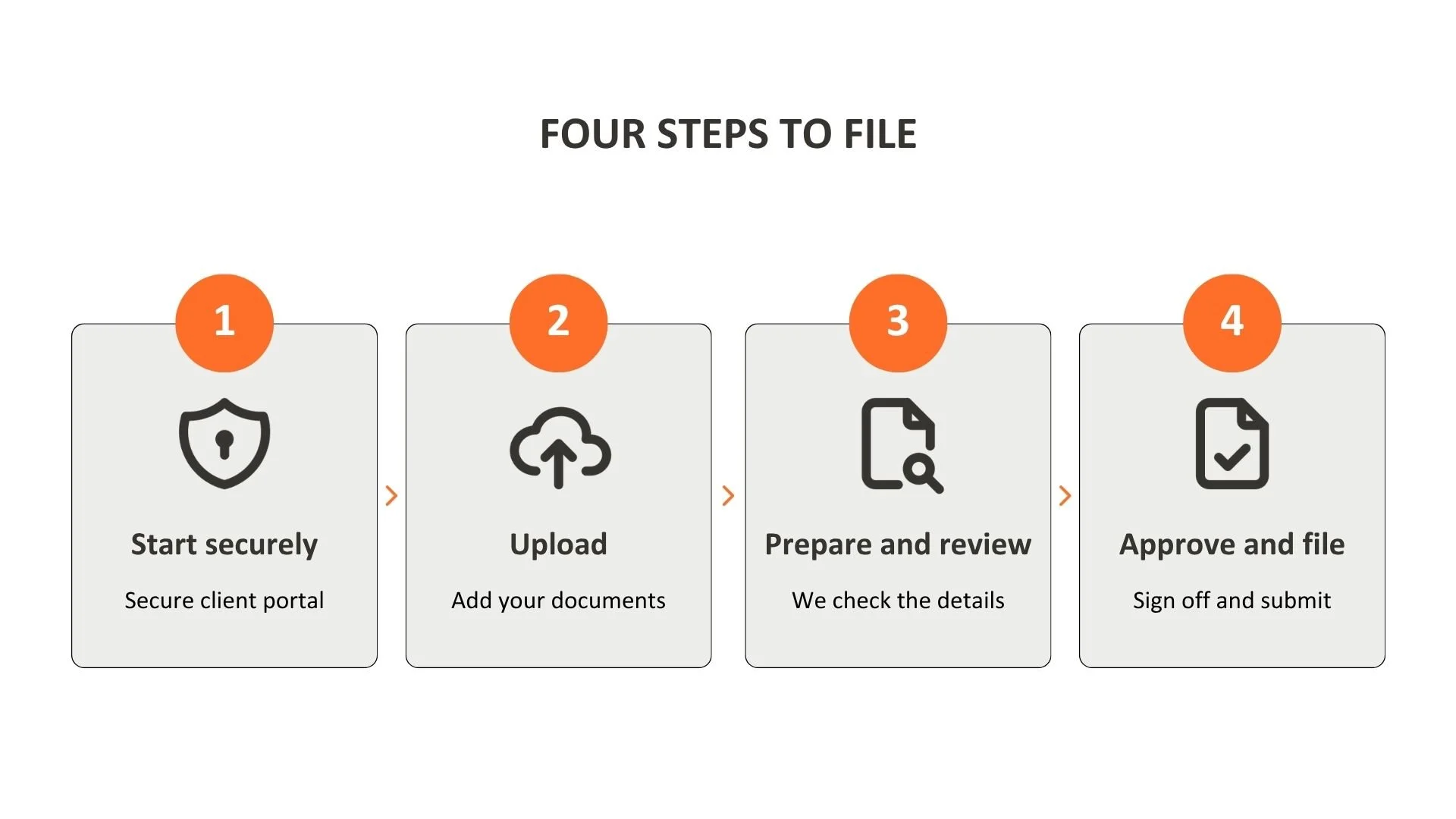
1. Start Securely
Begin through our secure client process. We will provide the engagement steps, organizer, and upload instructions for your return.
2. Upload Your Tax Documents
Provide your income forms, expense summary, prior year return, and supporting information. If something is missing or unclear, our team will identify the open item.
3. We Prepare and Review the Return
We prepare the applicable federal and California forms, review the business activity, and contact you about material questions.
Tax positions depend on the information and records provided.
4. Approve and File
After you review the completed return and sign the required authorization, we submit eligible returns electronically and provide a copy for your records.
Self Employed Tax Return FAQs
Do I need a 1099 to report self employment income?
No. Business income is generally reportable even when a customer does not issue a 1099. Your invoices, sales reports, bank activity, and other records help establish total receipts.
Can a single member LLC file Schedule C?
Often, yes. A domestic single member LLC is generally disregarded for federal income tax purposes unless it elects a different classification. The activity may be reported on Schedule C when appropriate. California filing and payment requirements can still apply to the LLC.
What if my business had a loss?
A legitimate business loss may affect other income, but limits can apply. Basis, at risk, passive activity, excess business loss, hobby loss, and other rules may need review before determining the tax result.
How much should I set aside for taxes?
There is no reliable percentage for every taxpayer. The appropriate amount depends on net profit, filing status, other household income, credits, state tax, prior year tax, and payments already made.
A projection is more useful than a generic rule.
Can Orange Coast Tax help with prior year returns?
Yes, subject to an initial review of the years involved, available records, and filing requirements. Tell us which returns are missing or need correction when you contact the office.
Get Help With Your Self Employed Tax Return
Your business return should tell a complete and supportable story. We help self employed individuals organize the information, report income, review allowable expenses, prepare the required schedules, and understand the result before filing.
Orange Coast Tax serves clients from our Orange County offices and through a secure online process.
Contact us to discuss your current year return, prior year filing needs, or questions about Schedule C preparation.
