

Home > Personal Income Tax
Personal Tax Preparation in Orange County
Filing your personal tax return can become complicated when
you have investments, rental property, business income,
multiple states, dependents, or major financial changes.
Orange Coast Tax prepares federal and state personal
income tax returns
for individuals and families throughout Orange County.
We review your income, deductions, credits, and supporting records
before preparing your return. Work with us at our Laguna Niguel or
Brea office, or complete the entire process through our secure
online client portal.

Personal Tax Returns Prepared Around Your Financial Life
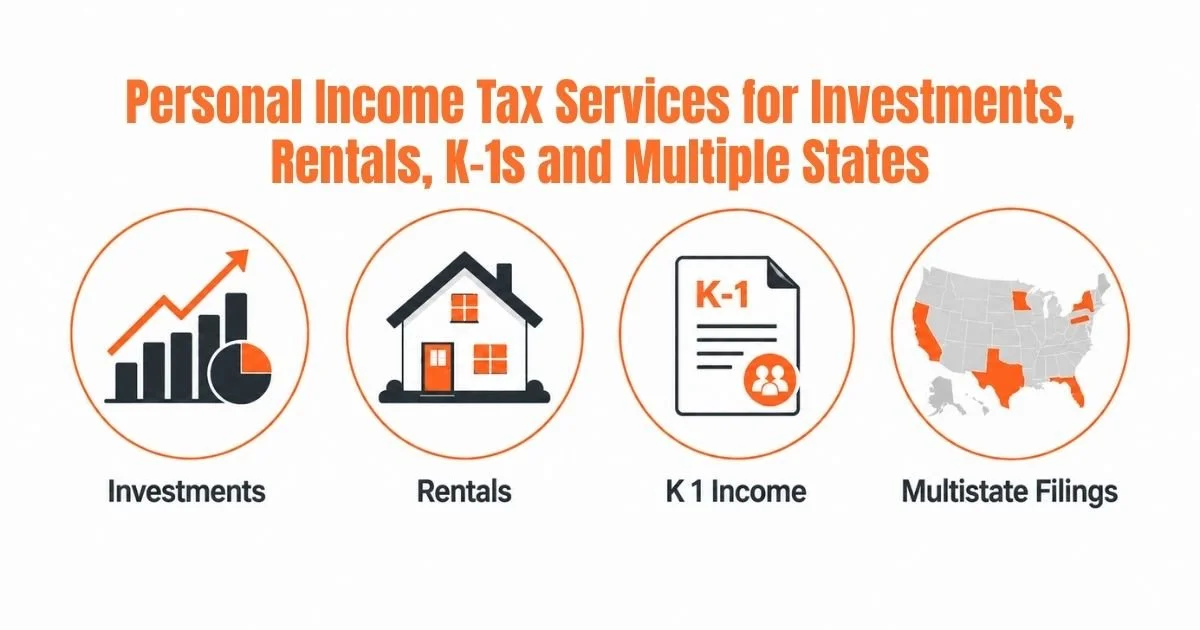
Your Form 1040 may involve much more than entering information from a W-2. Different types of income, investments, deductions, dependents, and life events can affect how your return should be prepared. Orange Coast Tax can assist with returns involving:
• W-2 wages and employee compensation
• Interest and dividend income
• Stock and cryptocurrency transactions
• Retirement income and distributions
• Social Security benefits
• Rental property income and expenses
• Partnership, S corporation, estate, and trust K-1s
• Independent contractor and side-business income
• Multiple-state filing requirements
• Prior-year and amended tax returns
Federal and Multistate Income Tax Preparation
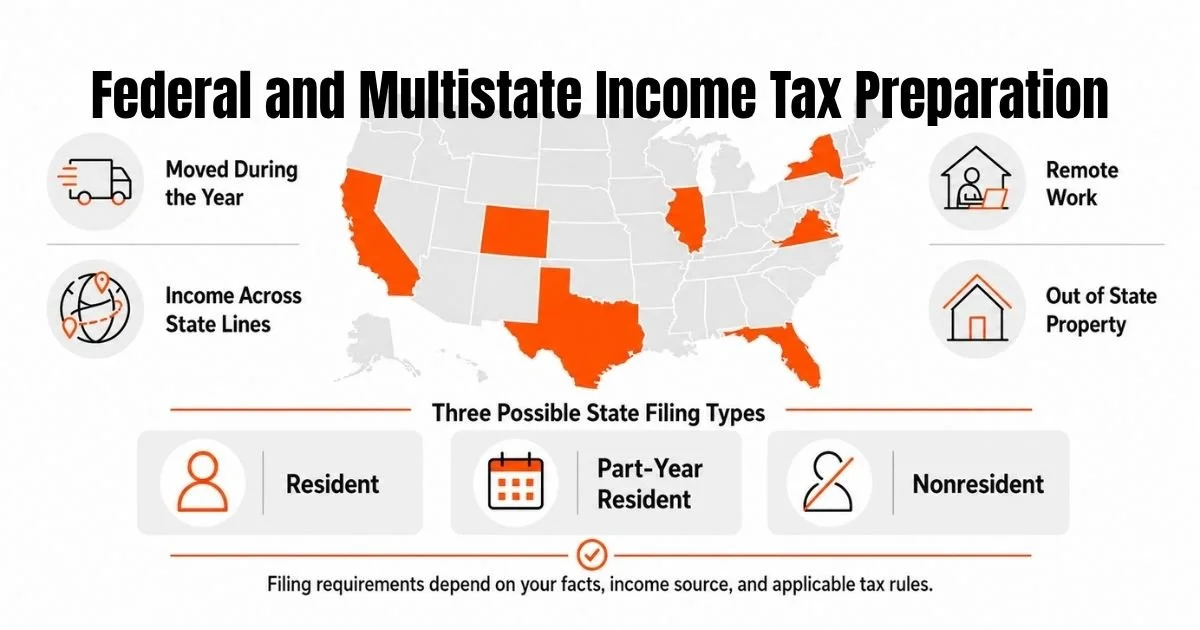
We prepare federal and state personal income tax returns, including returns for states outside California. If you moved during the year, earned income across state lines, worked remotely, or owned property in another state, you may have more than one state filing requirement. Depending on your facts, your state filings may include resident, part-year resident, or nonresident income tax returns. We review where you lived, where you worked, and where your income was sourced to determine which returns may be required.
Eligibility for a particular filing position, deduction, or credit depends on your facts and the applicable tax rules.

Tax Deductions and Credits We Review
A tax credit generally reduces the tax you owe, while a deduction generally reduces the amount of income subject to tax. Some credits may also be refundable. Depending on your circumstances, we may review:
• Child Tax Credit and Credit for Other Dependents
• Child and Dependent Care Credit
• Earned Income Tax Credit
• American Opportunity and Lifetime Learning Credits
• Retirement contribution deductions or credits
• Residential energy credits
• Mortgage interest and property taxes
• Charitable contributions
• Qualified medical expenses
• Business and rental property expenses
Each credit and deduction has its own eligibility and documentation requirements.
Personal Tax Situations We Can Help With
Investments and Capital Gains
Stocks, mutual funds, cryptocurrency, and other investments may create capital gains, capital losses, dividends, or other reporting requirements. We use your tax statements and transaction records to determine what must be included with your return
Rental Property Income
Rental properties can involve rental income, operating expenses, depreciation, improvements, passive activity rules, and gain or loss when a property is sold.
K-1 Income
Schedule K-1 income from a partnership, S corporation, estate, or trust may affect several parts of your personal return. We review the issuing entity, income categories, state information, and supporting statements provided with the K-1
Multistate, Part-Year Resident, and Nonresident Tax Returns
We prepare resident, part-year resident, and nonresident state income tax returns. These filings may apply when you move between states, work remotely across state lines, own out-of-state rental property, sell property in another state, or receive income sourced to more than one state.
Prior-Year and Amended Returns
If you missed a filing year or later discovered incorrect or missing information, we can review whether an original prior-year return or amended return should be prepared.

Our Personal Tax Preparation Process
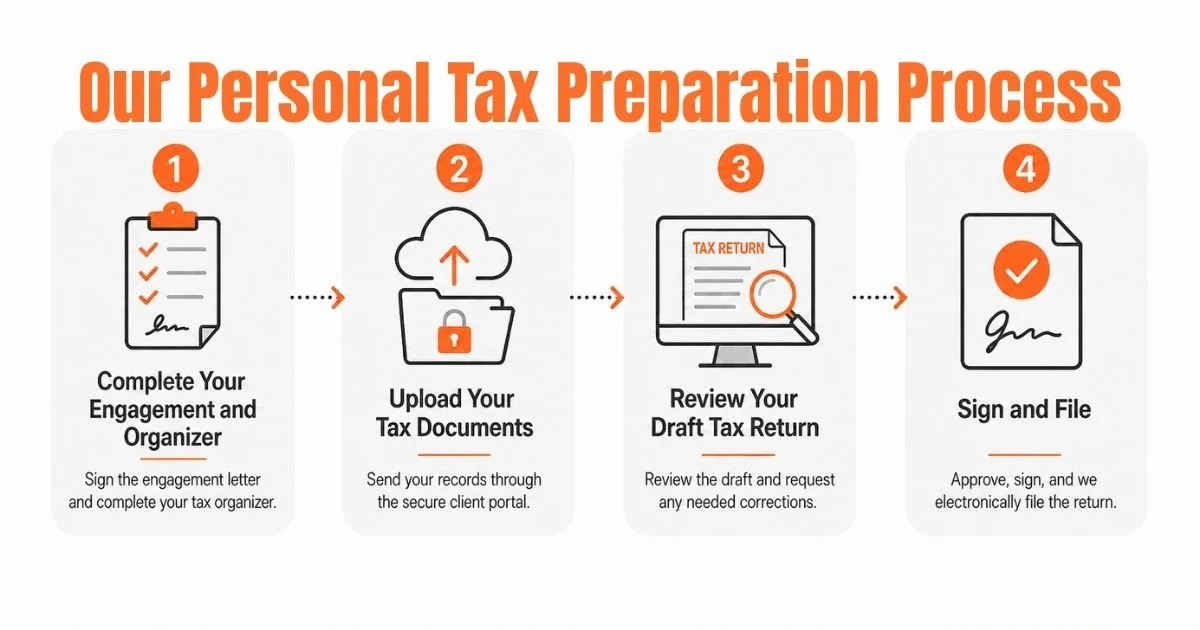
1. Complete Your Engagement and Organizer
You will receive an engagement letter explaining the scope of the service. After signing, complete the tax organizer so we can understand your income, household, deductions, and major financial changes.
2. Upload Your Tax Documents
Upload your records through the secure client portal. We will review your submission and contact you if additional information or clarification is needed.
3. Review Your Draft Tax Return
Once the return is prepared, you will receive a draft for review. We will address your questions and make any necessary corrections before requesting authorization to electronically file.
4. Sign and File
After you approve the completed return and sign the required electronic filing authorization, we will submit the return and monitor it for an IRS or state acknowledgment
Documents Commonly Needed for Your Tax Return
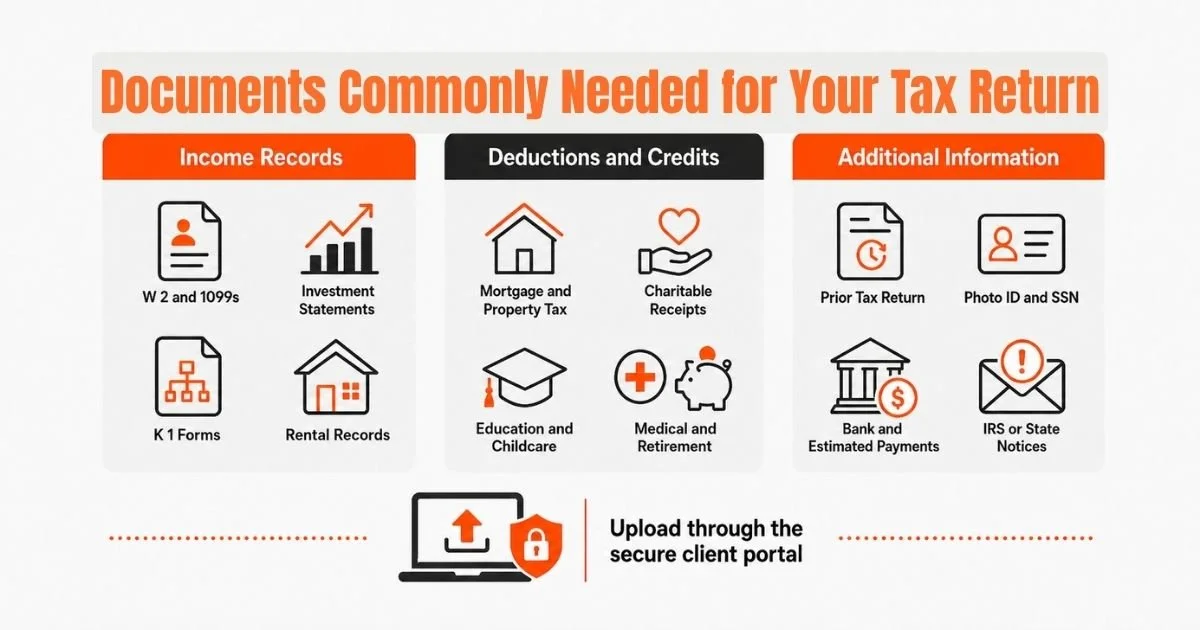
Your exact document list will depend on your financial situation. Common records include:
Income Records
• Forms W-2
• Forms 1099-NEC, 1099-MISC and 1099-K
• Forms 1099-INT and 1099-DIV
• Forms 1099-B and investment statements
• Forms 1099-R
• Social Security benefit statements
• Schedule K-1 forms
• Rental income and expense records
Deduction and Credit Records
• Mortgage interest statement
• Property tax records
• Charitable contribution receipts
• Education expense statements
• Childcare provider information
• Medical expense records, when applicable
• Retirement contribution records
• Residential energy improvement documents
Additional Information
• Copy of your previous tax return
• Government-issued identification
• Social Security or tax identification numbers
• Bank information for direct deposit or payment
• Estimated tax payment records
• IRS or state tax notices received during the year Security
Common Form 1040 Schedules
Sometimes your tax filings require other tax forms & schedules to be attached to your 1040 Income Tax Return. The Following Are the more common IRS tax schedules:
Schedule A: Itemized Deductions
Used when a taxpayer claims qualifying itemized deductions instead of the standard deduction.
Schedule B: Interest and Ordinary Dividends
Used when interest, dividend, foreign account, or trust-related reporting meets the applicable filing requirements.
Schedule C: Profit or Loss From Business
Used by many sole proprietors and independent contractors to report business income and deductible business expenses.
Schedule D: Capital Gains and Losses
Used to report certain sales and exchanges of investments, real estate, and other capital assets.
Schedule E: Supplemental Income and Loss
Used to report income or loss from rental real estate, royalties, partnerships, S corporations, estates, and trusts. Not every taxpayer needs these schedules. Other forms or schedules may be required depending on the income and transactions reported.
Why Work With Orange Coast Tax?
Local Orange County Service
Meet with us in Laguna Niguel or Brea, or work with our team remotely through the secure client portal.
Preparation for More Involved Returns
We assist with personal returns involving investments, rental properties, K-1 income, independent contracting, multiple states, and other reporting issues.
Secure Online Process
Upload documents, complete your organizer, review your return, and sign filing forms through the client portal.
Year-Round Assistance
Tax questions do not always arrive during filing season. Our team remains available throughout the year for tax preparation and related filing matters.

Personal Income Tax Preparation FAQs
-
Yes. We prepare federal and state income tax returns, including California and other states. We can also prepare resident, part-year resident, and nonresident returns when your income or residency creates filing requirements in multiple states.
-
Yes. You can complete the process through our secure client portal, including uploading documents, reviewing your draft, and signing the electronic filing authorization.
-
Tell us which document is missing before the return is completed. Depending on the document, you may need to request another copy from the issuer or obtain available wage and income information.
-
Yes. We prepare returns involving rental properties, stocks, capital gains, dividends, K-1s, and other investment-related reporting.
-
Yes. We can prepare many unfiled prior-year returns. The available electronic filing method and required documents can depend on the tax year.
-
Yes. We can review the original return and the new information to determine whether an amended federal or state return is appropriate.
-
Timing depends on the completeness of your records, the complexity of the return, and the time of year. Missing documents or unanswered questions can extend the preparation timeline.
-
Fees depend on the forms, schedules, states, and complexity involved. We can provide pricing information after learning more about your return.
Get Help Preparing Your Personal Tax Return
Whether your return includes W-2 wages, investments, rental property, K-1 income, multiple states, or prior-year filings, Orange Coast Tax can help you organize the information and prepare the required returns. Work with us in Laguna Niguel, Brea, or through our secure online client portal.