
Multi State Income Tax Return Preparation
Moving, working remotely, owning property, or earning income in another state can create more than one state income tax filing requirement.
I prepare federal and multi state income tax returns for taxpayers who lived or earned income in different states during the year. This includes resident, part year resident, and nonresident state returns.
The goal is to determine where each return should be filed, how the income should be reported, and whether a credit may be available when two states tax the same income.
Orange Coast Tax is based in Orange County, California. We prepare federal and state income tax returns for clients throughout the United States using our secure online client portal.
Multi State Income Tax Filing Summary
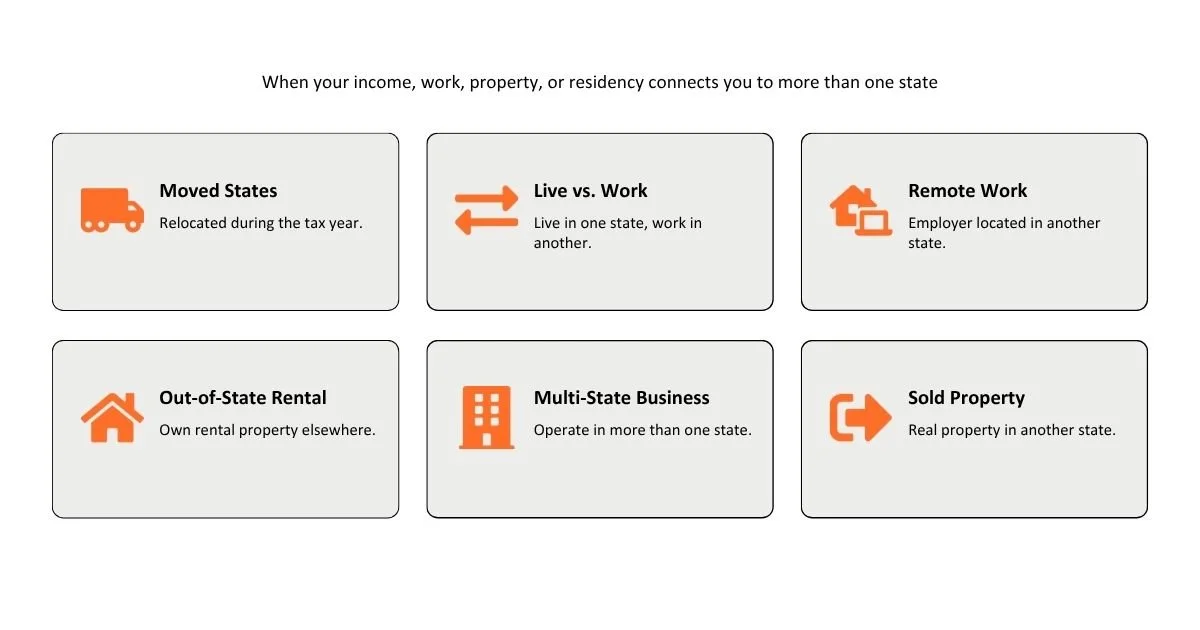
You may need to file more than one state income tax return when your income, work, property, or residency connects you to multiple states.
Common situations include:
Moving from one state to another during the year
Living in one state and working in another
Working remotely for an employer located in another state
Temporarily working or traveling for business in another state
Owning rental property outside your resident state
Operating a business in more than one state
Receiving partnership or S corporation income from another state
Selling real property located in another state
Receiving income from an estate or trust connected to another state
The filing answer is not always based on the address shown on a Form W 2 or Form 1099. I review where you lived, where you performed the work, where the property was located, and how each state treats the income.
Who May Need to File Multiple State Tax Returns
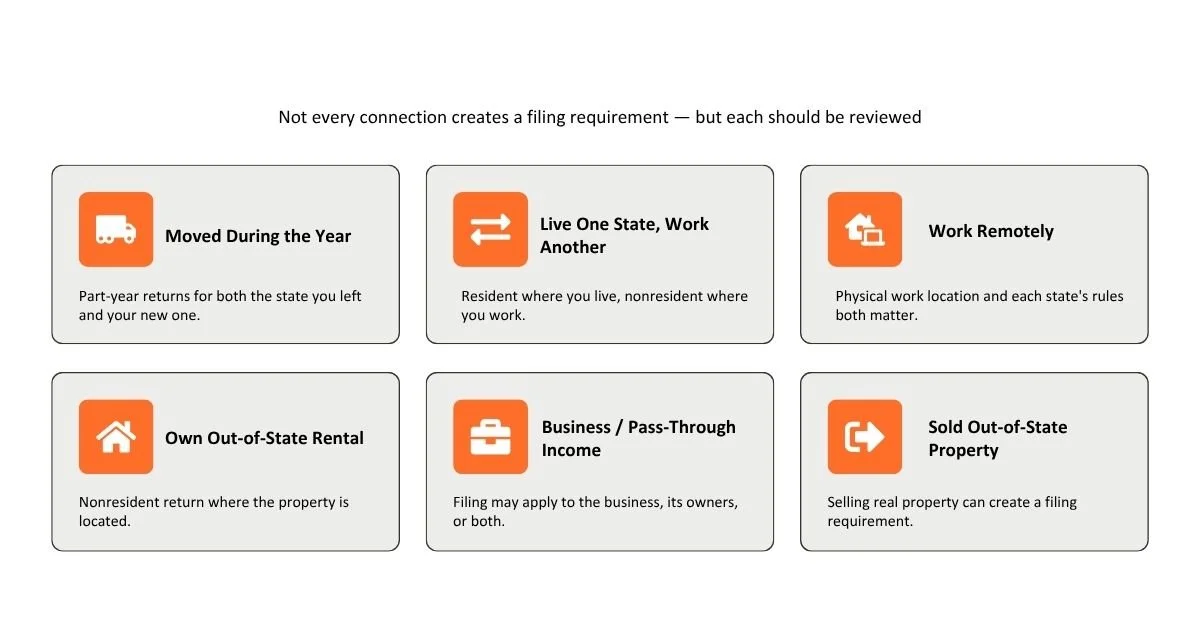
Not every connection to another state creates a filing requirement. However, the following situations should be reviewed before the returns are prepared.
You Moved to Another State During the Year
Moving during the tax year may require part year resident returns for the state you left and the state where you established your new residence.
The date of the move matters, but it is not the only factor. States may also consider where you maintained a home, registered your vehicle, held a driver’s license, worked, voted, and established your personal and financial connections.
Income received before and after the move may need to be separated between the two residency periods.
You Live in One State and Work in Another
You may have a resident filing requirement where you live and a nonresident filing requirement where you work.
Some neighboring states have reciprocal agreements that can change how employee wages are reported. These agreements do not apply to every state or every type of income.
I review the rules for both states before determining which returns and schedules are needed.
You Work Remotely From Another State
Remote work has made state income tax filing more complicated for many employees.
The employer’s office address does not always determine where the wages are taxable. The employee’s physical work location, residency, travel schedule, employer location, and the rules of each state may all matter.
A remote employee may need more than one state return when working from a different state for part or all of the year. Withholding shown on Form W 2 should also be reviewed to determine whether tax was withheld for the correct state.
You Own Rental Property in Another State
Rental income is commonly connected to the state where the real property is located.
You may need a nonresident return for the state where the rental property is located, even when you live somewhere else. The rental activity may also be reported on your resident state return.
Depreciation, suspended losses, state adjustments, and a future sale should be tracked carefully from year to year.
You Own a Business or Receive Pass Through Income
Business activity may create state filing requirements for the business, its owners, or both.
This can apply to sole proprietors, partners, limited liability company members, and S corporation shareholders. The filing requirements can depend on where the business operates, where services are performed, where customers are located, and how the state sources business income.
State withholding or estimated tax payments reported by a partnership or S corporation should also be matched to the owner’s individual state return.
You Sold Property Located in Another State
Selling real property can create a filing requirement in the state where the property is located.
This may apply to a rental property, vacation property, investment property, or former residence. State tax withholding may also appear on the closing statement.
I review the purchase records, improvements, depreciation, selling expenses, and state withholding before preparing the federal and state returns.
Resident, Part Year Resident, and Nonresident State Returns
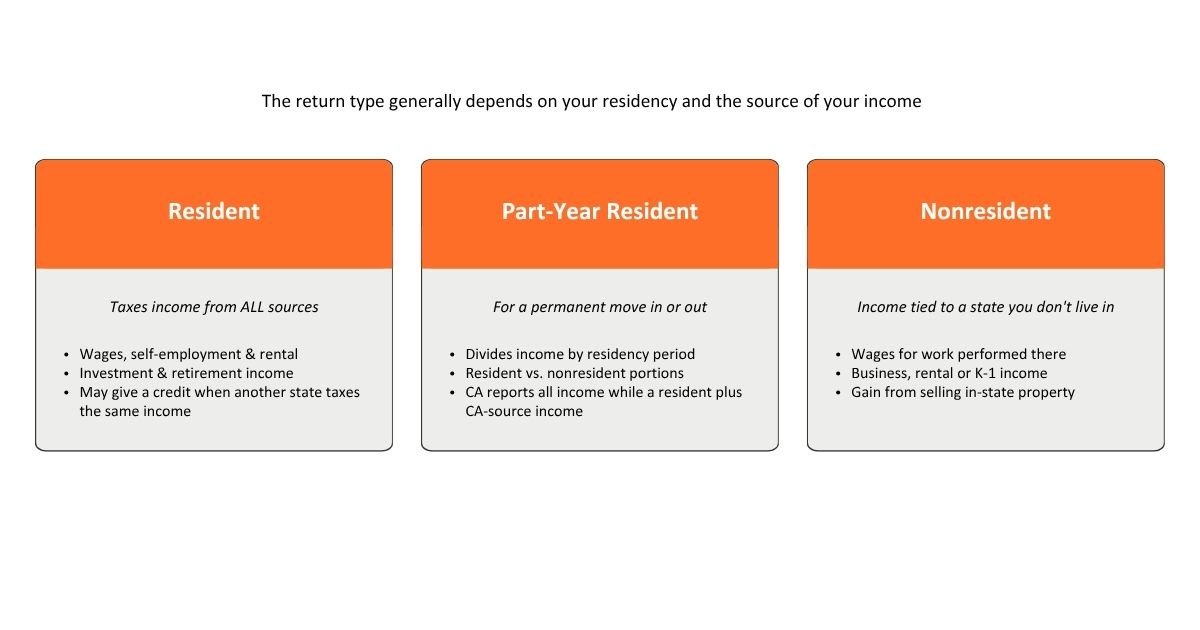
The type of state return you file generally depends on your residency and the source of your income.
Resident State Income Tax Return
Your resident state may tax income from all sources, including income earned in another state.
This can include wages, self employment income, rental income, investment income, retirement income, and income from a business located outside your resident state.
A resident return may provide a credit when the same income is also taxed by another state. The credit rules and limitations must be reviewed for the states involved.
Part Year Resident State Income Tax Return
A part year resident return is commonly required when you permanently move into or out of a state during the tax year.
The return may divide income between the period when you were a resident and the period when you were a nonresident.
For California, a part year resident generally reports all income received while a California resident and California source income received while a nonresident. Other states can apply different rules.
Nonresident State Income Tax Return
A nonresident return may be required when you receive income connected to a state where you do not live.
Examples can include:
Wages for services performed in the state
Income from a business operating in the state
Rental income from property located in the state
Income from a partnership or S corporation
Gain from selling real property located in the state
Each state has its own filing thresholds and sourcing rules. Receiving income connected to another state does not automatically mean a return is required, but it should be reviewed.
How Income Is Divided Between States
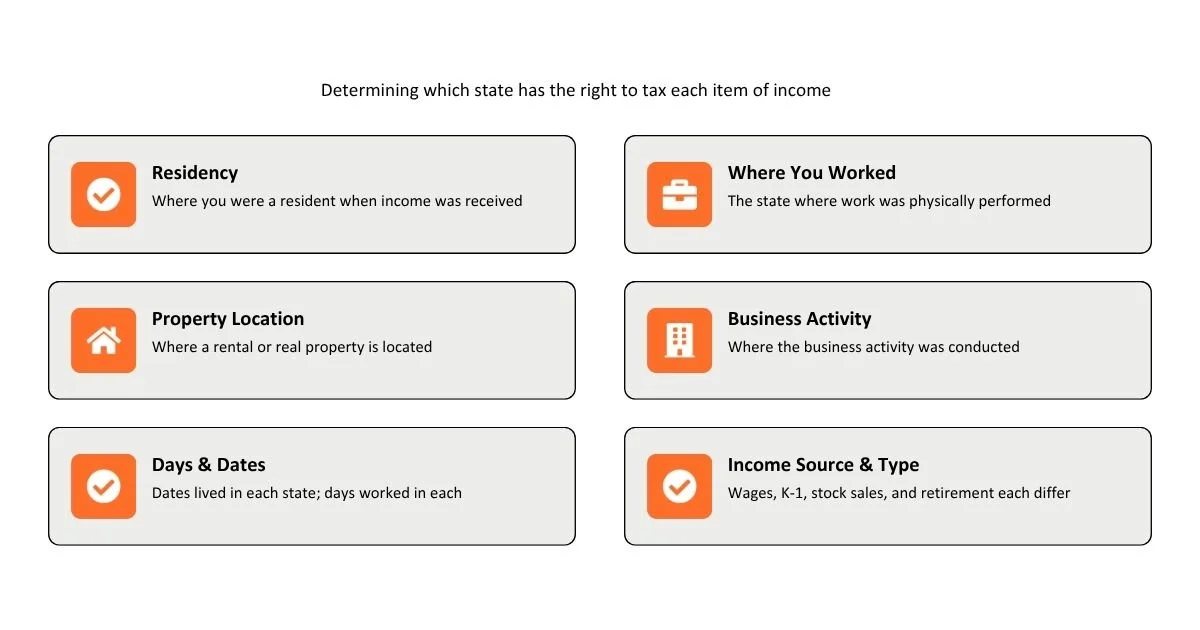
One of the most important parts of a multi state return is determining which state has the right to tax each item of income.
Income may be assigned or allocated based on factors such as:
Where you were a resident when the income was received
Where you physically performed your work
Where a rental or other real property is located
Where business activity was conducted
The dates you lived in each state
The number of days worked in each state
The source of partnership or S corporation income
The type of investment or retirement income received
The same allocation method does not apply to every type of income. Wages, business income, rental income, stock sales, and retirement income may each follow different state rules.
I review the character and source of each income item before preparing the state returns.
Credit for Income Taxes Paid to Another State
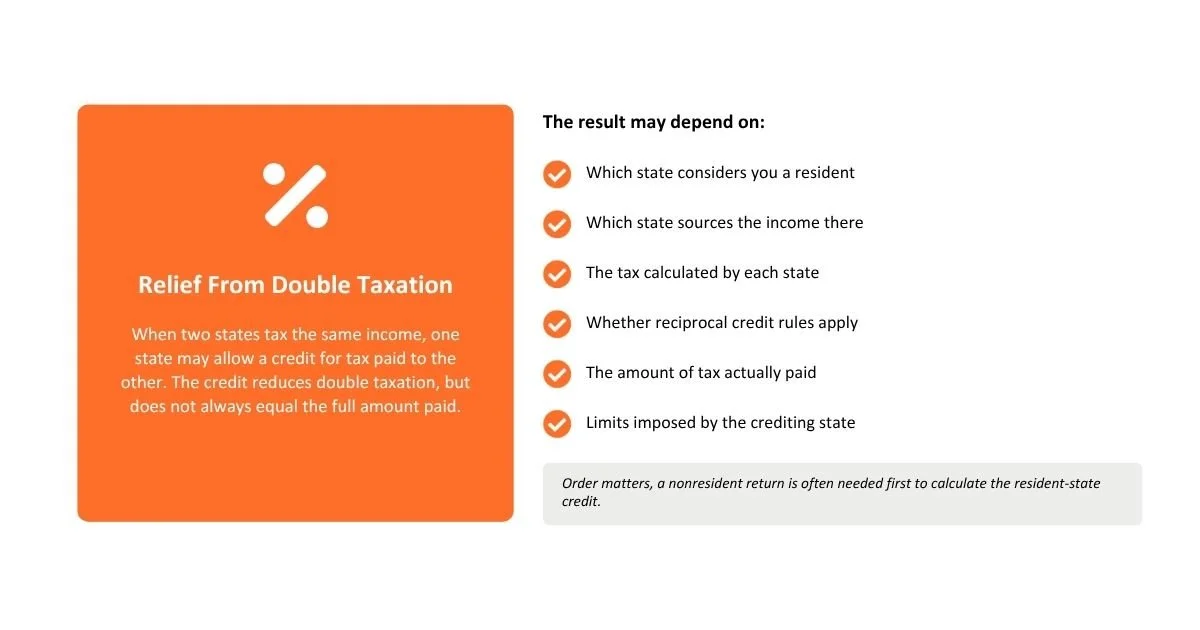
When the same income is taxed by two states, one state may allow a credit for income taxes paid to the other state.
This credit is intended to reduce double taxation, but it does not always equal the full amount paid to the other state.
The result may depend on:
Which state considers you a resident
Which state considers the income to be sourced there
The tax calculated by each state
Whether the states have reciprocal credit rules
The amount of tax actually paid to the other state
The limitations imposed by the state allowing the credit
The order in which the returns are prepared can matter because information from a nonresident return may be needed to calculate the credit on the resident return.
I coordinate the state returns so the income and available credit are reported consistently.
Common Multi State Tax Filing Problems
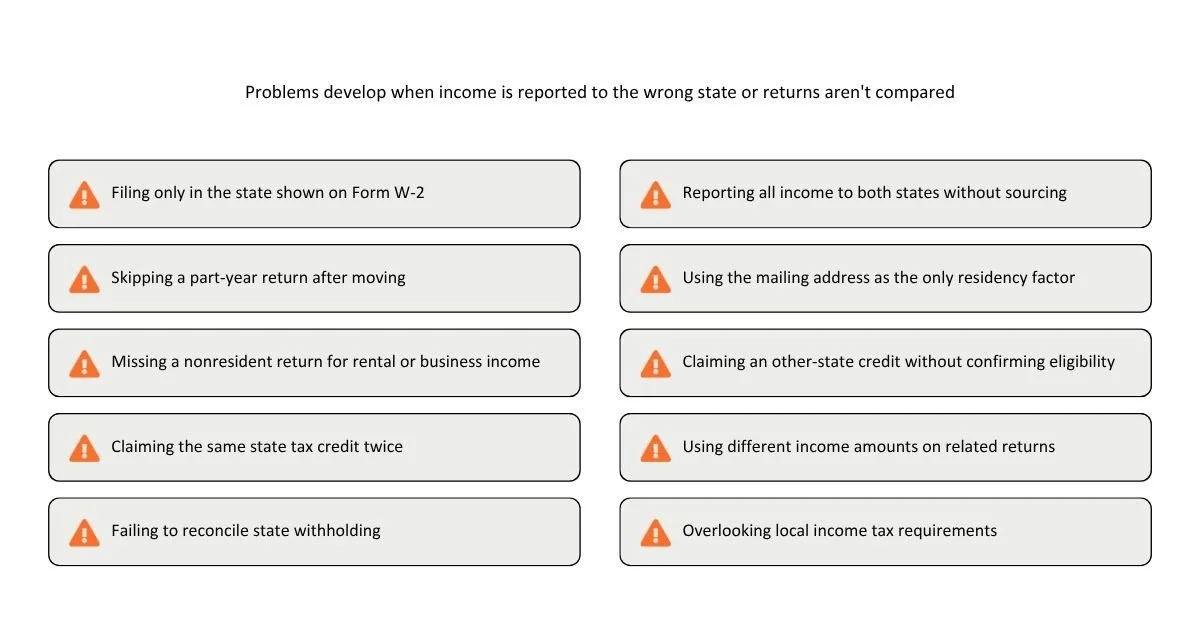
Multi state returns can develop problems when income is reported to the wrong state or the returns are prepared separately without comparing them.
Common issues include:
Filing only in the state shown on Form W 2
Reporting all income to both states without reviewing sourcing rules
Failing to file a part year resident return after moving
Using the mailing address as the only residency factor
Missing a nonresident return for rental or business income
Claiming a credit for taxes paid to another state without confirming eligibility
Claiming the same state tax credit twice
Using different income amounts on related state returns
Failing to reconcile state withholding
Overlooking local income tax requirements
Ignoring a state tax notice because the federal return was accepted
A federal return being accepted does not confirm that every state return was prepared correctly. Each state independently applies its own residency, income sourcing, deduction, and credit rules.
Documents Needed for Multi State Tax Return Preparation
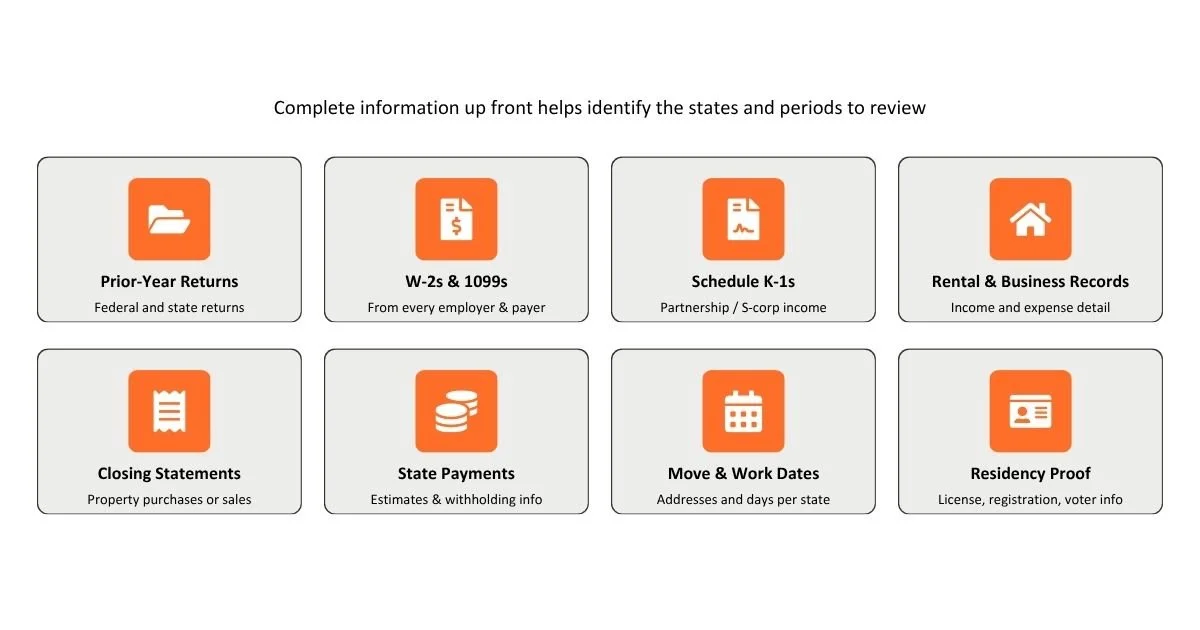
Providing complete information at the beginning helps us identify the states and filing periods that need to be reviewed.
Please be prepared to provide:
Your prior year federal and state income tax returns
Forms W 2 from every employer
Forms 1099
Schedule K 1 forms
Rental property income and expense records
Business income and expense records
Closing statements for property purchases or sales
State estimated tax payment records
Notices received from a state tax agency
The date you moved from one state to another
The addresses where you lived during the year
The dates you worked in each state
Your remote work schedule
Travel records for work performed in different states
State income tax withholding information
Information about homes maintained in more than one state
Driver’s license and vehicle registration changes when residency is an issue
Voter registration and other residency information when relevant
Additional information may be requested depending on the states and income involved.
Our Multi State Tax Return Preparation Process

Step 1, Identify Every State Connection
I begin by reviewing where you lived, worked, owned property, operated a business, and received income during the year.
This helps identify which state filing requirements need further review.
Step 2, Determine Residency and Filing Status
We review whether you were a resident, part year resident, or nonresident of each state.
When residency is unclear, we may need additional facts about your move, home, family, employment, and personal connections.
Step 3, Review and Source the Income
Each income item is reviewed to determine how it should be treated on the applicable state returns.
This can include wages, business income, rental income, investments, retirement income, and pass through income.
Step 4, Prepare the Federal and State Returns
The federal return and all required state returns are prepared as one coordinated filing project.
Preparing the returns together helps maintain consistent income reporting across the federal, resident, part year resident, and nonresident filings.
Step 5, Review State Credits and Payments
We review state withholding, estimated payments, extension payments, pass through entity payments, and possible credits for taxes paid to another state.
A credit is claimed only when the applicable state rules support it.
Step 6, Review the Drafted Returns With You
You will receive the drafted returns for review before filing.
We explain which state returns were prepared, how the income was reported, and whether any additional information is needed.
Step 7, Electronically File the Returns
After you approve and sign the required authorization forms, eligible federal and state returns are submitted electronically.
Some state or prior year returns may require a different filing method depending on the return and the state’s electronic filing rules.
Multi State Tax Preparation From Orange County
Orange Coast Tax is based in Orange County, California, but our tax preparation service is not limited to California returns.
We prepare federal and state income tax returns for clients who have moved, work remotely, own property, operate businesses, or receive income in multiple states.
Our secure client portal allows you to upload documents, review your drafted return, sign forms, receive updates, and access your completed tax documents online.
Multi State Income Tax Return FAQs
-
Not necessarily. The answer depends on where you were a resident, where you physically performed the work, how much income was earned, and the filing rules of each state.
Some states have filing thresholds or reciprocal agreements. Other states may require a nonresident return when income is sourced there.
-
You may need to file part year resident returns for the state you left and the state where you established your new residence.
The returns may divide your income based on residency dates and the source of each income item.
-
It can, but not in every situation.
Your physical work location, residency, employer location, travel, and each state’s sourcing rules should be reviewed. The state listed on Form W 2 is important, but it may not provide the complete answer.
-
Two states may initially tax the same income under their respective rules. A credit for income taxes paid to another state may reduce double taxation.
The available credit may be limited and does not always equal the full tax paid to the other state.
-
The correct order depends on the states involved.
A nonresident return is often prepared before the resident return because the tax paid to the nonresident state may be needed to calculate an available credit. Reciprocal state rules can change that process.
-
A state without a broad individual income tax may not require a standard individual income tax return. However, other taxes, business filings, or specific income taxes may still apply.
Your complete activities in that state should be reviewed before deciding that no filing is required.
-
The state withholding and your actual filing requirements must be reviewed separately.
You may need to file a return with the state that received the withholding to request any available refund. You may also owe tax to the state where the income should have been reported.
A refund is not guaranteed because it depends on the state’s law, filing deadlines, and the facts supporting the correction.
-
Yes. Orange Coast Tax prepares federal and multi state income tax returns for clients throughout the United States.
The number and type of returns required will depend on your residency, income, work locations, property, and business activities.
Get Help Preparing Your Multi State Income Tax Returns
If you moved, worked remotely, earned income, or owned property in more than one state, I can review your filing situation and determine which returns should be prepared.
Orange Coast Tax coordinates the federal and state filings so that your income, withholding, payments, and available state credits are reviewed together.
Tell us where you lived, worked, and earned income during the year. We will review the information needed to begin your federal and state income tax returns.