Sell an investment property outright, and you're looking at capital gains tax, depreciation recapture, and possibly the net investment income tax, all due in the year of the sale. A 1031 exchange offers a different path: roll the proceeds into a new investment property and defer all of that tax, potentially for years. It's one of the most powerful tools available to real estate investors, and also one of the easiest to get wrong. Here's how it actually works.

What Is a 1031 Exchange?
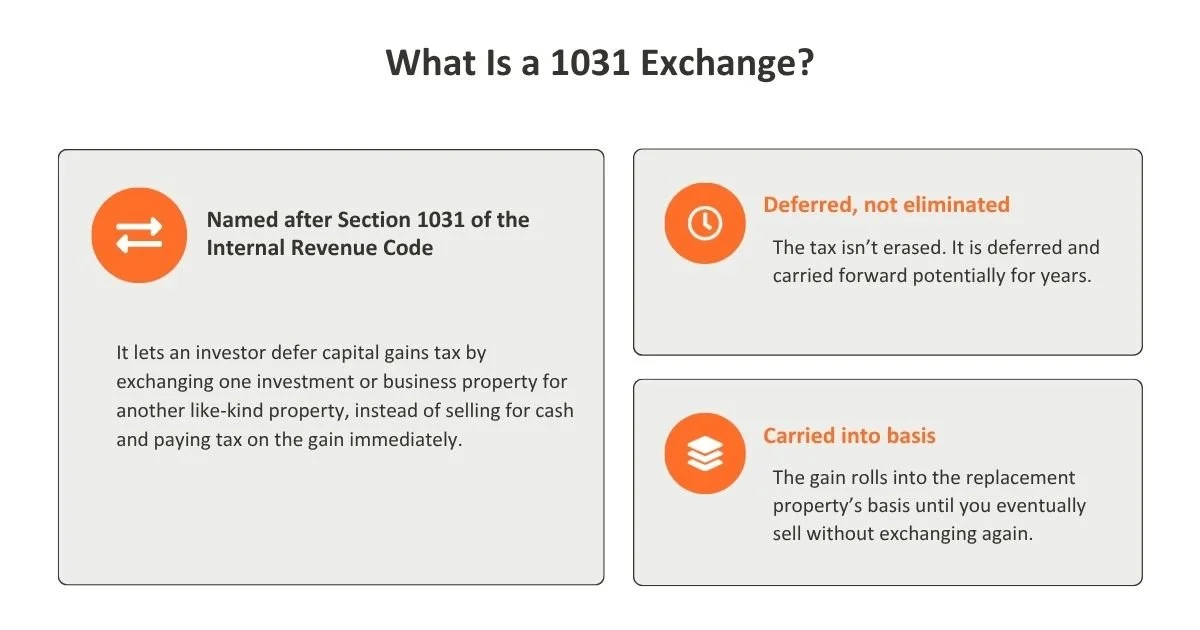
Named after Section 1031 of the Internal Revenue Code, a 1031 exchange lets an investor defer capital gains tax by exchanging one investment or business property for another like-kind property, instead of selling for cash and paying tax on the gain immediately. The tax isn't eliminated; it's deferred and carried forward into the replacement property's basis until you eventually sell without exchanging again.
What Qualifies as "Like-Kind" Property?
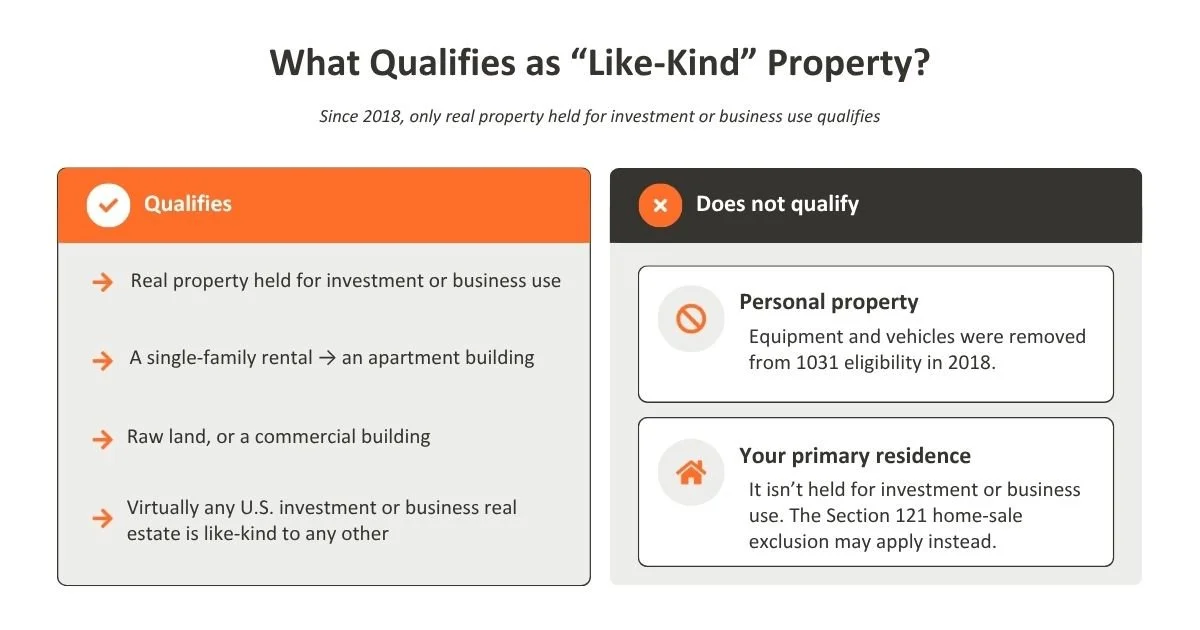
The like-kind standard is broader than most people expect. Since 2018, only real property held for investment or business use qualifies; personal property like equipment or vehicles was removed from 1031 eligibility. But within real estate, like-kind is interpreted generously: a single-family rental can be exchanged for an apartment building, raw land, or a commercial building. Virtually any U.S. investment or business real estate is like-kind to any other. Your primary residence doesn't qualify, since it isn't held for investment or business use, though the Section 121 home sale exclusion may apply instead.

The Two Deadlines You Can't Miss
Every 1031 exchange runs on two deadlines that start on the same day: the day you close on the sale of your relinquished property. They run concurrently, not back to back.
The 45-Day Identification Rule
You have 45 calendar days from your closing date to identify potential replacement properties in writing. The identification must be specific and unambiguous: a street address or legal description, not a general description like "a property in Orange County." It has to be delivered to your qualified intermediary or another party involved in the exchange, not simply written down for yourself. This deadline is absolute. There are no extensions for weekends, holidays, financing delays, or any other circumstance, aside from federally declared disaster relief in affected areas.
The 180-Day Closing Rule
You have 180 calendar days from the same closing date to complete the purchase of your replacement property. Note that this isn't 45 days plus 180 more days; both clocks start on the same day. There's also a secondary trigger worth knowing: if your tax return for the year of the sale is due before the 180 days are up, and you haven't filed an extension, the exchange must be completed by that earlier filing deadline instead.
The Role of a Qualified Intermediary
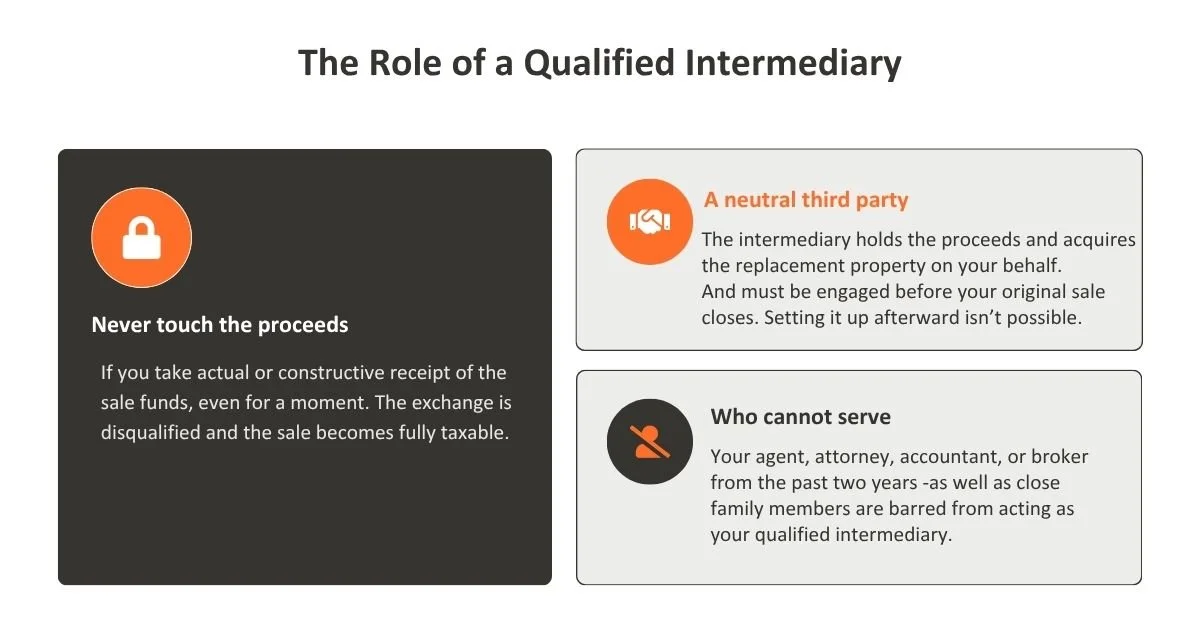
You cannot touch the sale proceeds at any point during the exchange. If you take actual or constructive receipt of the funds, even for a moment, the exchange is disqualified and the sale becomes fully taxable. A qualified intermediary, a third party with no other relationship to you, holds the proceeds from the sale and uses them to acquire the replacement property on your behalf. The intermediary needs to be engaged before your original sale closes; setting this up after the fact isn't possible. Certain people are barred from serving as your qualified intermediary, including anyone who has acted as your agent, attorney, accountant, or broker within the past two years, as well as close family members.
Common Mistakes That Disqualify an Exchange
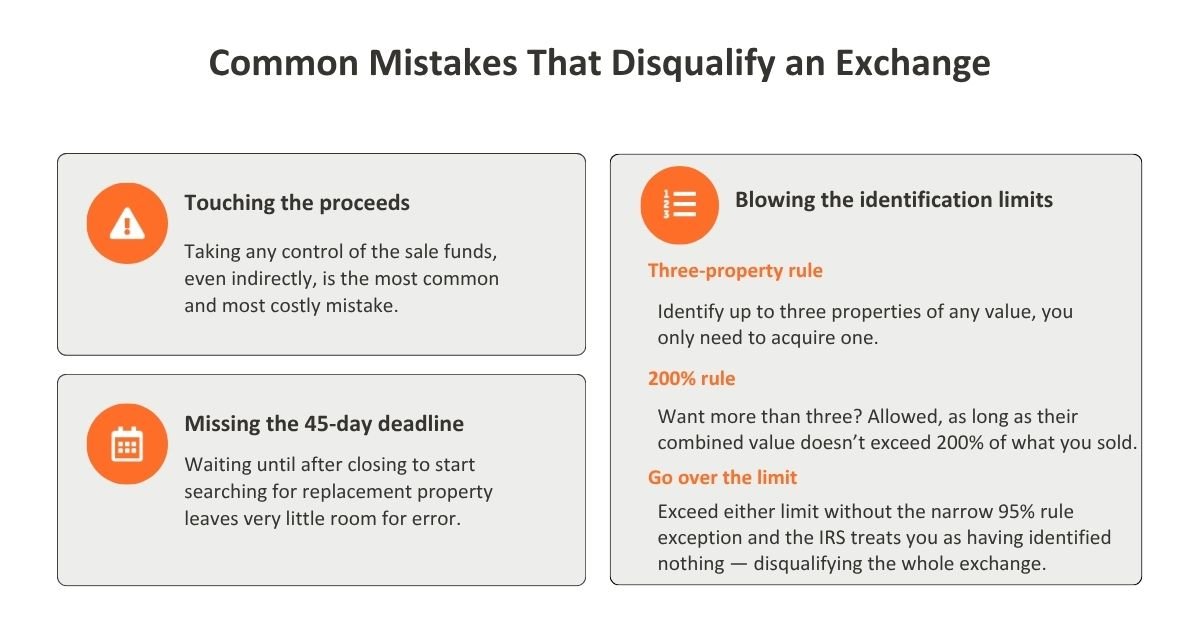
A few mistakes come up repeatedly and can unravel an otherwise well-planned exchange. Taking any control of the sale proceeds, even indirectly, is the most common and most costly. Missing the 45-day identification deadline is another, waiting until after closing to start searching for replacement property leaves very little room for error.
Identifying more than three replacement properties creates its own set of rules to follow correctly. Under the three-property rule, you can identify up to three properties of any value and only need to acquire one. If you want to identify more than three, the 200 percent rule allows it, as long as the combined value of everything identified doesn't exceed 200 percent of the value of the property you sold. Go over either of those limits without qualifying under a narrower exception, the 95 percent rule, and the IRS treats you as having identified no replacement property at all, which disqualifies the entire exchange.
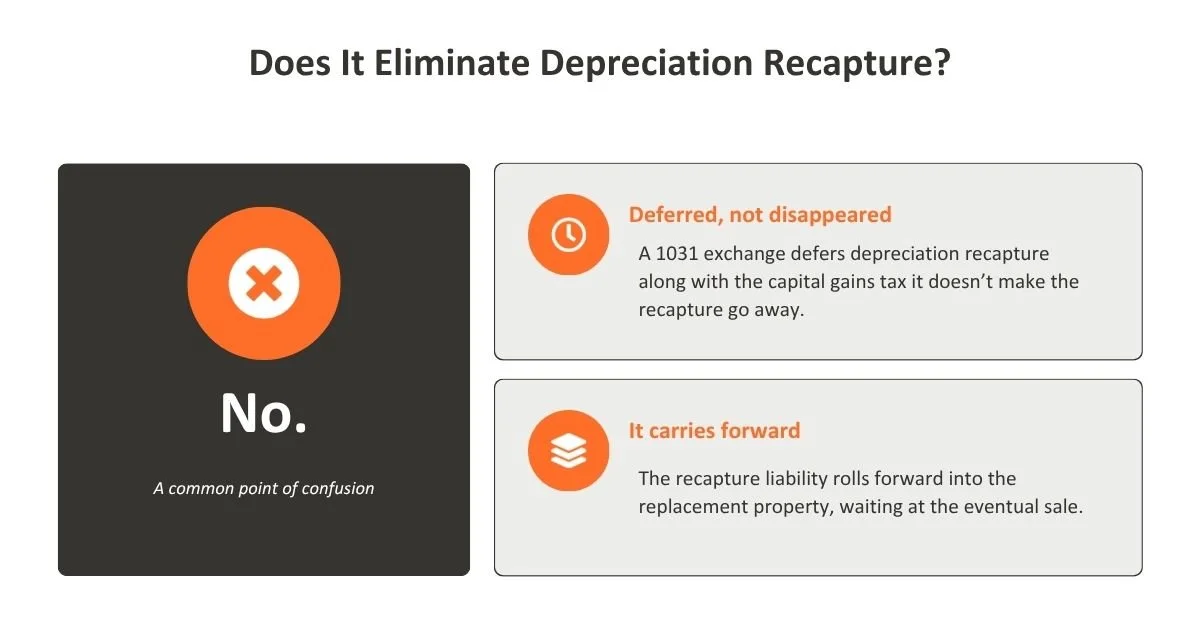
Does a 1031 Exchange Eliminate Depreciation Recapture?
No, and this is a common point of confusion. A 1031 exchange defers depreciation recapture along with the capital gains tax, it doesn't make it disappear. The recapture liability carries forward into the replacement property. We cover exactly how depreciation recapture works, and what it means at the eventual sale, in our depreciation recapture guide.
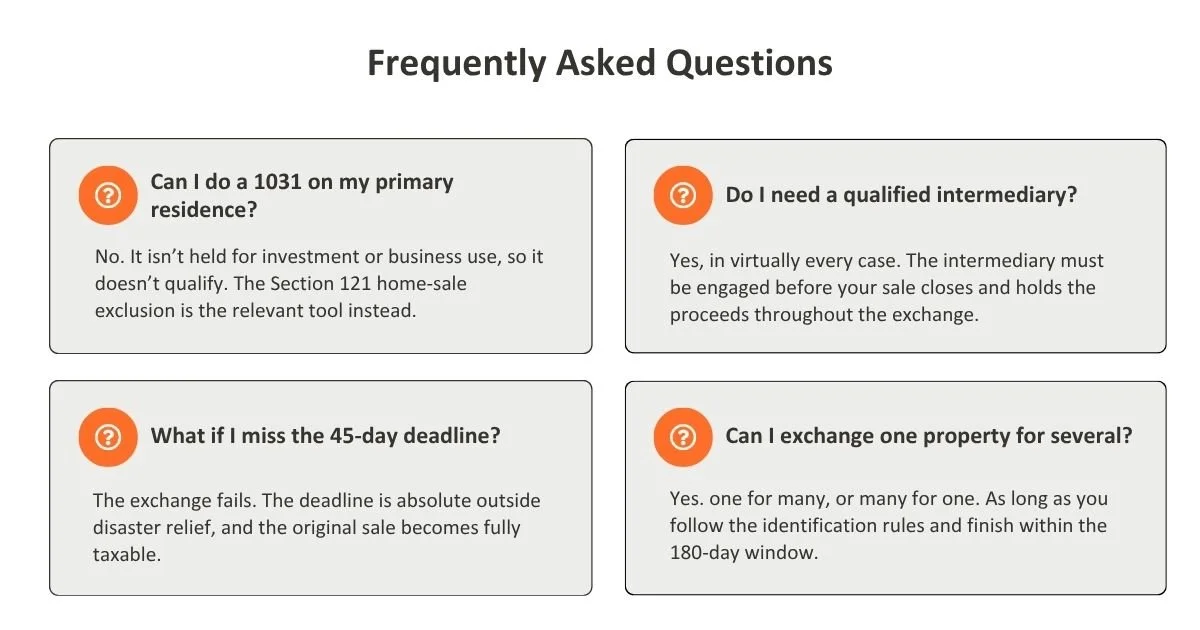
Frequently Asked Questions
-
No. A primary residence isn't held for investment or business use, so it doesn't qualify. The Section 121 home sale exclusion is the relevant tool for a primary residence instead.
-
Yes, in virtually every case. The intermediary has to be engaged before your original sale closes and holds the proceeds throughout the exchange. Trying to structure an exchange without one, or bringing one in after closing, disqualifies the transaction.
-
The exchange fails. The deadline is absolute, with no extensions outside of federally declared disaster relief for affected areas. Missing it means the original sale becomes fully taxable, as if no exchange had been attempted.
-
Yes. You can sell one relinquished property and acquire multiple replacement properties, or sell multiple relinquished properties and acquire one, as long as you follow the identification rules and complete everything within the 180-day window.
Section 1031 exchanges offer real tax deferral, but the deadlines don't bend for anyone. A tax professional can help you structure the exchange correctly before your sale even closes.