Fix a leaking pipe and you deduct the cost this year. Replace the entire plumbing system and you depreciate it over 27.5 years.
The dollar difference in timing is significant, and misclassifying one as the other is one of the most common, and most avoidable, mistakes rental property owners make. Here's the actual test the IRS uses, and three safe harbors that can simplify the decision considerably.

The Basic Divide
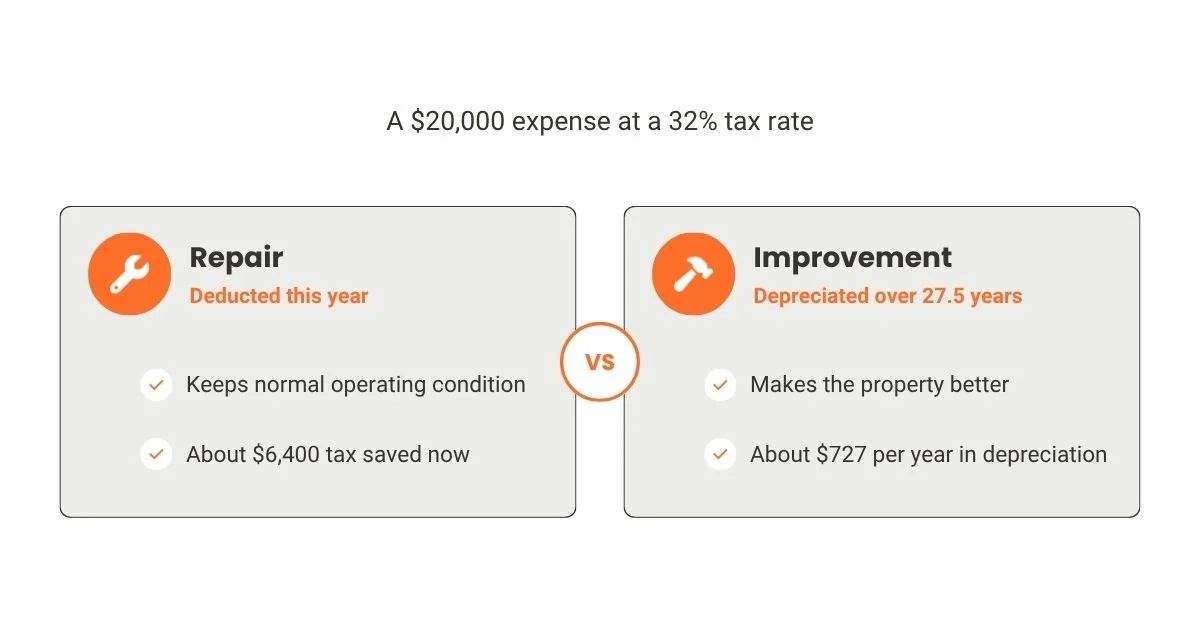
A repair keeps the property in its normal operating condition without making it meaningfully better than it was. Repairs are currently deductible, in full, in the year you pay for them. An improvement, on the other hand, makes the property better, adapts it to a new use, or restores a major component after real deterioration.
Improvements have to be capitalized and depreciated over time, 27.5 years for residential rental property, 39 years for commercial. The dollar impact of getting this classification right is substantial: a 20,000 dollar expense that qualifies as a repair saves roughly 6,400 dollars in tax immediately for someone in the 32 percent bracket.
The same 20,000 dollars, capitalized instead, produces only about 727 dollars a year in depreciation, and the equivalent tax benefit trickles in over nearly three decades rather than arriving at once.
The BAR Test
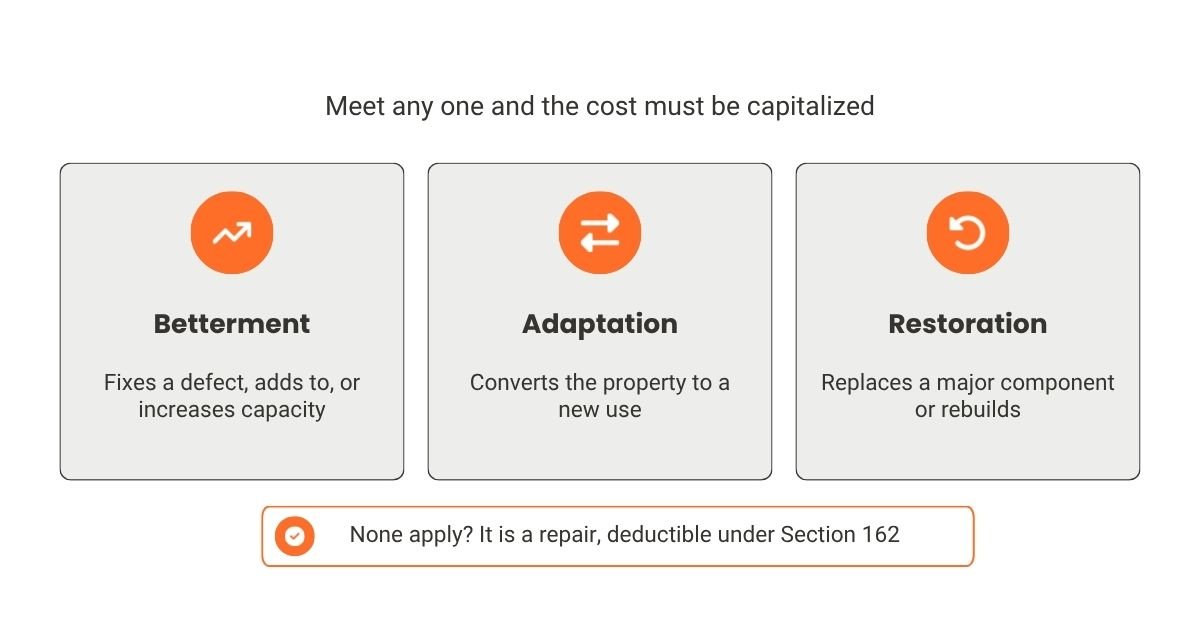
The IRS uses a three-part framework, commonly called the BAR test, betterment, adaptation, restoration, to decide which category an expense falls into. If an expense meets any one of these three conditions, it has to be capitalized as an improvement, not deducted as a repair.
Betterment means the work fixes a material defect that existed before you acquired the property or arose during your ownership, makes a material addition to the property, or materially increases its capacity, productivity, efficiency, strength, quality, or output. Adaptation means converting the property to a new or different use than what it was being used for when placed in service, turning a single-family rental into a short-term rental with structural changes, for example. Restoration covers replacing a major component of the property, returning it to working condition after it deteriorated to a state of disrepair, restoring damage after a casualty loss, or rebuilding it to essentially new condition after the end of its normal useful life.
If none of these three conditions apply, the cost is a repair, deductible under Section 162 in the year incurred. If any one applies, it capitalizes under Section 263, depreciated over time instead.
Three Safe Harbors That Can Simplify This
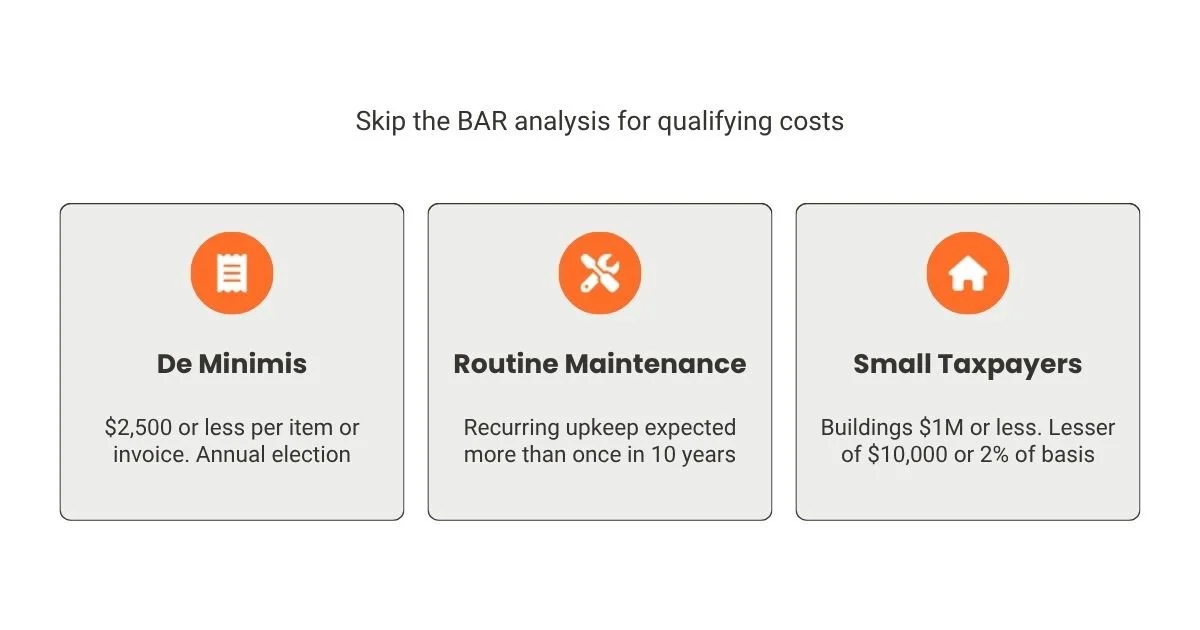
Rather than running the full BAR analysis on every expense, three safe harbor provisions let you skip straight to a current deduction for costs that would otherwise require detailed classification.
The de minimis safe harbor lets you immediately deduct items costing 2,500 dollars or less per invoice or item, without needing to determine whether the BAR test would otherwise require capitalization. This is the threshold that applies to virtually all individual landlords. A higher 5,000 dollar threshold exists, but only for taxpayers with an applicable financial statement, generally audited financial statements, which almost no individual rental property owner has. This safe harbor requires an annual election attached to your tax return, it isn't automatic.
The routine maintenance safe harbor covers recurring activities you expect to perform more than once, generally over a 10-year period for a building or its major systems, to keep the property in ordinarily efficient operating condition. Regular HVAC servicing, periodic repainting, and similar recurring upkeep typically qualify here, deductible currently regardless of what the BAR test alone might suggest.
The Safe Harbor for Small Taxpayers is the most valuable of the three for smaller property owners, but it comes with real limits. It's available only for buildings with an unadjusted basis of 1 million dollars or less, and your combined repair, maintenance, and improvement costs for that building for the year can't exceed the lesser of 10,000 dollars or 2 percent of the building's unadjusted basis. For a 400,000 dollar building, that limit works out to 8,000 dollars, 2 percent of the basis, since that's lower than the flat 10,000 dollar cap. This election is made annually, building by building, and if you exceed the limit for a given building in a given year, the safe harbor simply doesn't apply to that building for that year, the standard BAR analysis takes over instead.
You Can't Double-Dip on the Same Component
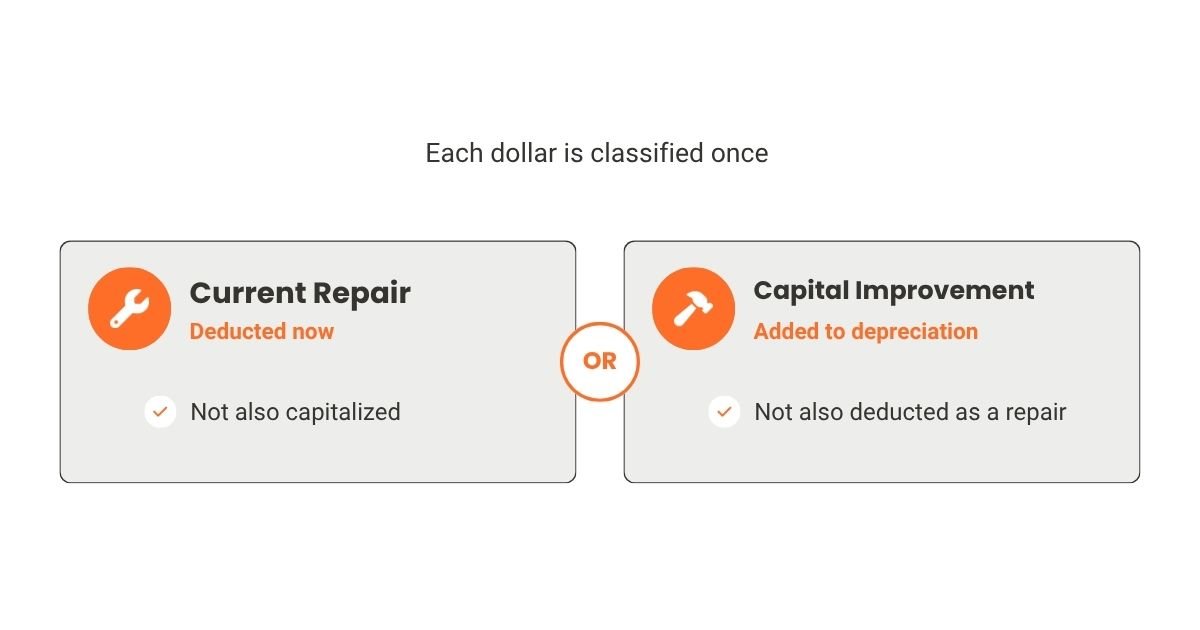
If you capitalize a cost as an improvement, replacing a roof, for example, you can't also claim a separate current repair deduction on that same component in the same year.
Each dollar spent gets classified once, either as a currently deductible repair or as a capitalized improvement added to your depreciation schedule, not both.
Documentation Makes or Breaks This
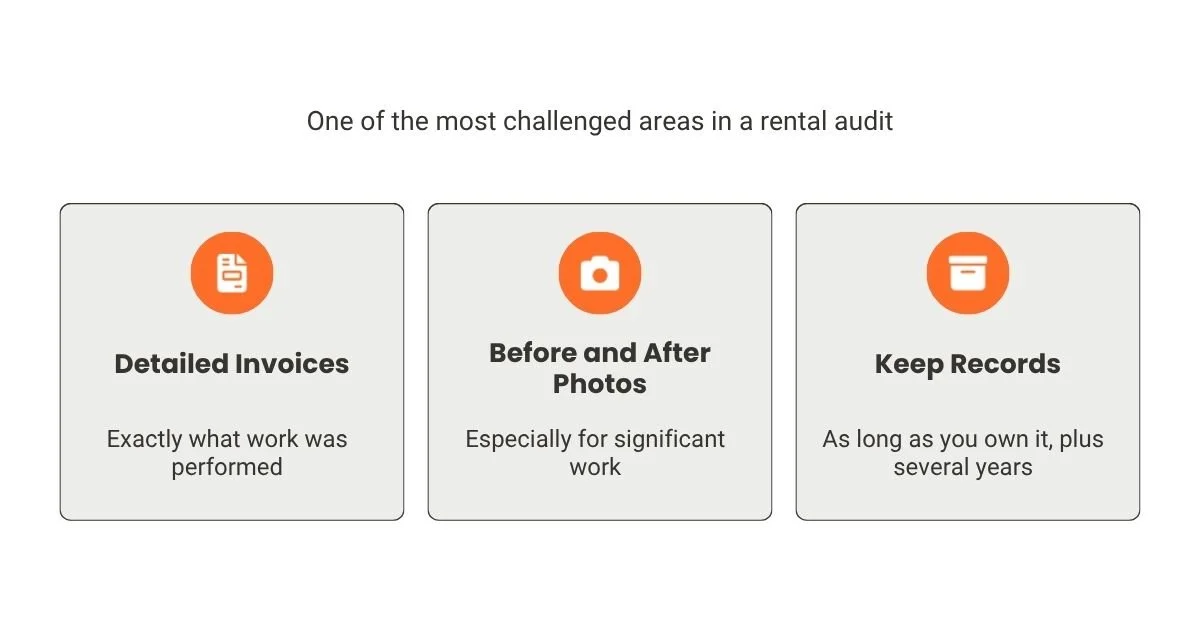
Since this classification is genuinely one of the most commonly challenged areas in a rental property audit, documentation matters enormously. Keep detailed invoices describing exactly what work was performed, not just a total dollar amount.
Photos showing the property's condition before and after significant work, especially anything claimed as routine maintenance or a minor repair rather than a restoration, provide real support if the classification is ever questioned. Retain these records for as long as you own the property, plus several years beyond, since depreciation schedules and basis calculations tied to past improvements stay relevant until you eventually sell.
If You've Been Misclassifying Expenses for Years
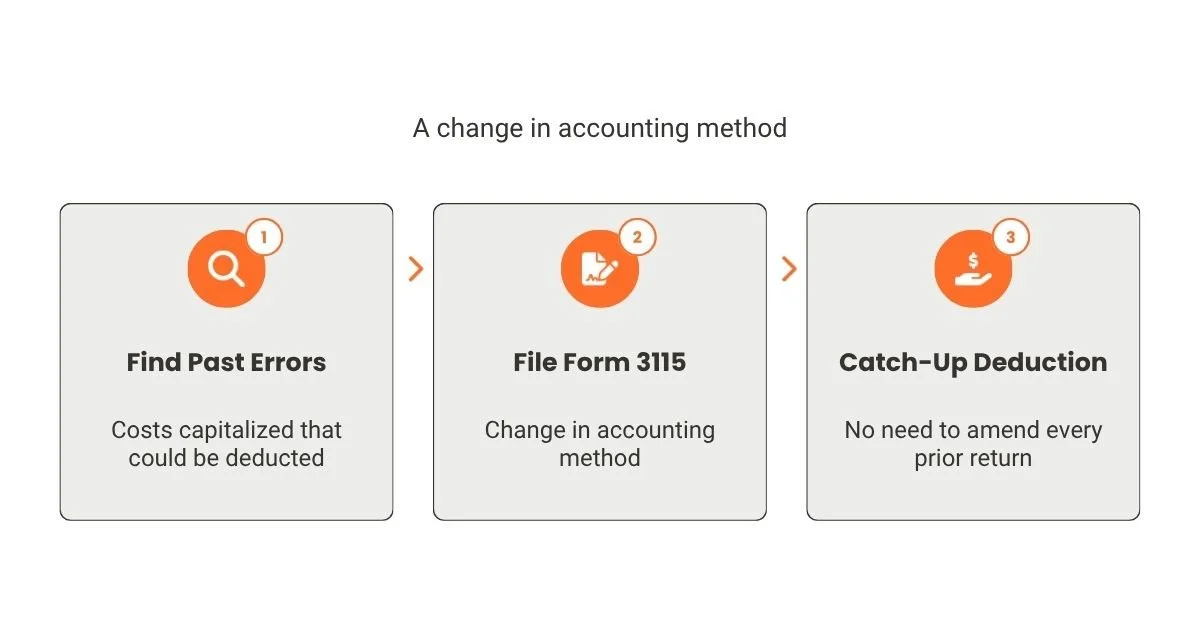
If you discover that costs were capitalized in prior years that should have qualified as current repairs or fallen under one of these safe harbors, this isn't necessarily a lost cause. A change in accounting method, filed on Form 3115, can allow a retroactive correction and let you claim a catch-up deduction for the difference, without needing to amend every affected prior-year return individually.
This is a genuinely valuable option for property owners who've been capitalizing conservatively for years without realizing safe harbors were available, and it's worth a direct conversation with a tax professional if this describes your situation.
Frequently Asked Questions
-
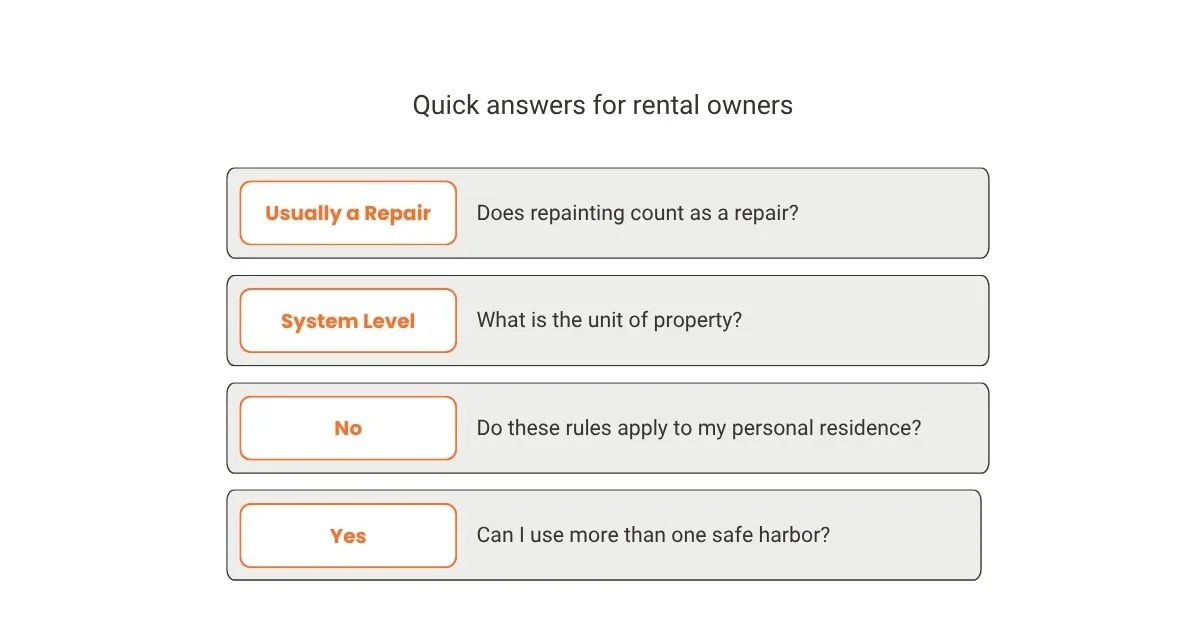
Ordinary repainting to maintain the property's condition is typically a repair.
Painting done as part of a larger renovation that also involves structural changes or upgrades may get swept into the capitalized cost of that broader project instead, depending on the full scope of work.
-
The unit of property is the specific building or building system, HVAC, plumbing, electrical, roof, and similar systems are each generally treated as their own unit under the building system rules, that the BAR test gets applied against.
A full system replacement, like replacing an entire HVAC system, is measured against that system as the relevant unit, not against the building as a whole, which is part of why full-system replacements so often qualify as restorations requiring capitalization.
-
No, these specific repair-versus-improvement deduction rules apply to rental and business property.
For your personal residence, there's no current deduction for either repairs or improvements, though capital improvements to a personal residence do increase your cost basis, which can reduce gain when you eventually sell, relevant to the Section 121 exclusion we cover elsewhere.
-
Yes, the de minimis safe harbor and the Safe Harbor for Small Taxpayers can both apply in the same year for the same property, though amounts deducted under the de minimis safe harbor count toward the small taxpayer safe harbor's annual limit, they're not entirely independent of each other.
Getting repairs versus improvements right, and using the available safe harbors correctly, can mean a meaningfully larger deduction sooner rather than later. A tax professional can help you classify current expenses correctly and review whether prior years were handled optimally.