When Do You Need to File a Gift Tax Return?
Most people who need to file a gift tax return never actually owe any gift tax. That distinction surprises a lot of people, and confusing the two is exactly why some folks file when they didn't need to, while others skip filing when they actually should have.
Filing a return and owing tax are two separate thresholds, with very different numbers attached to each.
Here's how to tell which situation you're in.

The Annual Exclusion: What You Can Give Without Filing
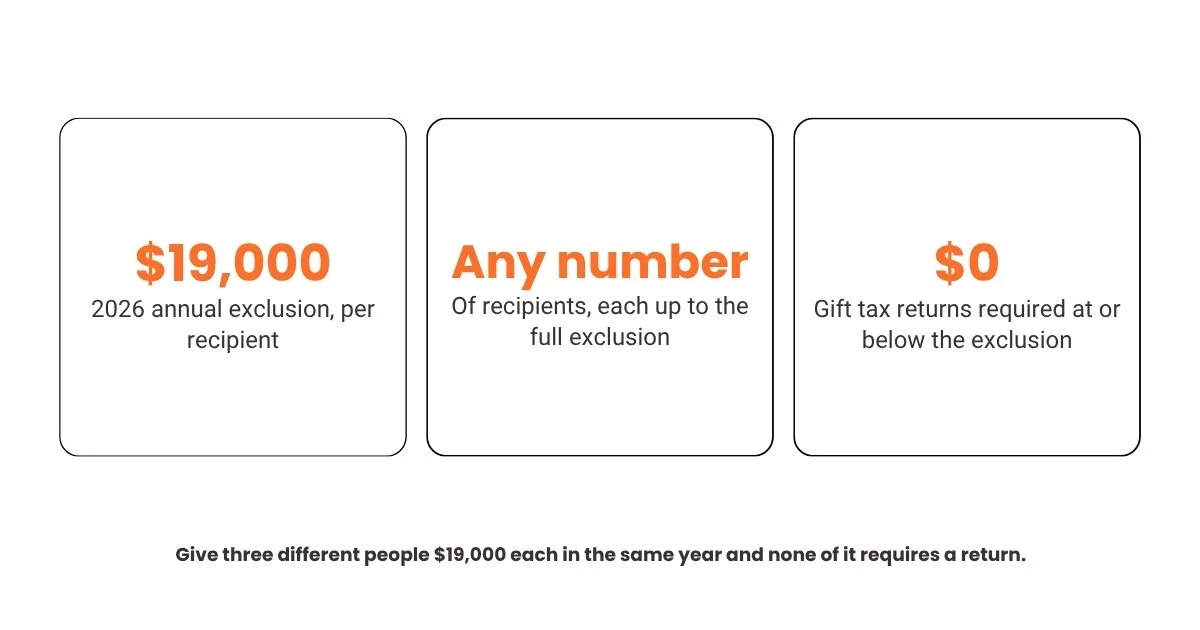
Each year, the IRS lets you give up to a certain amount to any individual, to any number of people, without triggering a filing requirement at all. For 2026, that annual exclusion is 19,000 dollars per recipient.
Give your daughter 19,000 dollars, your son 19,000 dollars, and a friend 19,000 dollars in the same year, and none of it requires a gift tax return, regardless of how many people you give to.
When You DO Need to File, Even Without Owing Tax
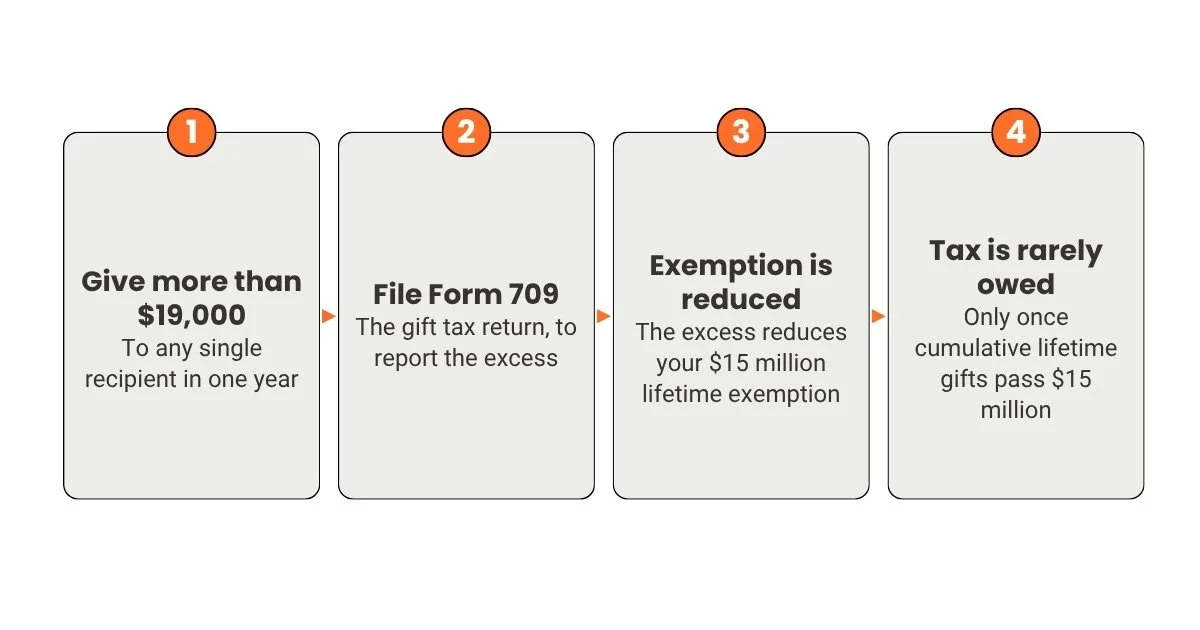
Once you give more than 19,000 dollars to any single recipient in a year, you're required to file Form 709, the gift tax return, to report the excess. Here's the part that surprises people: filing that return almost never means you actually owe tax.
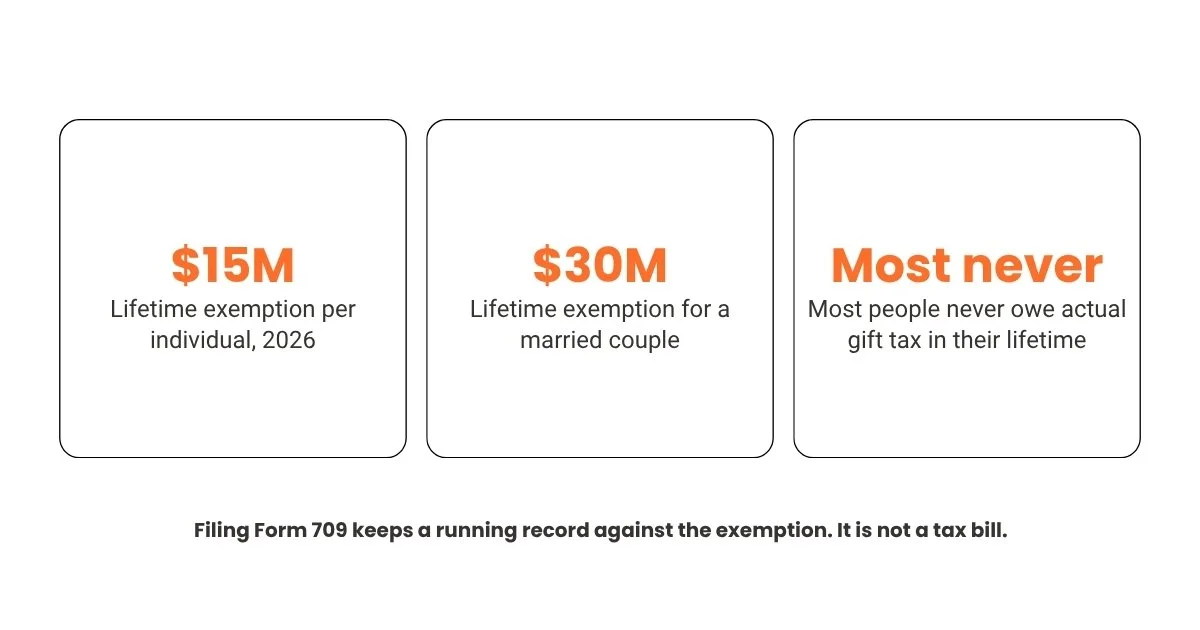
The amount above the annual exclusion simply reduces your lifetime gift and estate tax exemption, currently 15 million dollars per individual for 2026, made permanent by recent federal legislation.
You only owe actual gift tax once your cumulative lifetime gifts exceed that 15 million dollar figure, which is far beyond what the vast majority of people will ever give away.
What Counts as a Gift for This Purpose?
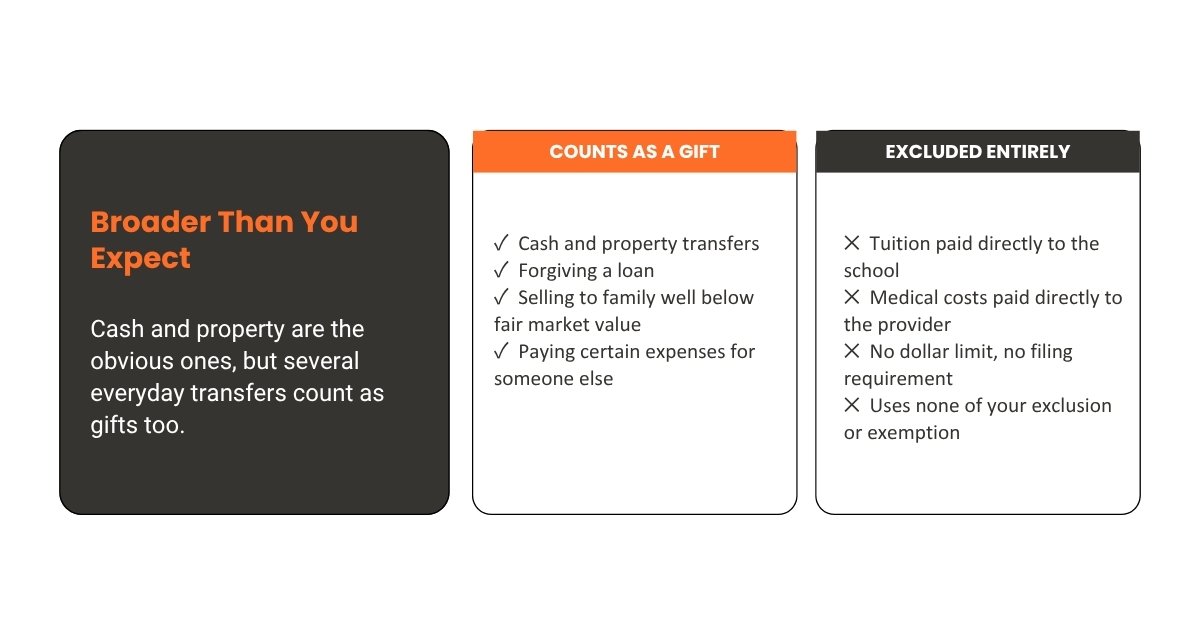
The definition is broader than most people expect. Cash and property are the obvious ones, but forgiving a loan, selling something to a family member well below its fair market value, and paying certain expenses on someone else's behalf can all count as gifts too.
There's an important exception worth knowing: paying tuition or medical expenses directly to the school or medical provider, not to the individual, is excluded from gift tax entirely, with no dollar limit and no filing requirement.
This is a genuinely useful planning tool. Paying a grandchild's tuition bill directly to the university doesn't use any of your annual exclusion or lifetime exemption, no matter how large the tuition bill is.
Gift Splitting Between Spouses
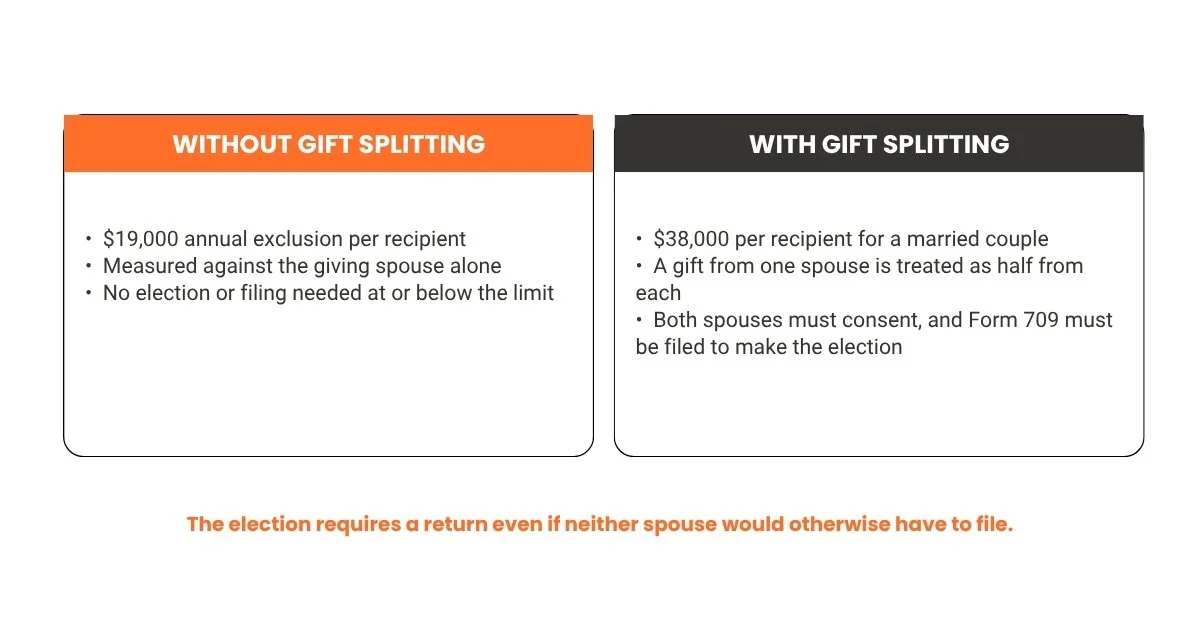
Married couples can effectively double their per-recipient annual exclusion to 38,000 dollars through a strategy called gift splitting, treating a gift from one spouse as if half came from each.
This requires both spouses to consent, and it requires filing Form 709 to make the election, even if neither spouse would otherwise be required to file on their own.
What Happens If You Don't File When You Should?
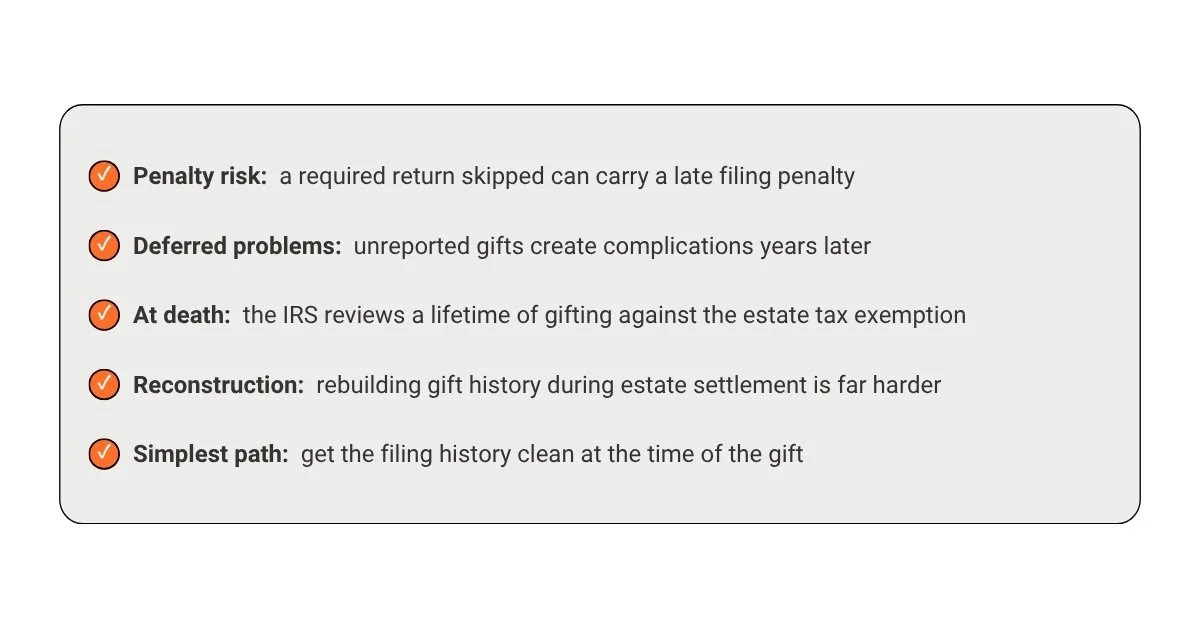
Skipping a required gift tax return carries real risk beyond just a potential penalty for late filing. Unreported gifts can create real complications years later, at death, when the IRS reviews a lifetime of gifting against the estate tax exemption.
Getting the filing history clean at the time of the gift is far simpler than reconstructing it during an estate settlement.
When Do You Actually Owe Gift Tax?
To be direct about it: most people never owe actual gift tax in their lifetime. With a 15 million dollar per-person lifetime exemption, 30 million dollars for a married couple, cumulative lifetime gifts exceeding the annual exclusion would have to add up to that amount before any actual tax is owed.
Filing Form 709 when required simply keeps a running record against that exemption, it isn't a tax bill in most cases.
Frequently Asked Questions
-
No. Gift tax, when it applies at all, is generally the responsibility of the person giving the gift, not the person receiving it.
-
No, in almost all cases. Transfers between spouses who are both U.S. citizens are unlimited under the marital deduction and don't require a gift tax return.
-
As long as the payment goes directly to the medical provider or educational institution, rather than to the family member themselves, it's excluded from gift tax entirely, with no dollar limit and no filing requirement.
-
Yes, generally, though 529 plans have a special provision allowing you to contribute up to five years' worth of the annual exclusion at once and treat it as spread evenly over five years for gift tax purposes. This is a more advanced planning strategy worth discussing directly with a tax professional given the election and reporting involved.
Whether you need to file Form 709 this year, or you're planning a larger gift and want to know how it fits within your lifetime exemption, a tax professional can walk you through exactly where you stand.