Retiring in California means dealing with two different tax systems that don't always agree with each other. The federal government and California draw the line between taxable and tax-free retirement income in genuinely different places, and the gap catches a lot of new retirees off guard, usually in the direction of a bigger state bill than expected. Here's how the two systems actually diverge.
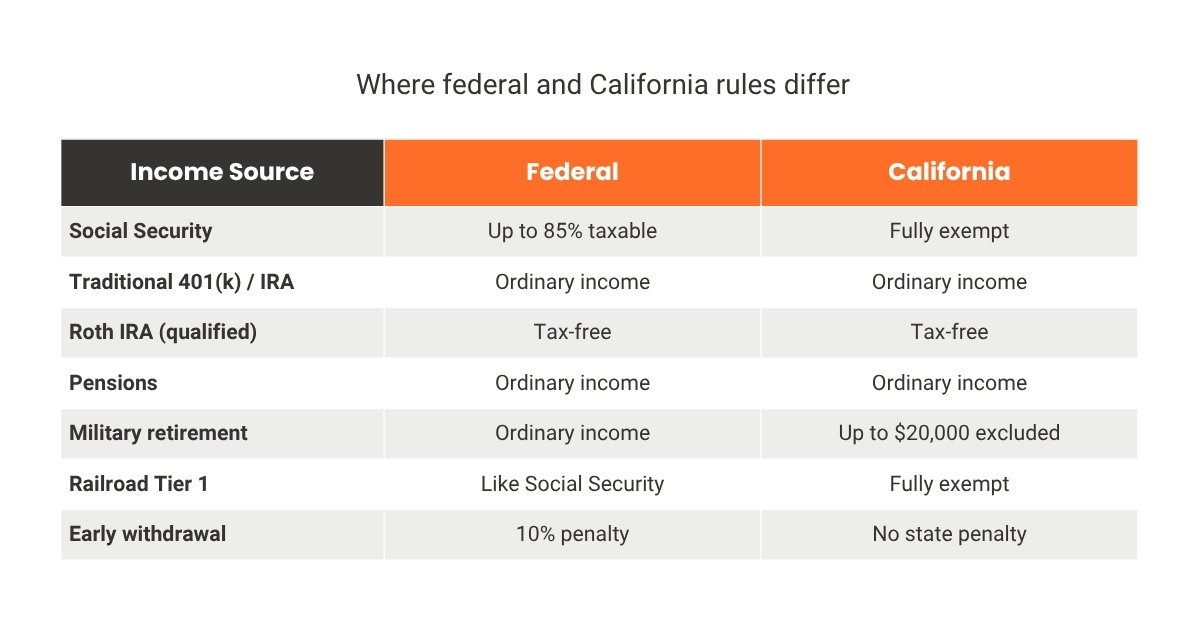
The Comparison at a Glance
The One Big Piece of Good News: Social Security
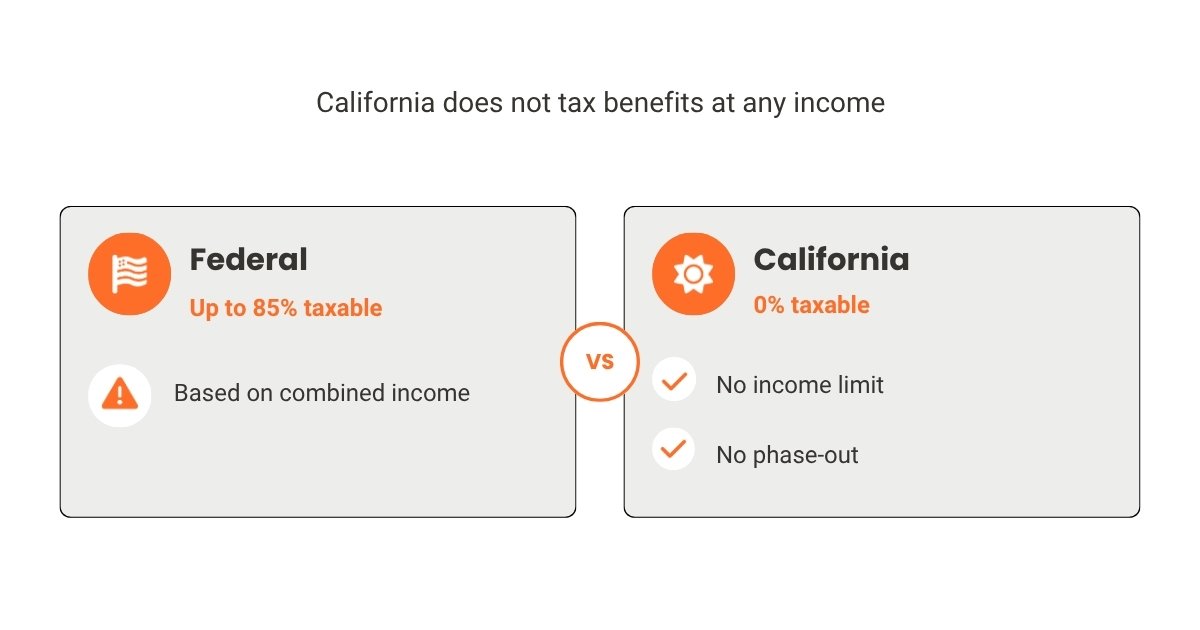
This is where California is genuinely generous. We cover the federal side in full in our Social Security taxability guide, up to 85 percent of your benefit can be federally taxable depending on your combined income. California doesn't tax Social Security at all, at any income level, with no phase-out and no exceptions. For retirees relying heavily on Social Security, this is a real, ongoing benefit to living in California rather than a one-time consideration.
Everything Else Gets Taxed as Ordinary Income
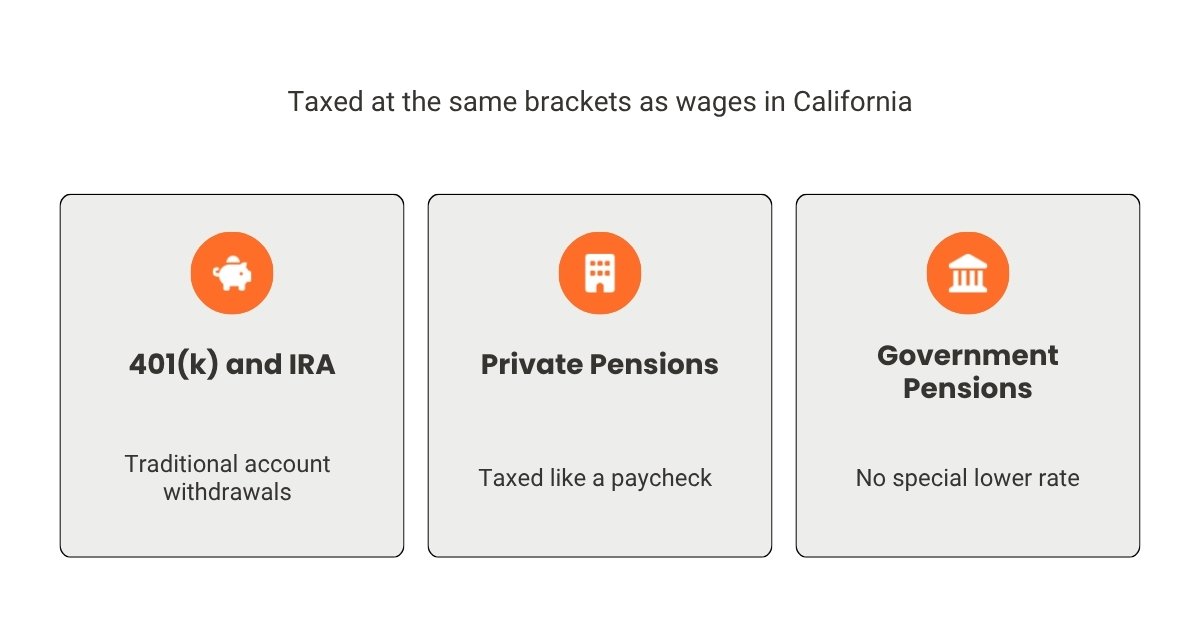
Beyond Social Security, California doesn't offer the kind of special retirement income breaks some other states provide. Some states exempt pension income entirely, or offer a partial exclusion for retirement account withdrawals. California doesn't do either. Traditional 401(k) and IRA distributions, private pensions, and government pensions are all taxed as ordinary income once withdrawn, using California's regular progressive brackets, the same brackets that apply to wage income. There's no separate, lower rate for retirement income specifically.
This surprises a lot of people who assume retirement income gets gentler treatment somewhere along the way. In California, once the money comes out of a traditional retirement account, it's treated exactly like a paycheck for tax purposes.
California's Rates Run High
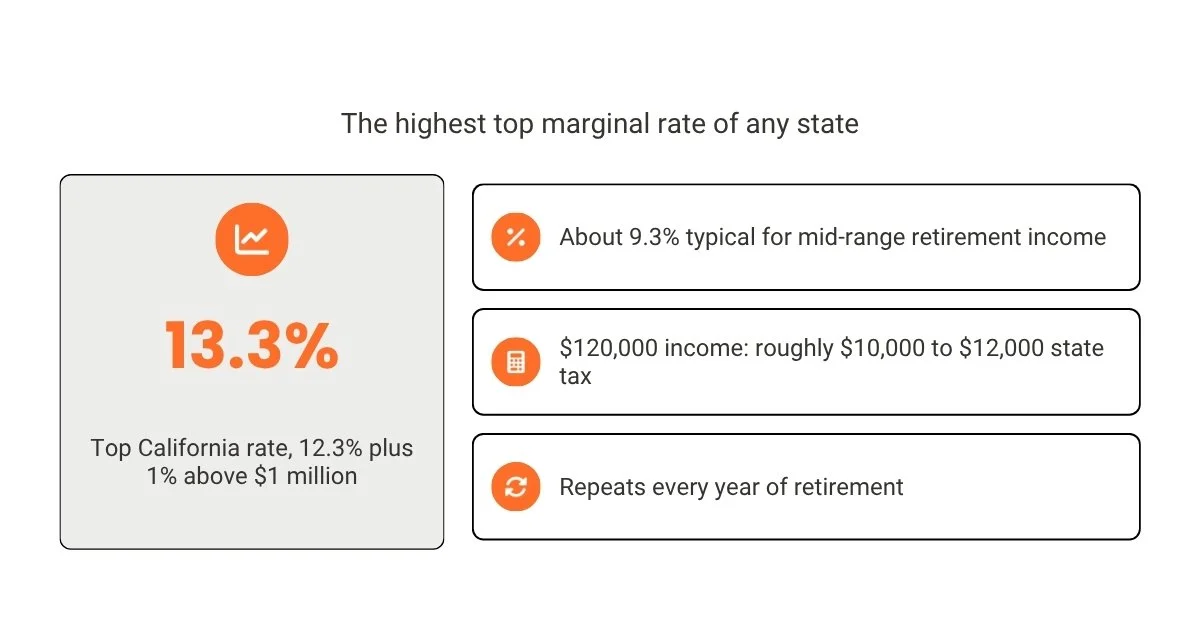
California has the highest top marginal income tax rate of any state, 13.3 percent, made up of a 12.3 percent top bracket plus an additional 1 percent surcharge on income above 1 million dollars. Most retirees won't hit that top rate, but even the mid-range brackets that apply to a fairly typical retirement income, often somewhere around 9.3 percent, are meaningfully higher than what many other states charge on the same income. A California retiree with 120,000 dollars in combined pension and IRA income might owe somewhere in the range of 10,000 to 12,000 dollars in state income tax annually, a bill that repeats every year of retirement, not a one-time cost.
A Recent Change for Military Retirees
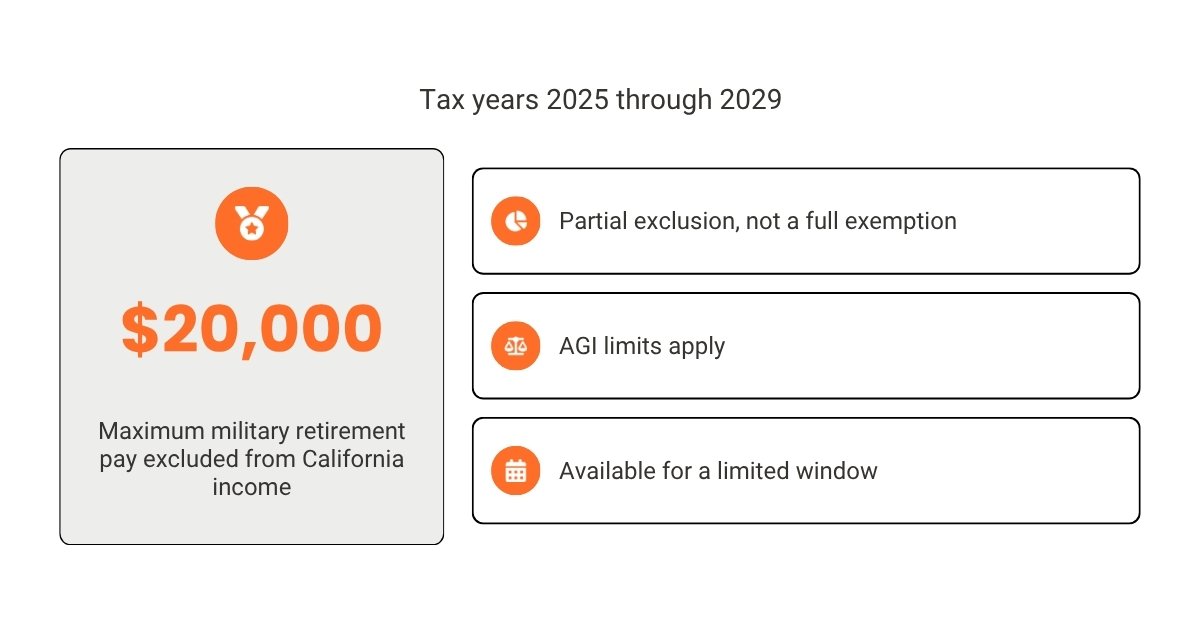
California has historically taxed military retirement pay fully as ordinary income, unlike several other states that exempt it entirely. That's shifted somewhat: for tax years 2025 through 2029, qualifying taxpayers can exclude up to 20,000 dollars of military retirement pay from California income, subject to adjusted gross income limits. This is a meaningful improvement for veterans, though it's a partial exclusion within a specific window, not a full exemption, and the specifics of the AGI limits are worth confirming directly given how recently this provision took effect.
Roth Accounts Work the Same Way at Both Levels
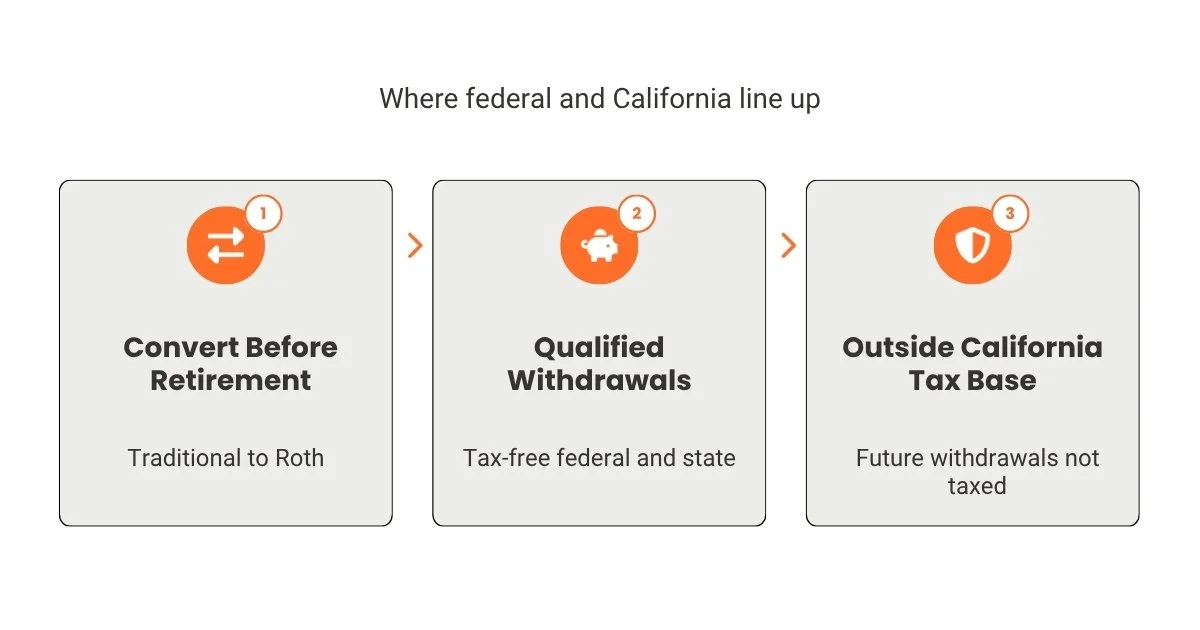
Qualified distributions from a Roth IRA are tax-free at both the federal and California level, since the contributions were already taxed going in. This is one of the few areas where state and federal treatment line up cleanly, and it's part of why Roth conversion planning, which we cover in our Roth conversion strategy guide, can be especially valuable for California retirees specifically, converting traditional retirement funds to Roth before retirement shifts future withdrawals out of California's ordinary income tax base entirely.
No State-Level Early Withdrawal Penalty
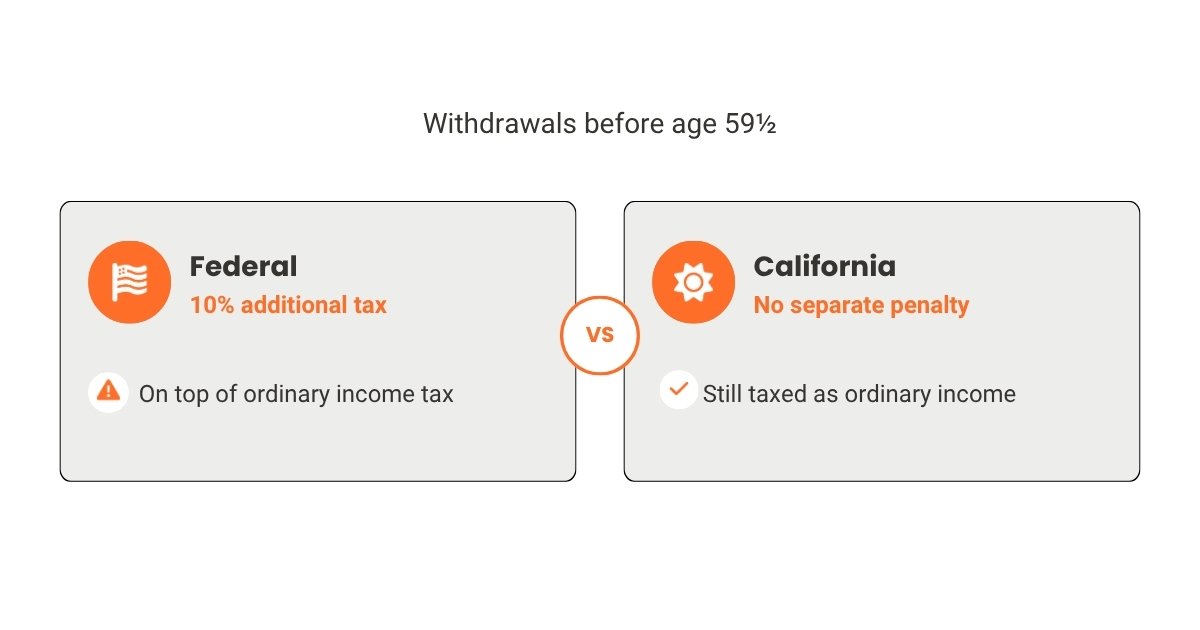
If you take money out of a retirement account before age 59 and a half, the federal government generally adds a 10 percent additional tax on top of ordinary income tax. California doesn't layer an additional state-level penalty on top of that, an early withdrawal is still taxed as ordinary state income, but without a separate California penalty stacked on the federal one.
Frequently Asked Questions
-
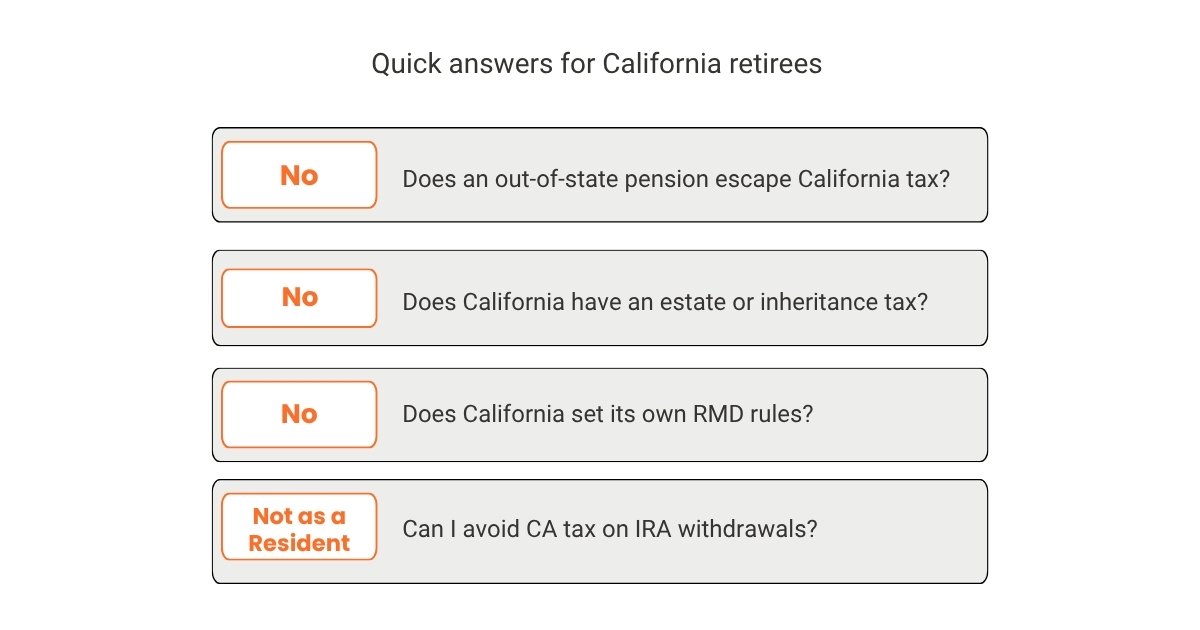
No. California taxes full-year residents on all income regardless of where it was earned or which state the paying employer is based in. A pension from an out-of-state employer is still generally taxable by California once you're a California resident receiving it.
-
No. California has no separate state-level estate or inheritance tax, unlike some other states. Federal estate tax rules still apply at the federal level for large estates, but California doesn't add its own layer on top.
-
No, the underlying RMD rules and starting age, covered in our RMD guide, are federal rules. California doesn't impose its own separate RMD schedule, it simply taxes the distribution once it's taken, at California's ordinary income rates.
-
Not while you remain a California resident, those withdrawals are taxable regardless of planning. Some retirees consider relocating to a no-income-tax state before beginning large retirement account withdrawals, though residency rules are genuinely complex and this is a significant life decision that goes well beyond a tax question alone.
Understanding where federal and California rules diverge can meaningfully change how you plan withdrawals in retirement. A tax professional can help you sequence your income sources with both systems in mind.