We cover how crypto is taxed generally, capital gains versus ordinary income, in our crypto tax guide. This post is about the mechanics: how those gains and losses actually get reported on Form 8949 and Schedule D, and a genuinely significant rule change that took effect in 2025 around how cost basis has to be tracked.
Getting this wrong is one of the most common ways crypto investors end up with an incorrect return, even when they're trying to do it right.

How the Two Forms Work Together
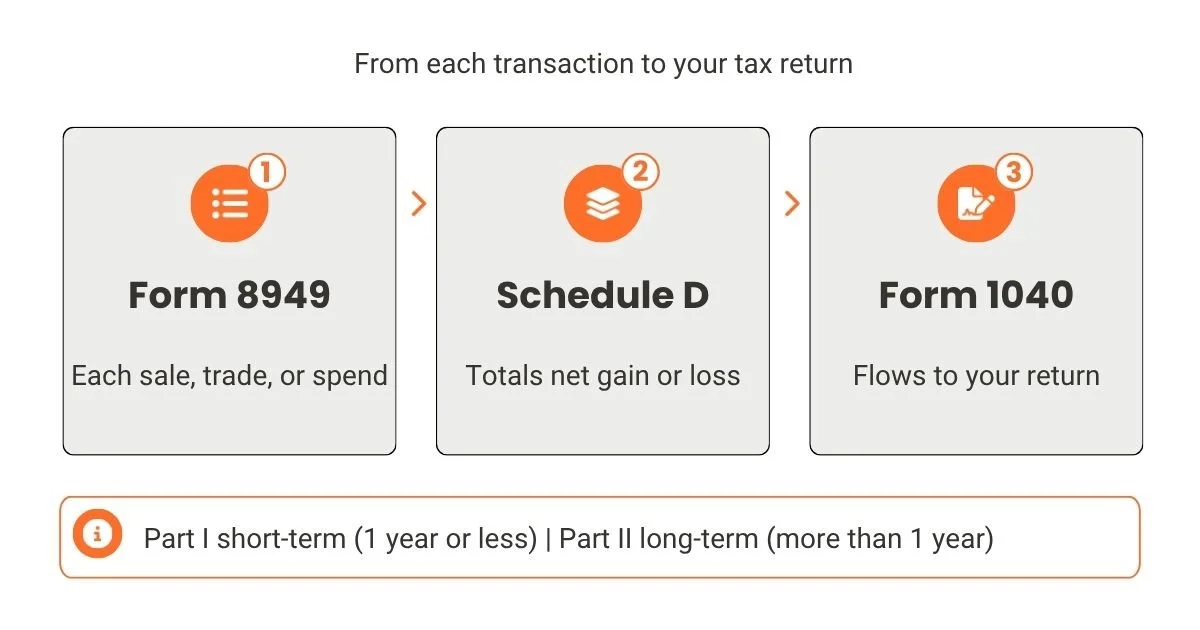
Form 8949 is where you report each individual disposal, every sale, trade, or spend, with its date acquired, date sold, proceeds, cost basis, and resulting gain or loss. Schedule D takes the totals from Form 8949 and rolls them into your overall net capital gain or loss for the year, which then flows to your Form 1040.
Form 8949 has two parts:
Part I for short-term transactions, held one year or less, and Part II for long-term transactions, held more than a year.
Within each part, you check a box indicating whether the transaction was reported to the IRS by a broker, and whether the cost basis was included in that report, this determines which specific box, A through F, applies to a given batch of transactions.
The Big Change: Per-Wallet Cost Basis Tracking
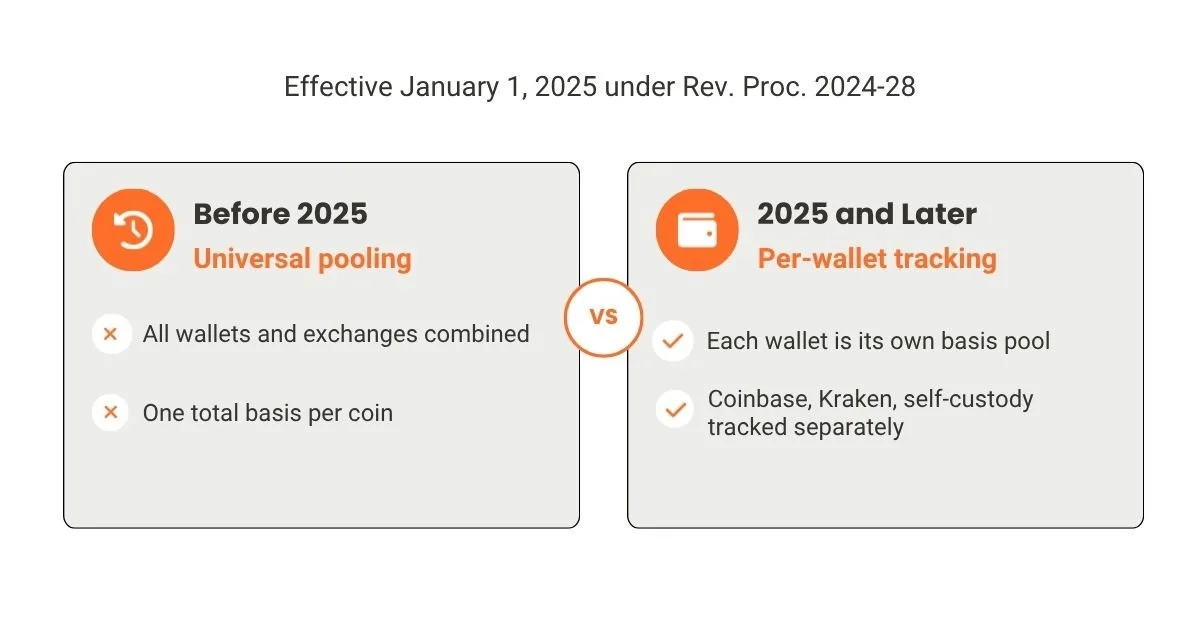
This is the most consequential recent change for how crypto gets reported, and a lot of older guidance online still doesn't reflect it. Starting January 1, 2025, under Revenue Procedure 2024-28, the IRS eliminated the old approach of pooling your cost basis across every wallet and exchange you use into one universal total.
Cost basis now has to be tracked separately for each individual wallet or account. If you hold Bitcoin on Coinbase, on Kraken, and in a self-custody wallet, each of those is now its own separate basis pool, you can no longer treat your total Bitcoin holdings across all three as one combined position.
There was a one-time transition opportunity tied to this change: taxpayers could elect to reallocate their existing, pooled basis across wallets as of January 1, 2025, but that election had a hard deadline, generally before your first disposal of that asset type on or after that date, or your 2025 return's due date with extensions, whichever came first.
If that window has already closed for you, you're now locked into however your basis happened to be allocated across wallets at that point, and it only moves between wallets going forward through actual transfers of the assets themselves.
Choosing a Cost Basis Method
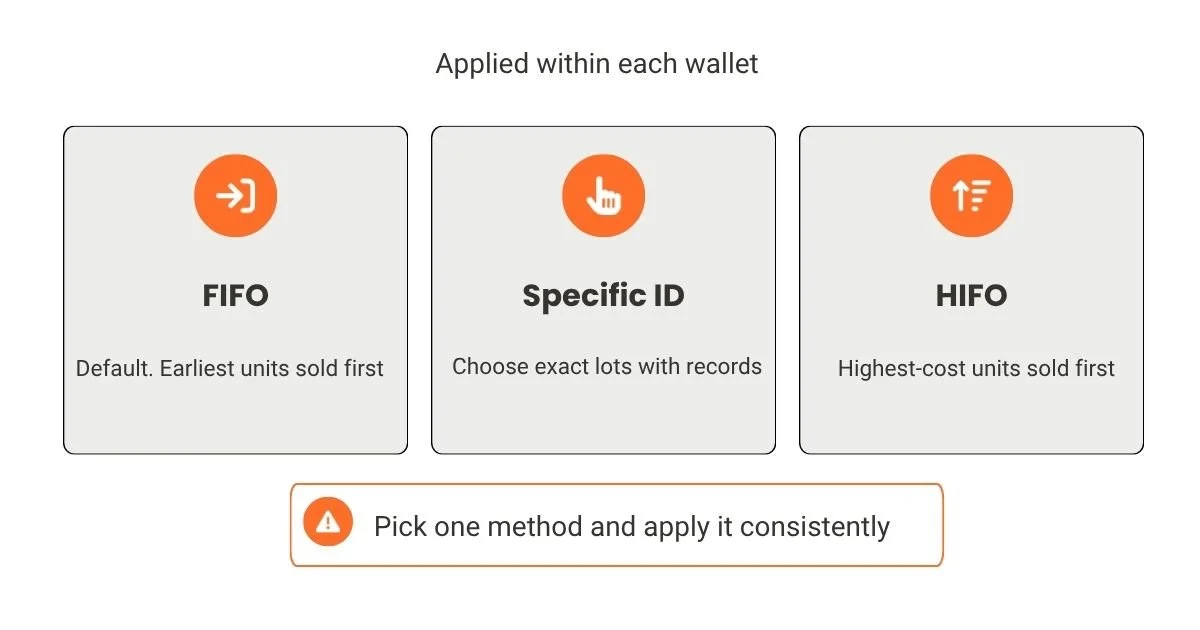
Within each wallet's separate basis pool, you choose how to determine which specific units were sold when you have multiple purchases at different prices. FIFO, first-in-first-out, is the default if you don't specifically identify otherwise, it treats your earliest-acquired units in that wallet as the ones sold first.
Specific identification lets you choose exactly which lots you're selling, provided your records can actually substantiate the choice, and within specific identification, strategies like HIFO, selling your highest-cost-basis units first to minimize reported gain, become available.
Whichever method you use, consistency matters. Using FIFO on one exchange and HIFO on another without a clear, documented rationale creates a pattern that can look like cherry-picking specifically to minimize tax, which invites exactly the kind of scrutiny you don't want. Pick a method, apply it consistently, and keep the records to back it up.
The 1099-DA Phase-In
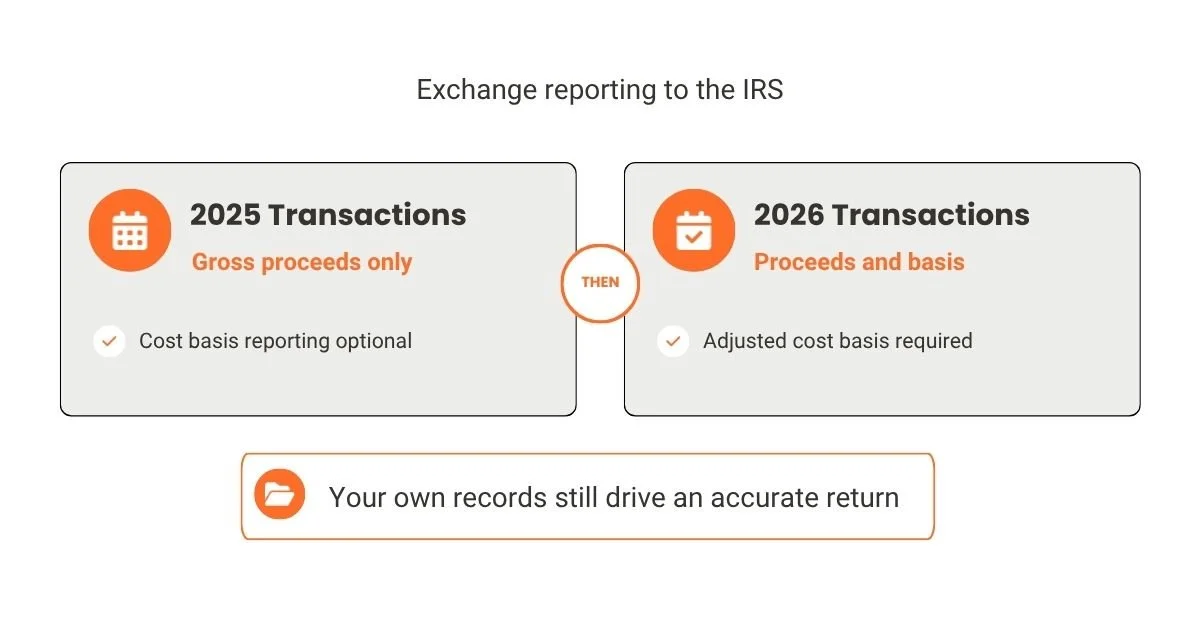
Centralized exchanges are now required to report your transaction activity to the IRS on Form 1099-DA, but the rollout happens in stages. For 2025 transactions, exchanges only had to report gross proceeds, cost basis reporting was optional. Starting with 2026 transactions, exchanges are required to report both gross proceeds and adjusted cost basis.
Until that's fully phased in, your own records are what actually drive an accurate return, don't assume the exchange's report alone captures your full picture, especially for anything involving a self-custody wallet or DeFi activity a centralized exchange has no visibility into.
Common Mistakes Worth Avoiding
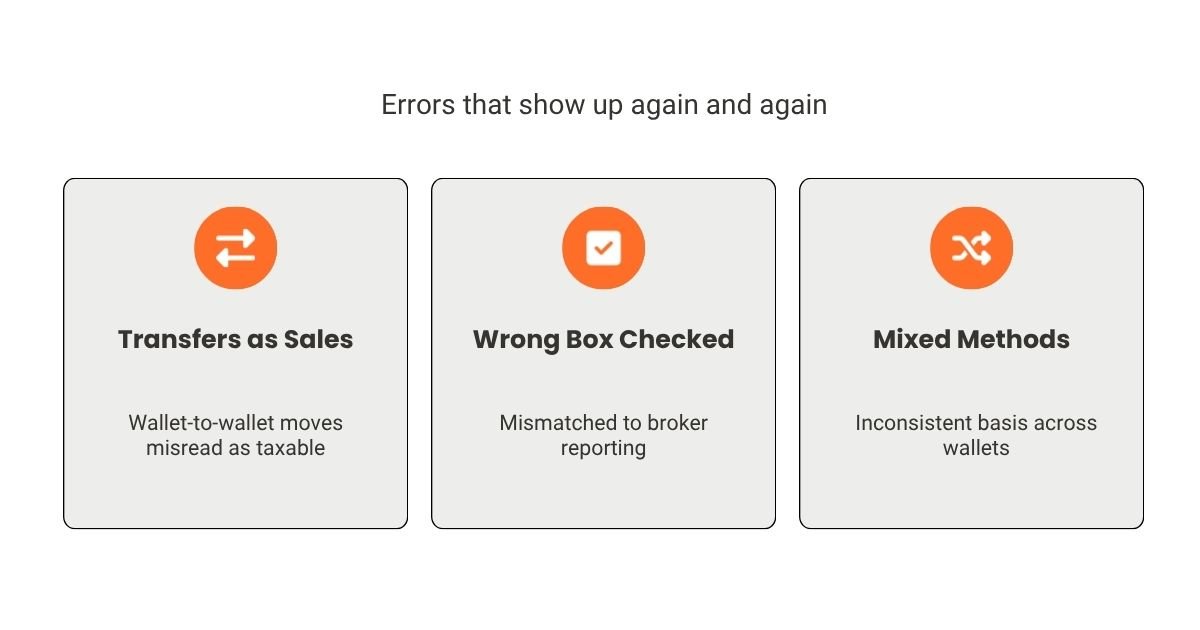
A few errors show up repeatedly. Moving crypto between two wallets you personally own isn't a sale, but tax software sometimes misreads it as one if the transfer isn't properly tagged, creating a phantom taxable event that overstates your gain.
Checking the wrong box on Form 8949, mismatched to whether a transaction was actually reported to the IRS by a broker, is another frequent issue. And using an inconsistent cost basis method across different wallets, as mentioned above, undermines the credibility of the whole return if it's ever questioned.
Frequently Asked Questions
-
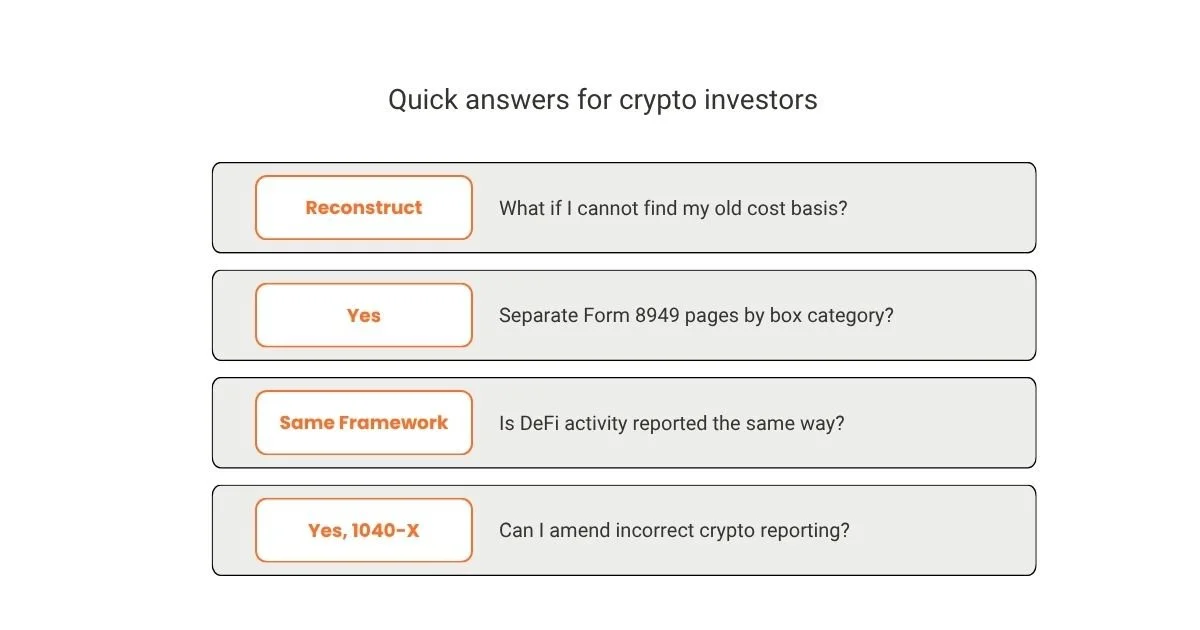
This is a common situation, especially for crypto bought years ago on exchanges that have since closed. Missing basis doesn't mean you should skip reporting the sale. Work with a tax professional to reconstruct what you can from available records, exchange statements, wallet history, blockchain explorers.
Without any substantiated basis, the IRS may treat the full proceeds as taxable gain, which is a worse outcome than a reasonably reconstructed number.
-
Yes, transactions get grouped by box category, short-term versus long-term, and by whether they were reported to the IRS with or without basis included.
If your activity spans multiple categories, you'll have multiple pages, one per box category.
-
The same basic framework applies, each disposal event still needs a date, proceeds, and basis, but DeFi activity often generates a much higher volume of individual taxable events, token swaps, liquidity pool entries and exits, that are easy to undercount without dedicated tracking.
This is an area where crypto-specific tax software or professional help genuinely earns its cost.
-
Yes, using Form 1040-X.
Given how much crypto reporting rules have shifted in recent years, particularly the 2025 per-wallet change, this is worth reviewing with a professional if you suspect a prior year's crypto reporting doesn't hold up under the current framework.
Crypto reporting has gotten more technical, not less, with per-wallet basis tracking and the 1099-DA rollout both changing the picture recently. A tax professional can help make sure your Form 8949 tells an accurate story.