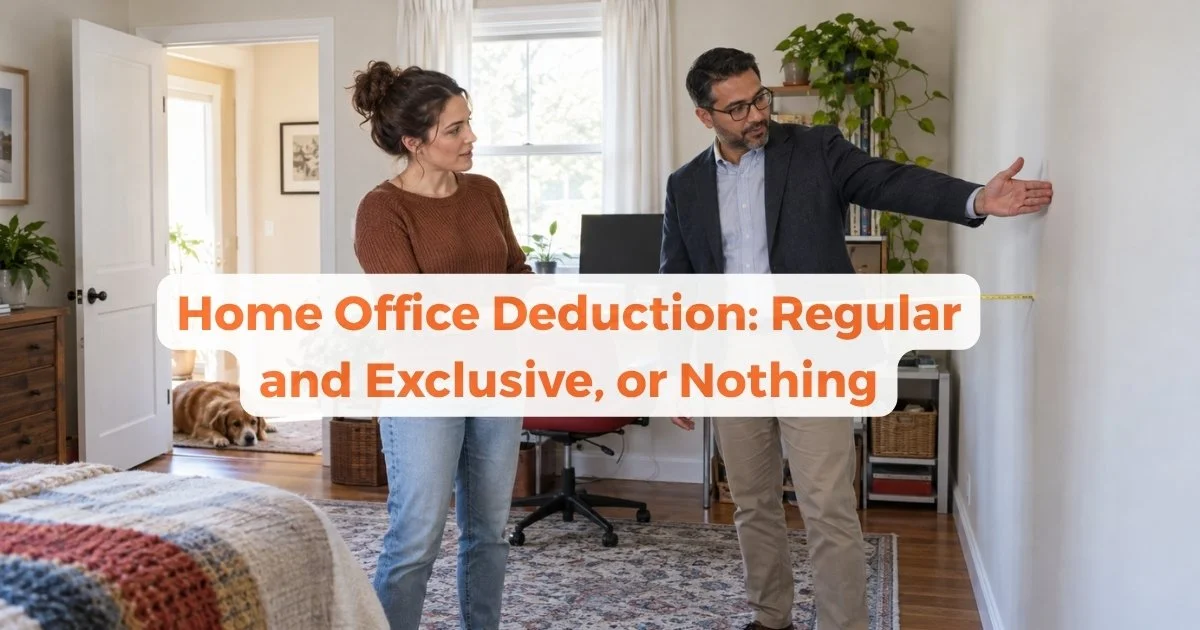
The home office deduction has a reputation for being an audit trigger, which stops a lot of people from claiming it even when they genuinely qualify. A properly documented, legitimately calculated deduction doesn't raise your audit risk on its own. What does matter is whether your space actually passes two specific tests, and which of two calculation methods gets you the bigger, defensible number.
Who Can Claim This Deduction
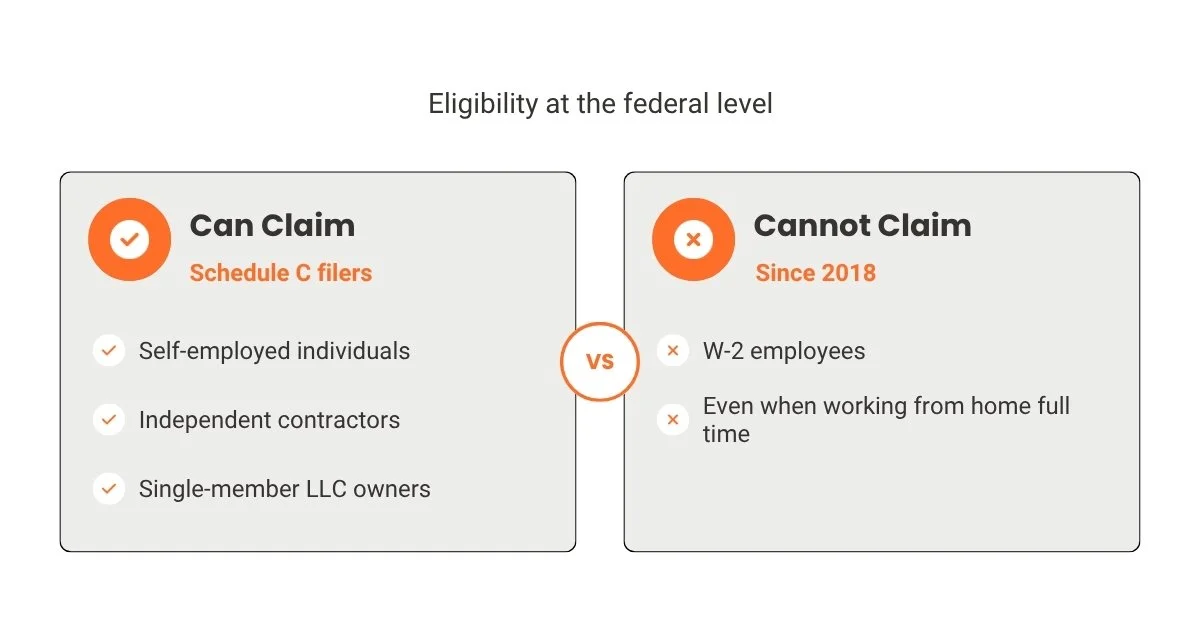
Self-employed individuals, independent contractors, and single-member LLC owners filing Schedule C can claim the home office deduction. W-2 employees cannot, even those working from home full time, this restriction has been in place since 2018 and continues under current law. If you're a W-2 employee with unreimbursed home office costs, this deduction simply isn't available to you at the federal level, regardless of how much of your work happens at home.
The Two Tests Your Space Has to Pass
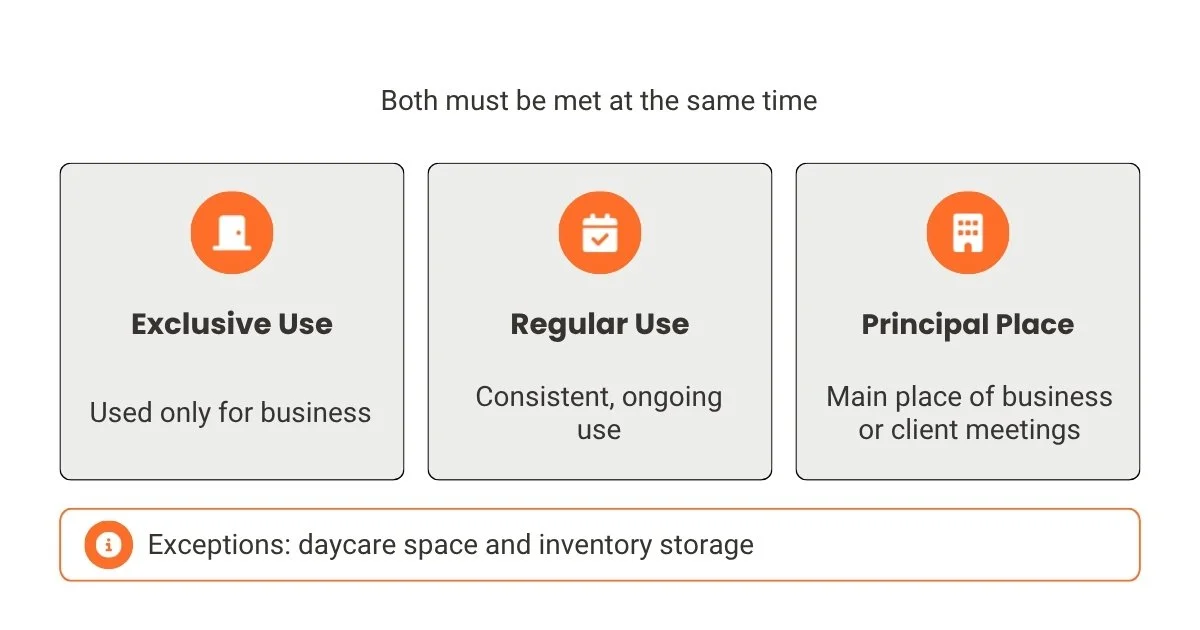
Your home office space has to meet two requirements at the same time. Exclusive use means the space is used only for business, not a guest bedroom that doubles as an office, not a kitchen table you also eat dinner at. Regular use means you use the space on a consistent, ongoing basis, not occasionally. The space doesn't have to be an entire separate room, a clearly defined section of a room, a desk in the corner separated by a divider, can qualify, as long as that specific area meets both tests.
There are two narrow exceptions to the exclusive use requirement: space used for daycare services, and space used to store inventory or product samples when your home is the only fixed location for that business. In both cases, the space can serve a dual purpose and still qualify.
Beyond exclusive and regular use, the space also has to be your principal place of business, or a place where you regularly meet clients. If you have another office elsewhere but do substantial administrative or management work from home, and don't have another fixed location where you regularly do that same administrative work, the home office can still qualify as your principal place of business for those activities.
Method One: The Simplified Option
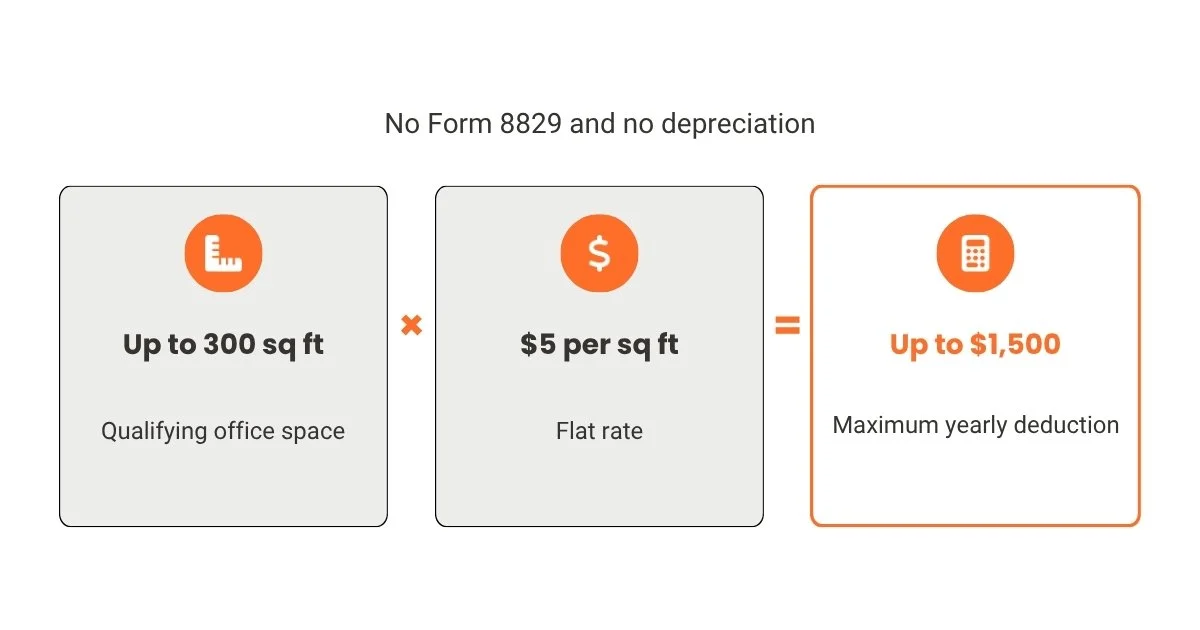
The simplified method deducts 5 dollars per square foot of qualifying office space, up to a maximum of 300 square feet, for a maximum deduction of 1,500 dollars per year. There's no Form 8829, no expense tracking, and no depreciation to worry about later. Your mortgage interest and property tax stay fully deductible on Schedule A as personal itemized deductions, unaffected by the business use. This method works well for smaller offices or situations where your actual home expenses wouldn't add up to much more than the 1,500 dollar cap anyway.
Method Two: The Regular Method
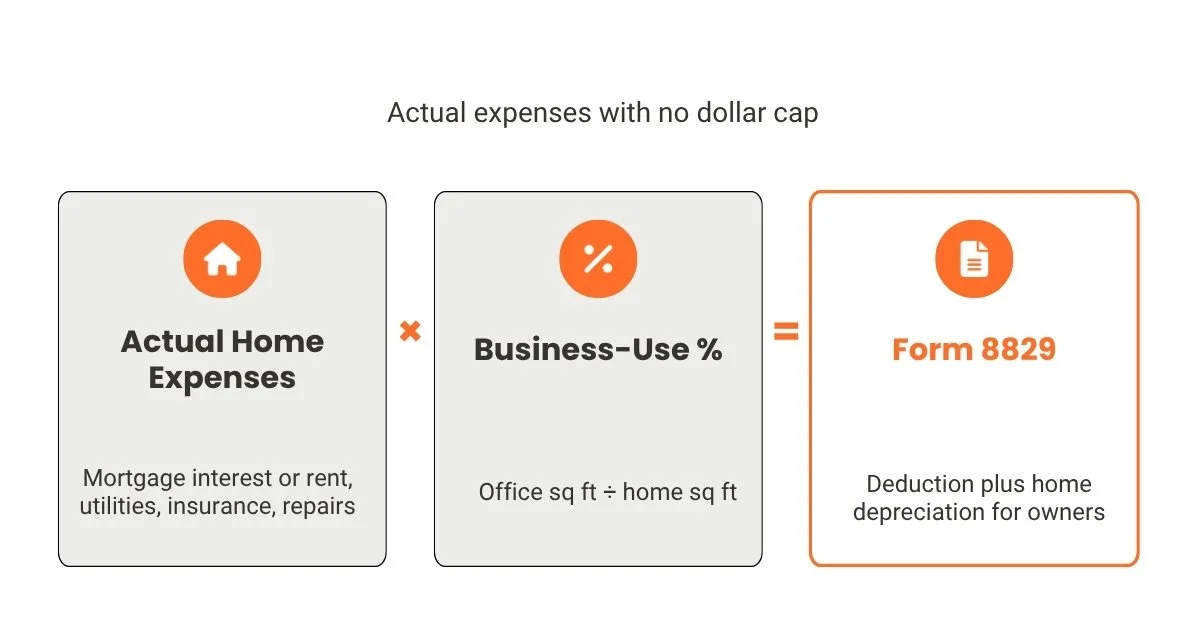
The regular method calculates your actual home expenses, mortgage interest or rent, utilities, insurance, repairs, and applies your business-use percentage to arrive at the deduction. That percentage is typically your office's square footage divided by your home's total square footage. There's no dollar cap on this method, and for most people with a dedicated office and real home costs, it produces a meaningfully larger deduction than the simplified option. It requires Form 8829 and more recordkeeping, and if you own your home, it also lets you depreciate the business-use portion of the home itself, which creates a genuine tradeoff worth understanding before choosing this method.
A Side-by-Side Example
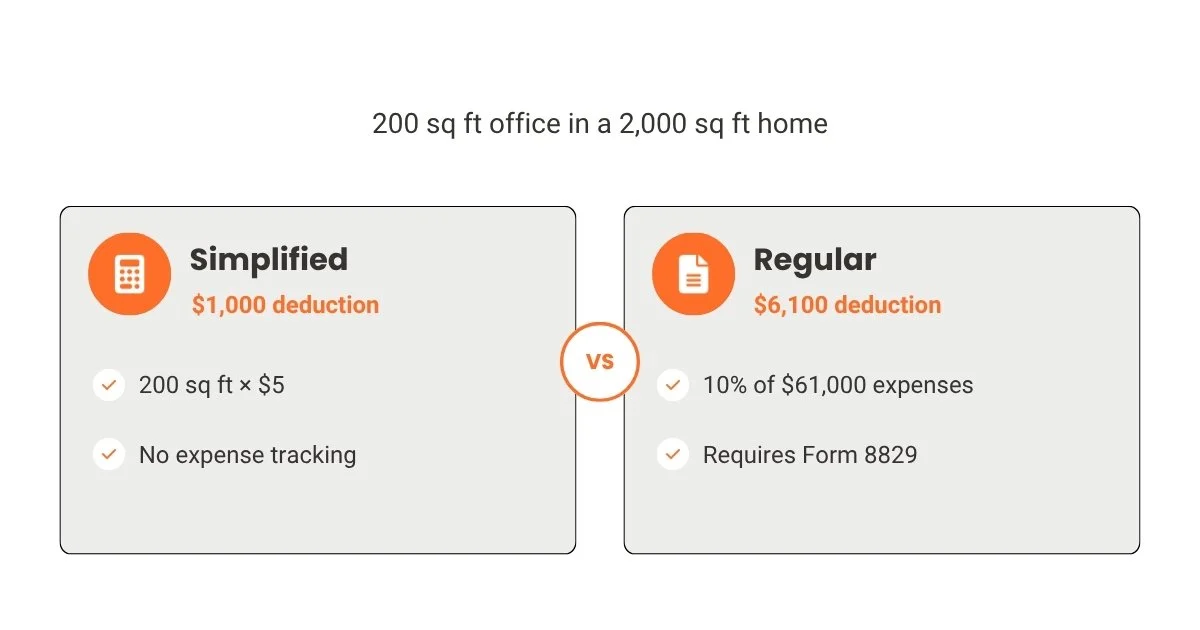
Say you have a 200 square foot home office in a 2,000 square foot home, a 10 percent business-use share. Under the simplified method, your deduction is capped at 200 square feet times 5 dollars, 1,000 dollars for the year. Under the regular method, if your total home expenses for the year, mortgage interest, utilities, insurance, repairs, come to 61,000 dollars, your deduction would be 10 percent of that, 6,100 dollars. In this scenario, the regular method produces over five times the deduction, though it requires tracking actual expenses and filing Form 8829 to get there.
The Depreciation Tradeoff
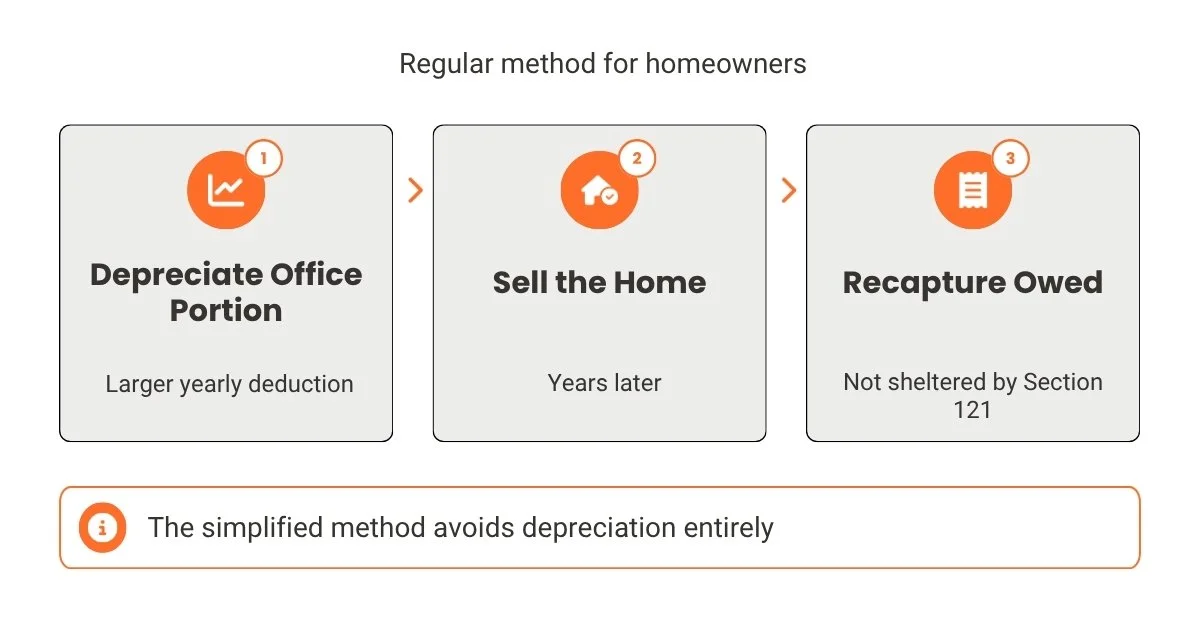
Choosing the regular method as a homeowner means you can depreciate the business-use portion of your home, which increases your annual deduction further. But that depreciation creates depreciation recapture exposure when you eventually sell the home, taxed under the same unrecaptured Section 1250 rules we cover in our depreciation recapture guide, and it isn't sheltered by the Section 121 home sale exclusion even within the normal exclusion limits, as we cover in our Section 121 guide. The simplified method avoids this entirely, since it doesn't involve any depreciation calculation. This is a genuine long-term tradeoff, not just a this-year-versus-that-year decision.
A SALT Cap Detail Worth Knowing
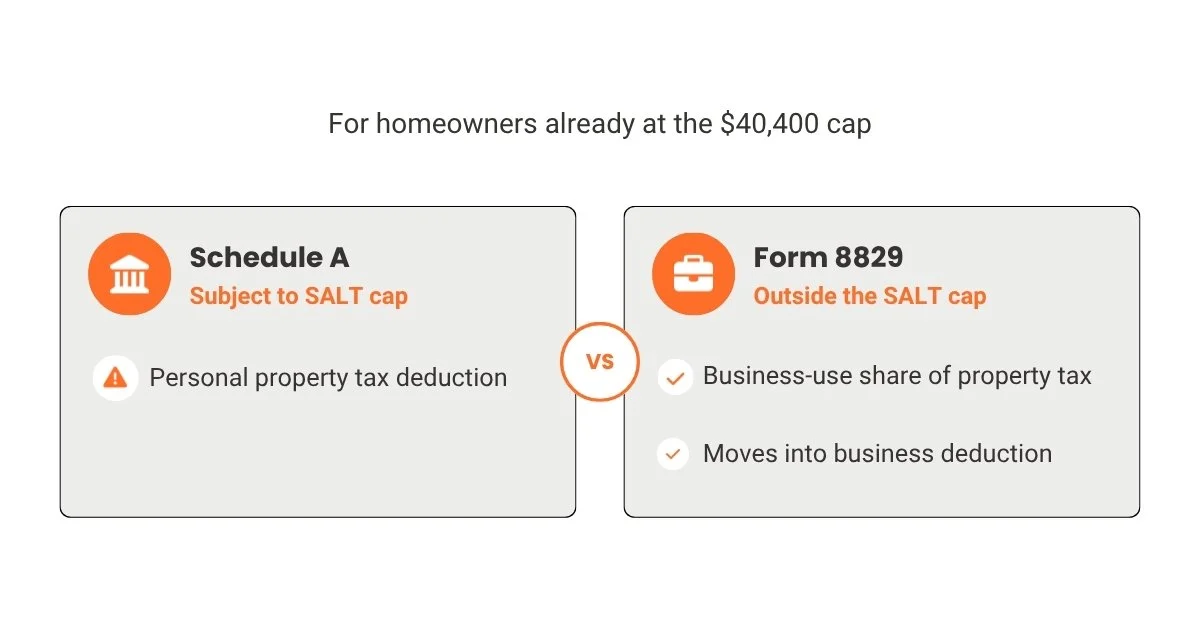
If your property tax deduction on Schedule A is being limited by the SALT cap, currently 40,400 dollars for 2026, there's a workaround worth knowing about. The business-use portion of your property tax, when calculated through the regular method and Form 8829, moves into your business deduction instead of your personal itemized deduction, and isn't subject to the SALT cap at all. For homeowners in high-property-tax areas already maxing out their SALT deduction, this can meaningfully increase the total tax benefit beyond what the home office deduction alone would suggest.
If You're an S Corp Owner
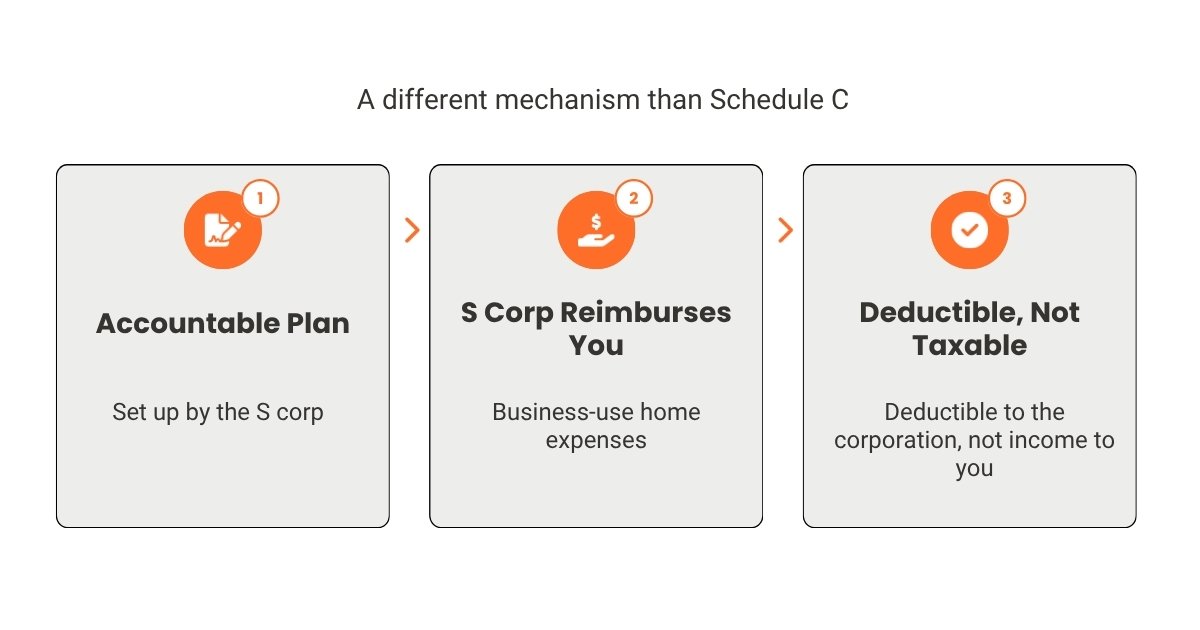
If your business is structured as an S corp, you generally can't claim the home office deduction directly on your personal return the way a sole proprietor can. Instead, the standard approach is an accountable plan, where the S corp reimburses you for the business-use portion of your home expenses, and that reimbursement is deductible to the corporation and not taxable to you. This is a meaningfully different mechanism than the Schedule C deduction covered in this post, and worth setting up correctly with a tax professional rather than assuming the same rules apply.
Frequently Asked Questions
-
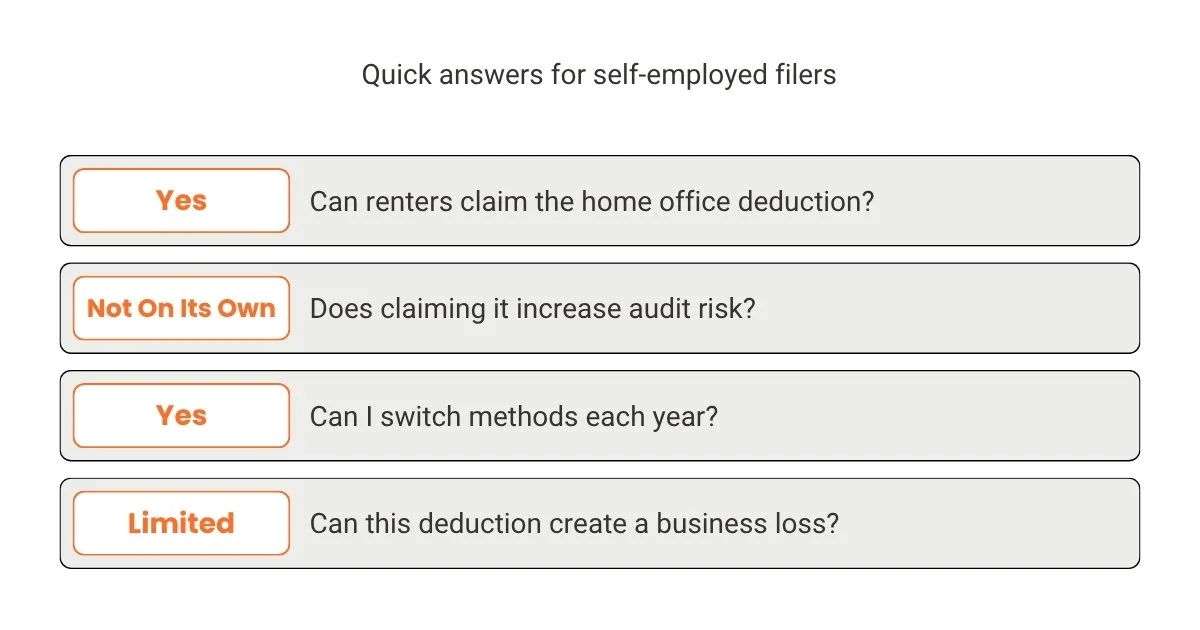
Yes. Renters use the same rules as homeowners, with rent treated as a qualifying indirect expense under the regular method, or simply the square footage calculation under the simplified method.
-
A properly documented, accurately calculated deduction should not increase audit risk on its own, according to IRS guidance. Risk rises when the deduction is unusually large relative to your income, or when documentation is weak. Keeping photos, measurements, and expense records makes any deduction easier to defend if it's ever questioned.
-
Yes. You can use the simplified method one year and the regular method the next, there's no penalty for switching, and it's worth recalculating each year since your better option can change if your home costs or office size change.
-
Under the simplified method, no, the deduction can't exceed your business income, and any excess is permanently lost rather than carried forward. Under the regular method, the deduction is also limited by business income under the gross income limitation, but disallowed amounts generally can carry forward to future years.
The right method, and whether the depreciation tradeoff makes sense for your situation, depends on your specific numbers. A tax professional can run both methods against your actual expenses and help you choose with the long-term picture in mind.