Crypto Staking and Mining Income: Reporting Requirements
Staking and mining rewards feel like they shouldn't be taxable until you actually cash out. The IRS disagrees, and has been explicit about it. Both are taxed as ordinary income the moment you receive them, at their dollar value that day, regardless of whether you ever sell. Here's how the reporting actually works, including a genuine legal dispute currently working its way through the courts that's worth knowing about.

Staking Rewards: Taxable the Moment You Receive Them
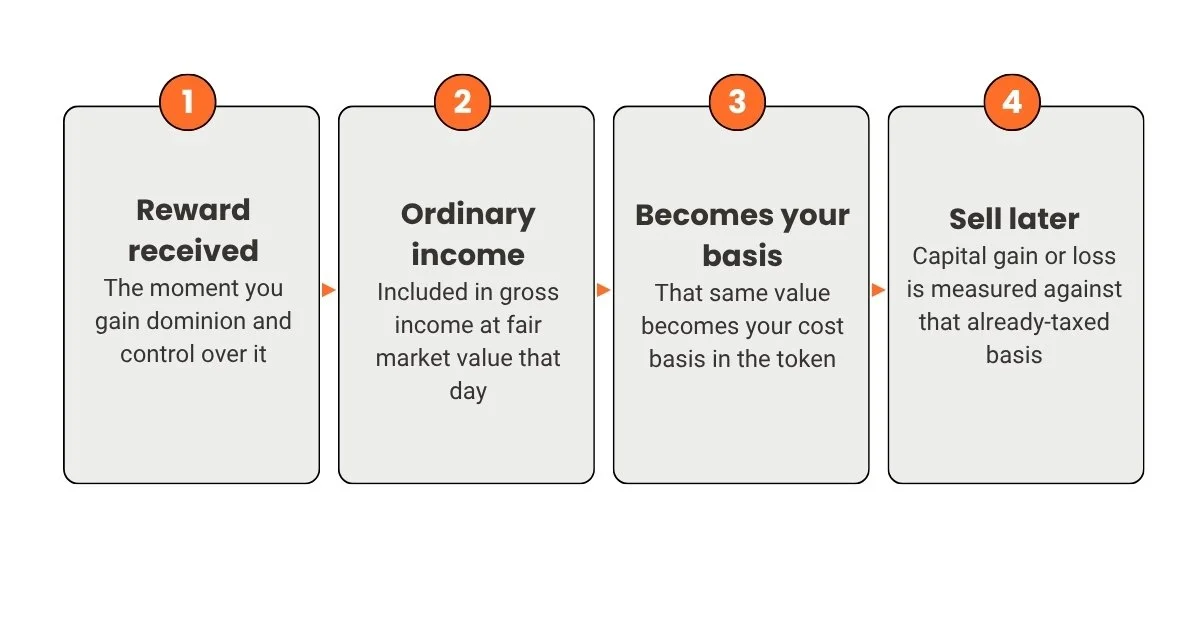
Under Revenue Ruling 2023-14, issued by the IRS in July 2023, staking rewards are includible in gross income as ordinary income at their fair market value the moment you gain dominion and control over them, meaning the moment you're able to sell, exchange, or otherwise dispose of the reward. This applies whether you're staking directly, through an exchange like Coinbase, or through a liquid staking protocol. The tax is owed that year even if you never sell the reward, and even if the token's value crashes afterward.
The fair market value at the time you receive each reward also becomes your cost basis in that specific token. When you eventually sell it, you calculate capital gain or loss based on the difference between the sale price and that already-taxed basis, so you're not taxed twice on the same value.
The Ongoing Legal Challenge Worth Knowing About
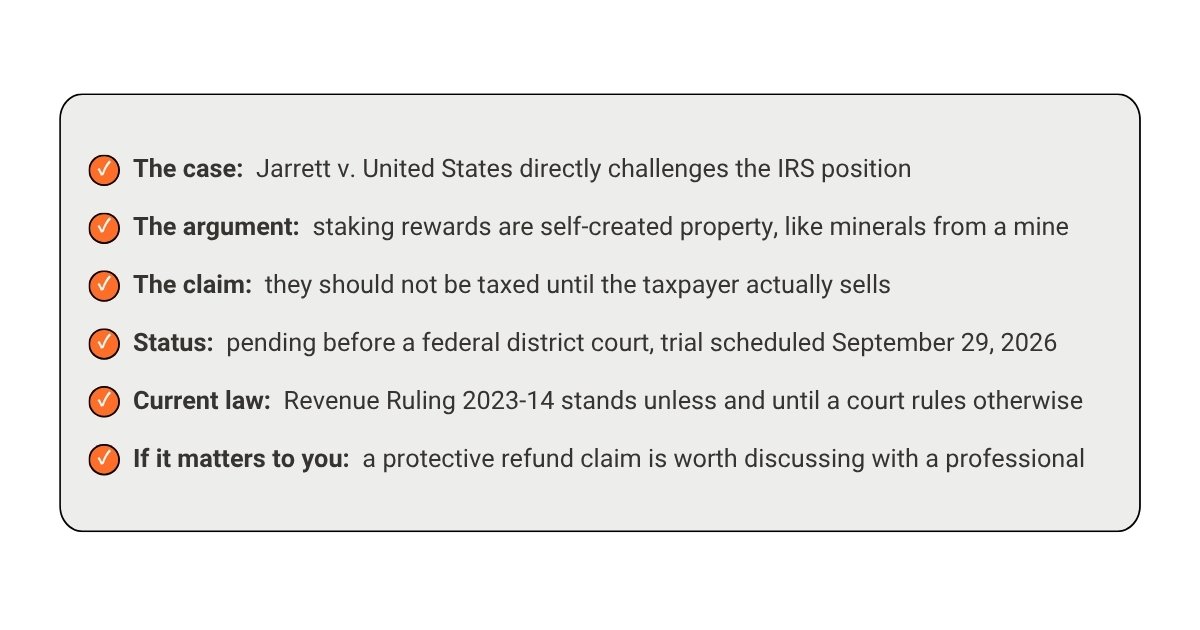
This isn't entirely settled law. A case called Jarrett v. United States has directly challenged the IRS's position, arguing that staking rewards are more like self-created property, similar to minerals extracted from a mine, and shouldn't be taxed until the taxpayer actually sells them. The case has moved through multiple stages, and as of this writing, is pending before a federal district court with a trial scheduled for September 29, 2026.
Here's what matters practically: the IRS's position under Revenue Ruling 2023-14 remains the current law unless and until a court rules otherwise. Taking the position that staking rewards aren't taxable until sold, based on the pending litigation, carries real risk. For anyone with a material amount of staking income who wants to preserve the option to claim a refund if the litigation eventually succeeds, filing a protective refund claim is worth discussing with a tax professional, rather than simply not reporting the income now.
Mining Income: Hobby or Business Changes Everything
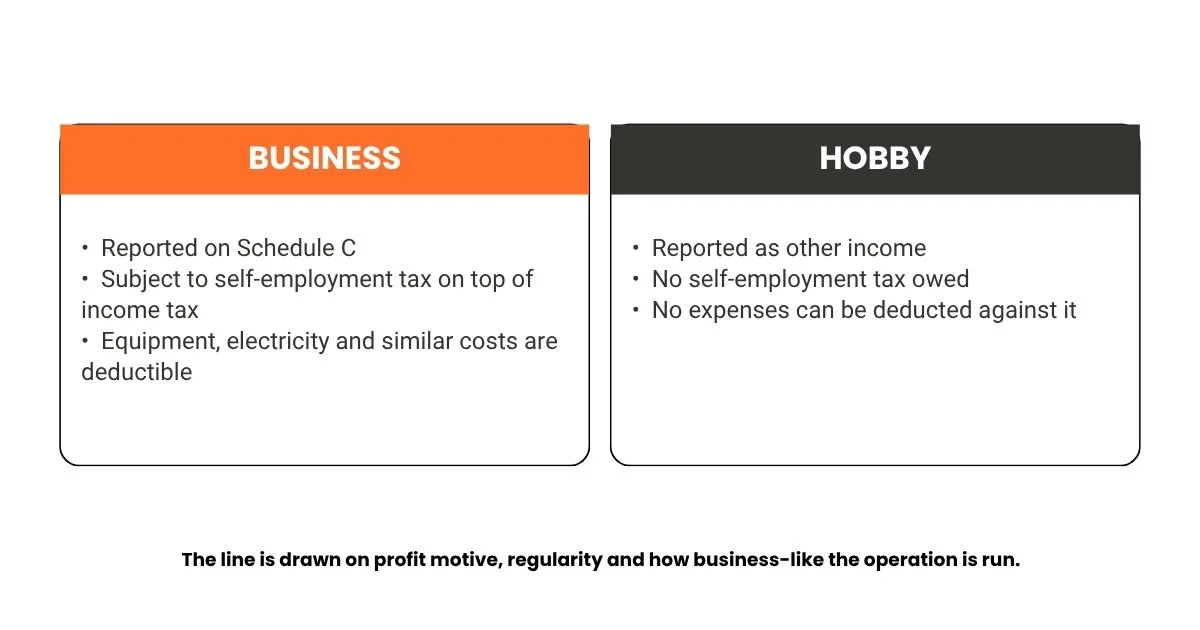
Mining income is also taxed as ordinary income at fair market value when received, but how it's reported depends on whether the IRS would consider your mining a business or a hobby, based on factors like profit motive, regularity of the activity, and how business-like the operation is run.
If mining rises to the level of a business, income is reported on Schedule C, subject to self-employment tax on top of ordinary income tax, but you can also deduct legitimate business expenses, equipment, electricity, and similar costs. If it's more casual, a hobby rather than a business, the income still counts as taxable ordinary income, reported as other income, but you don't owe self-employment tax and you also can't deduct expenses against it. This is a meaningfully different outcome depending on which side of the line your activity falls on, and it's worth an honest conversation about which category actually fits your situation rather than assuming.
Locked or Restaked Rewards: A Genuine Gray Area
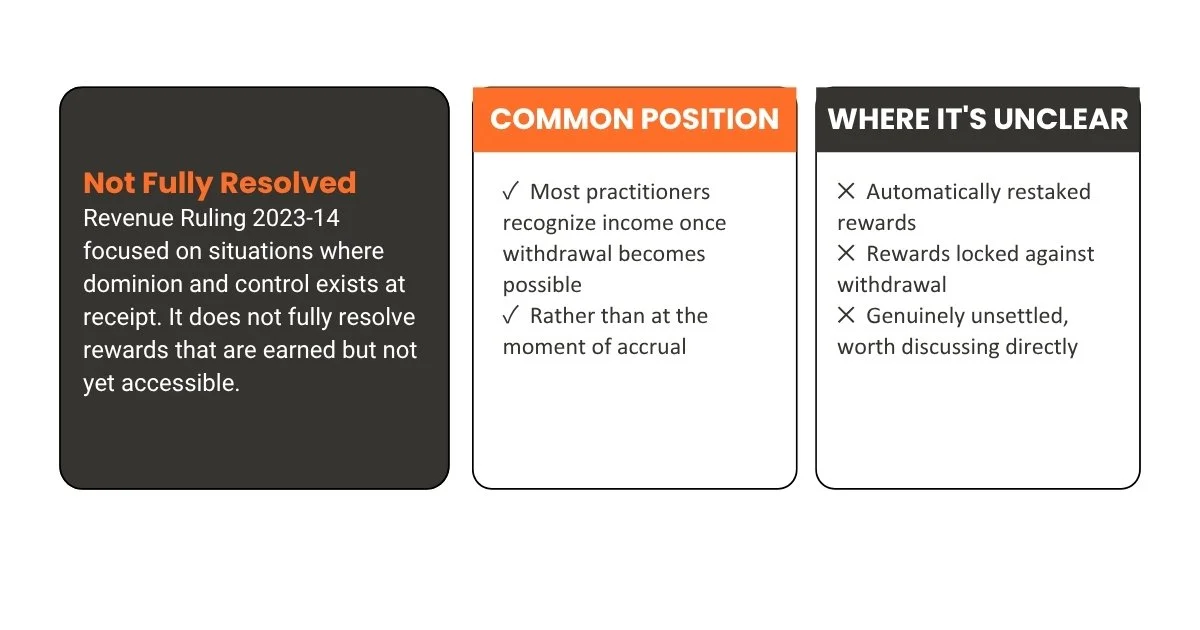
One area where reasonable practitioners disagree: rewards that are automatically restaked or otherwise locked in a way that prevents you from withdrawing them right away. Revenue Ruling 2023-14 focused on situations where dominion and control exists at receipt, but doesn't fully resolve what happens when rewards are technically earned but not yet accessible. Most tax professionals currently advise recognizing the income once withdrawal actually becomes possible, rather than at the moment of accrual, but this is a genuinely unsettled area worth discussing directly given the specifics of how your particular staking arrangement works.
How It Gets Reported
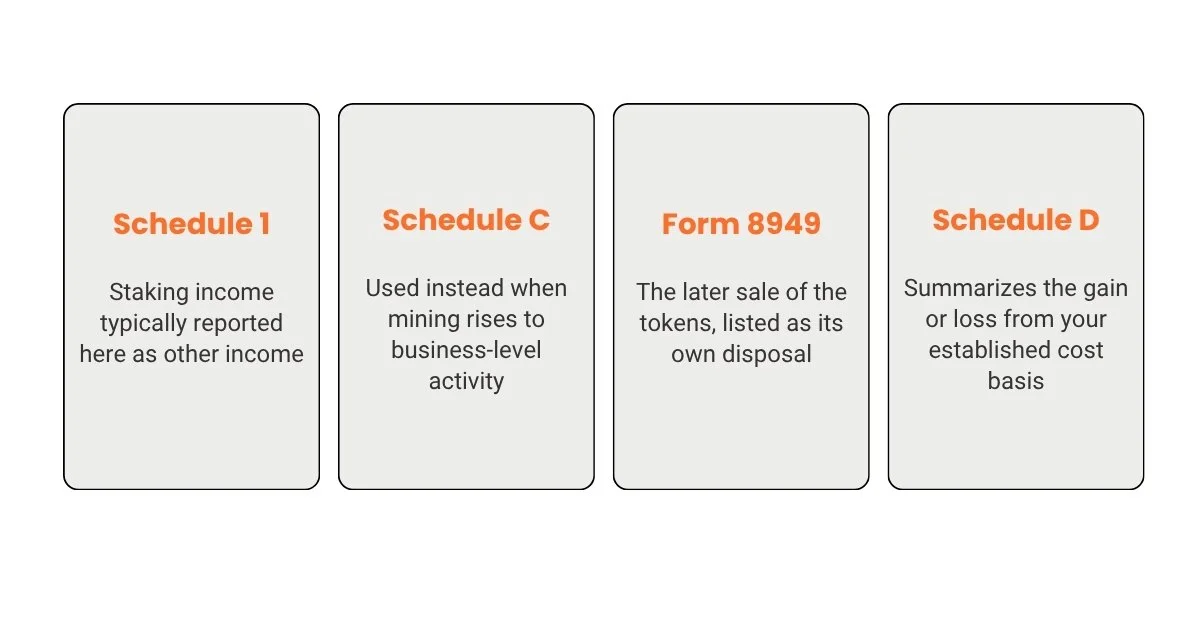
Staking and mining income both get reported as ordinary income for the year received, staking typically on Schedule 1 as other income, or Schedule C if it rises to business-level mining activity. When you later sell the tokens, that's a separate, second taxable event reported on Form 8949 and Schedule D, based on the gain or loss from your already-established cost basis.
Frequently Asked Questions
-
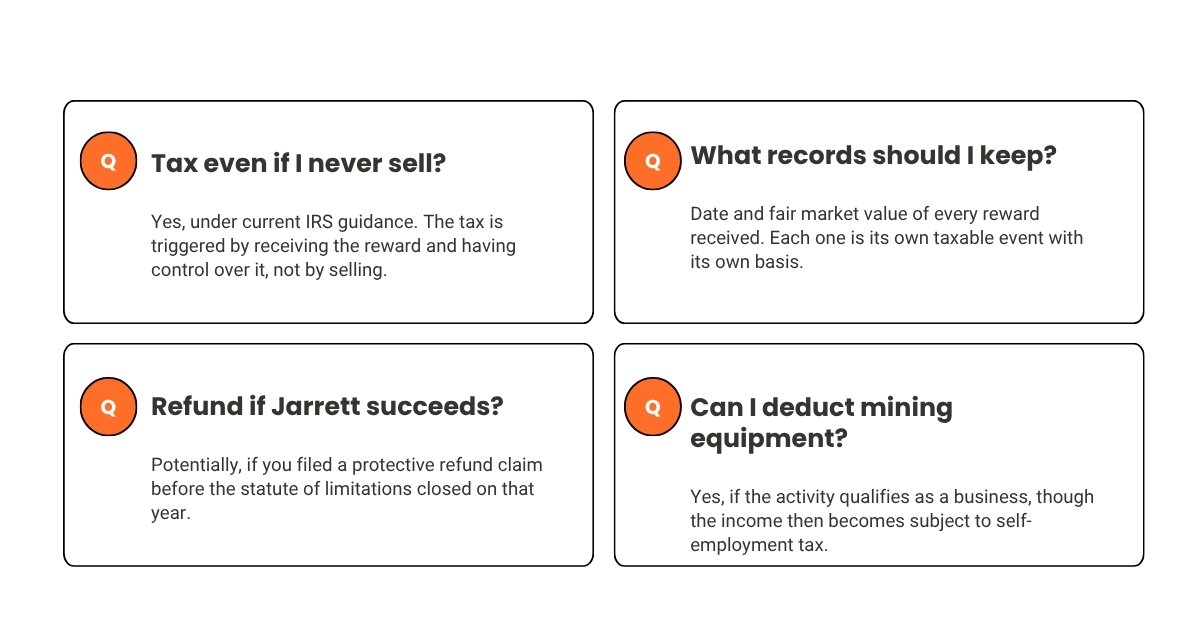
Yes, under current IRS guidance. The tax is triggered by receiving the reward and having control over it, not by selling it. This holds true even for very small reward amounts.
-
Detailed records of the date and fair market value of every reward received, since each one is technically its own taxable event with its own cost basis. For anyone staking or mining regularly, this can mean dozens or hundreds of individual entries over a year, which is where dedicated crypto tax software becomes genuinely useful rather than optional.
-
Potentially, if you've filed a protective refund claim before the statute of limitations closes on the relevant tax year. Without one, recovering previously paid tax if the law changes becomes much harder. This is worth a direct conversation if you have meaningful staking income and want to preserve that option.
-
Yes, if your mining activity qualifies as a business rather than a hobby. Legitimate business expenses, hardware, electricity, and similar costs, become deductible against the income, though the income also becomes subject to self-employment tax in that case.
Staking and mining income create real reporting obligations the moment you receive rewards, not when you eventually sell. A tax professional can help you track this correctly and think through whether a protective refund claim makes sense for your situation.