Self-Employment Tax Explained: Social Security and Medicare for the Self-Employed
If you work for yourself, freelancer, independent contractor, sole proprietor, or single-member LLC owner, you owe self-employment tax on top of regular income tax. It covers the same Social Security and Medicare programs an employer normally withholds from a paycheck, except when you're self-employed, you're on the hook for both the employee and employer share. Here's exactly how it's calculated, and what actually reduces it.

The 15.3 Percent Breakdown
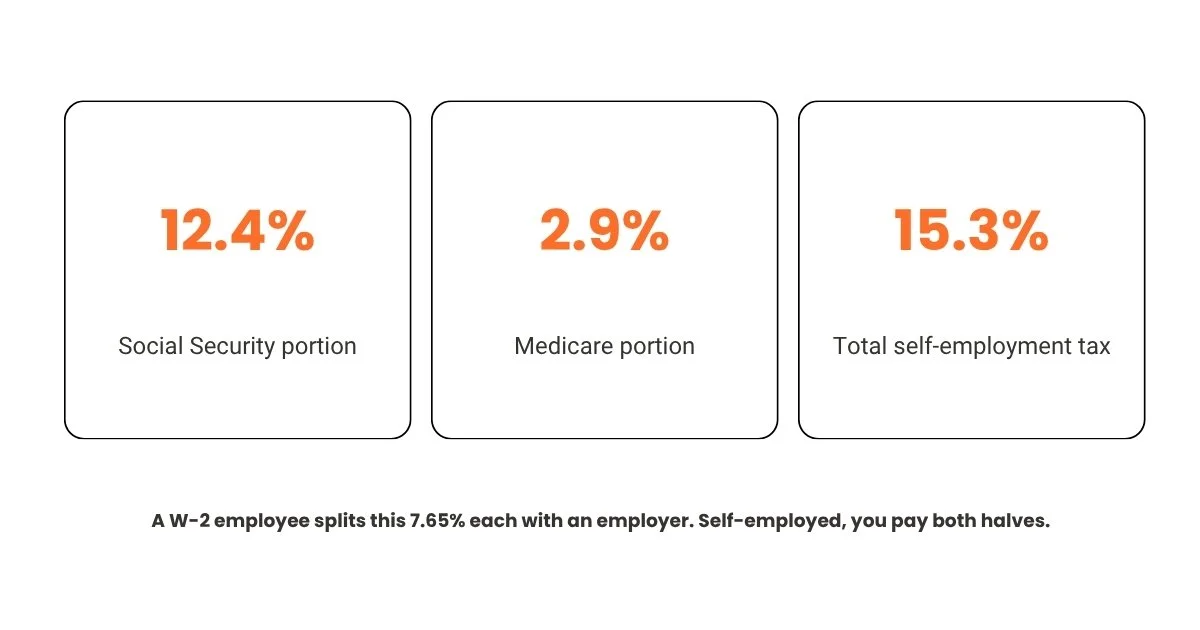
Self-employment tax is 15.3 percent total, made up of two parts: 12.4 percent for Social Security, and 2.9 percent for Medicare. When you work as a W-2 employee, this same 15.3 percent gets split evenly, 7.65 percent from you, 7.65 percent from your employer. As a self-employed person, there's no employer to split it with, so you pay the full 15.3 percent yourself.
You're Only Taxed on 92.35 Percent of Net Earnings
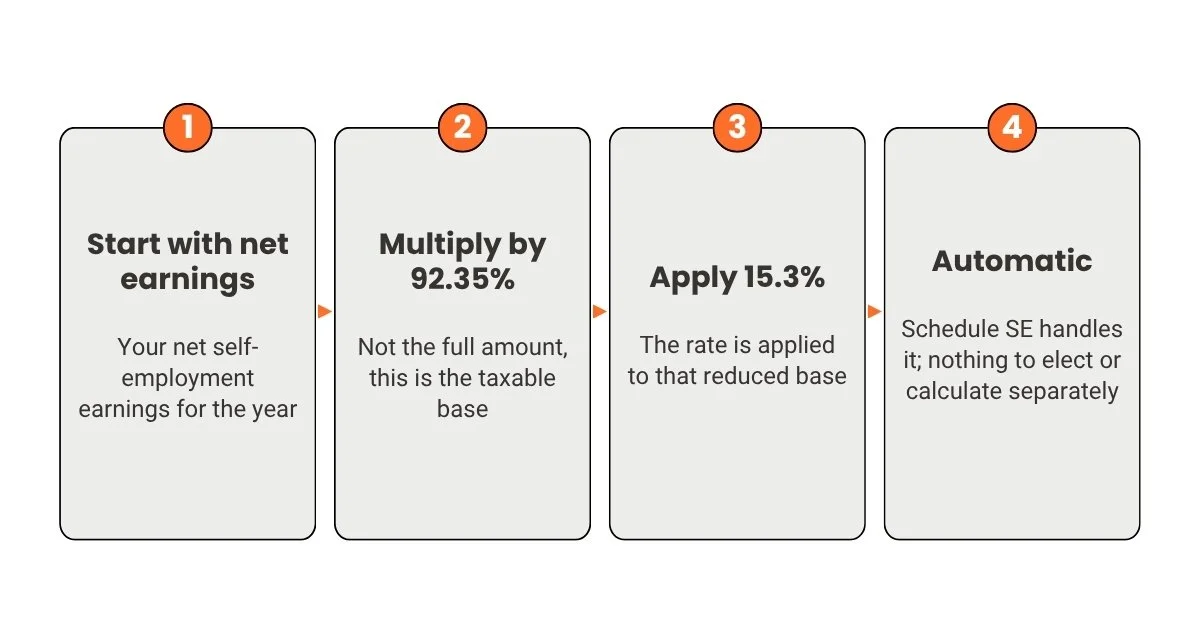
Before applying the 15.3 percent rate, your net self-employment earnings get multiplied by 92.35 percent, not the full amount. This adjustment exists to roughly mirror the fact that a W-2 employee's employer-paid half of FICA isn't counted as the employee's own taxable wages. It's a built-in reduction, not something you have to elect or calculate separately, Schedule SE handles it automatically.
The Social Security Portion Has a Cap, Medicare Doesn't
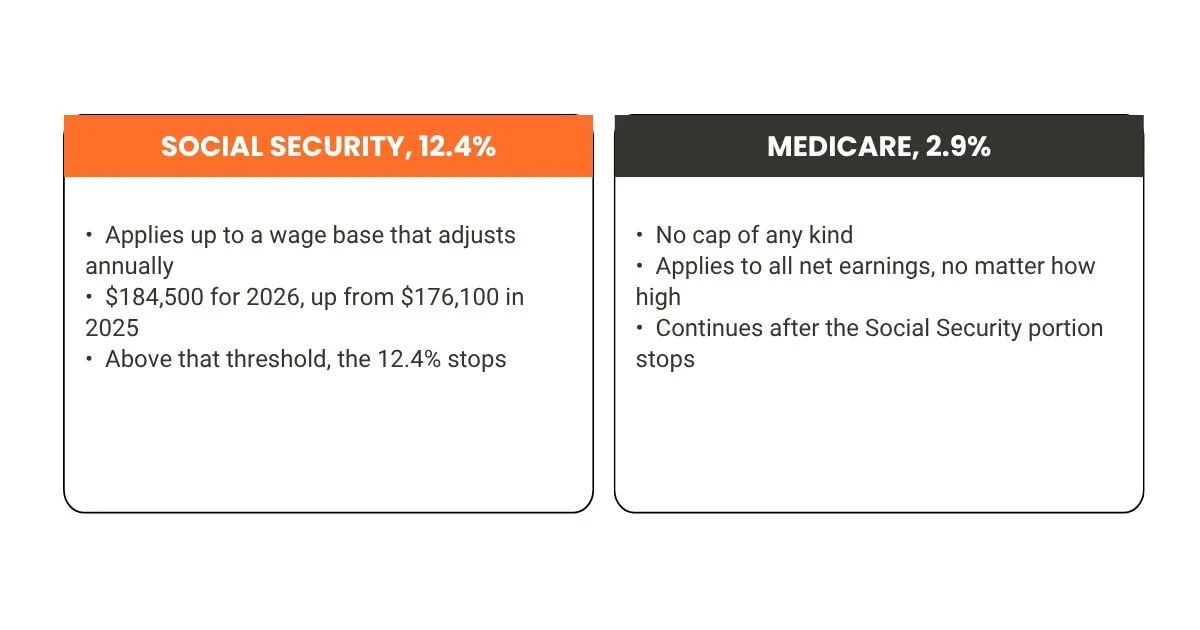
The 12.4 percent Social Security portion only applies up to a wage base that adjusts annually, 184,500 dollars for 2026, up from 176,100 dollars in 2025. Once your combined wages and net self-employment earnings for the year cross that threshold, you stop owing the 12.4 percent portion on anything above it. The 2.9 percent Medicare portion has no such cap, it applies to all of your net earnings, no matter how high.
If you have both a W-2 job and self-employment income in the same year, your W-2 wages count first against that 184,500 dollar cap. So if you earned 150,000 dollars in wages and 100,000 dollars in self-employment income, only 34,500 dollars of your self-employment income would be subject to the 12.4 percent Social Security portion, the remaining self-employment income would only owe the 2.9 percent Medicare portion.
The Additional Medicare Tax for Higher Earners
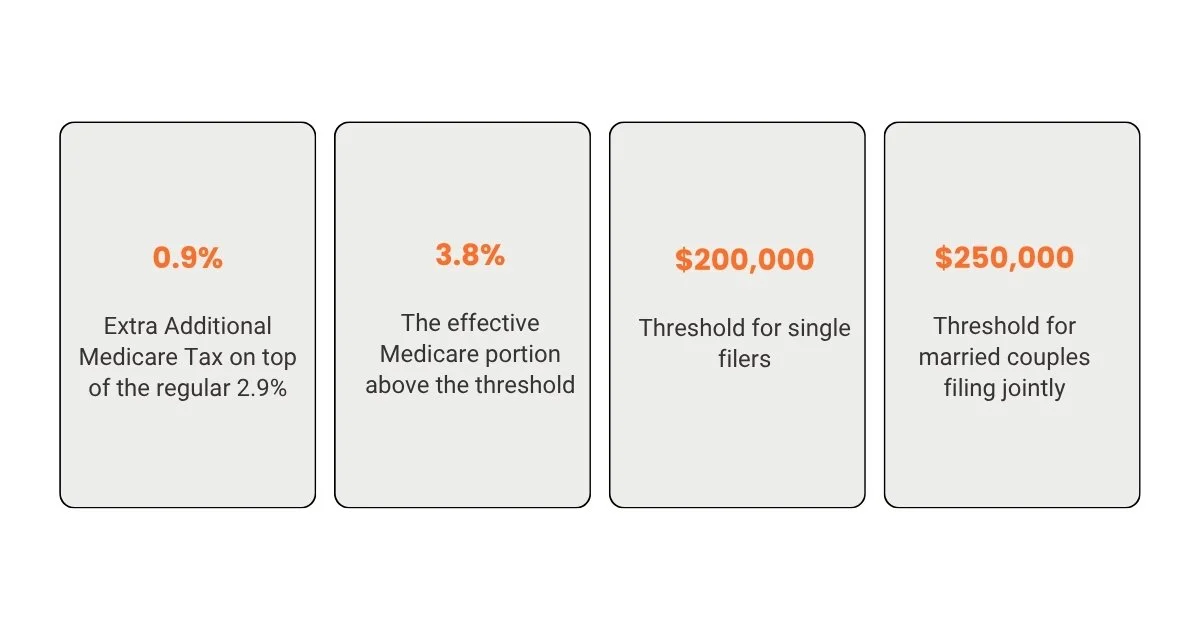
Above a certain income level, an extra 0.9 percent Additional Medicare Tax applies on top of the regular 2.9 percent, bringing the Medicare portion to 3.8 percent above the threshold. That threshold is 200,000 dollars for single filers, or 250,000 dollars for married couples filing jointly. Unlike the Social Security wage base, these thresholds are fixed by statute and don't adjust for inflation each year, which is a detail worth knowing since it means more people cross this line over time as incomes rise, even without a change in the law.
The Deduction That Softens the Blow
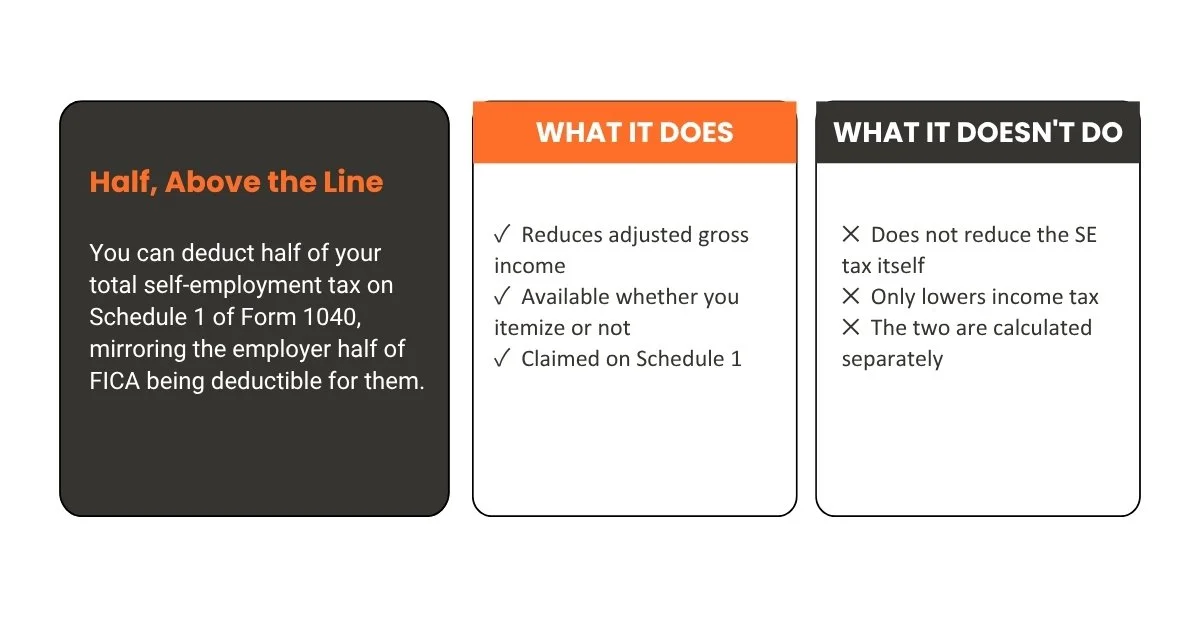
You can deduct half of your total self-employment tax as an above-the-line deduction on Schedule 1 of your Form 1040. This reduces your adjusted gross income regardless of whether you itemize or take the standard deduction, and it mirrors the fact that an employer's half of FICA is a deductible business expense for them. Important to note: this deduction lowers your income tax, it does not reduce the self-employment tax itself, those are calculated separately.
A Worked Example
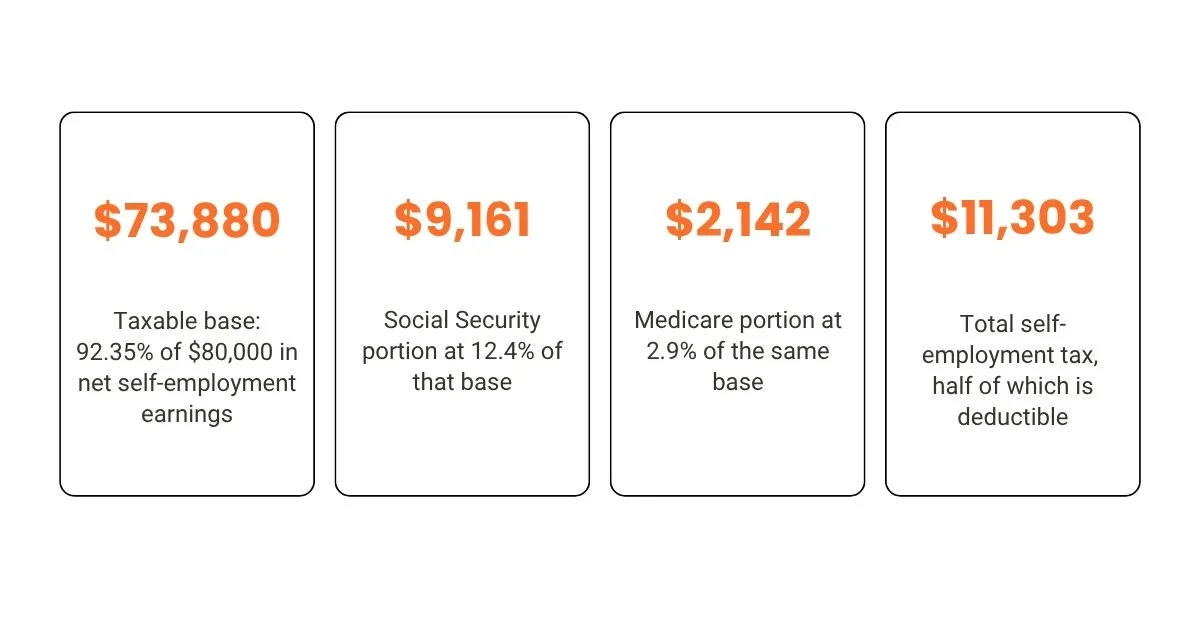
Say you have 80,000 dollars in net self-employment earnings for the year, no other wage income. Your taxable base for SE tax purposes is 92.35 percent of that, 73,880 dollars. Social Security tax is 12.4 percent of that base, 9,161 dollars. Medicare tax is 2.9 percent of the same base, 2,142 dollars. Total self-employment tax comes to roughly 11,303 dollars. You'd then deduct half of that, about 5,652 dollars, from your income before calculating regular income tax.
Frequently Asked Questions
-
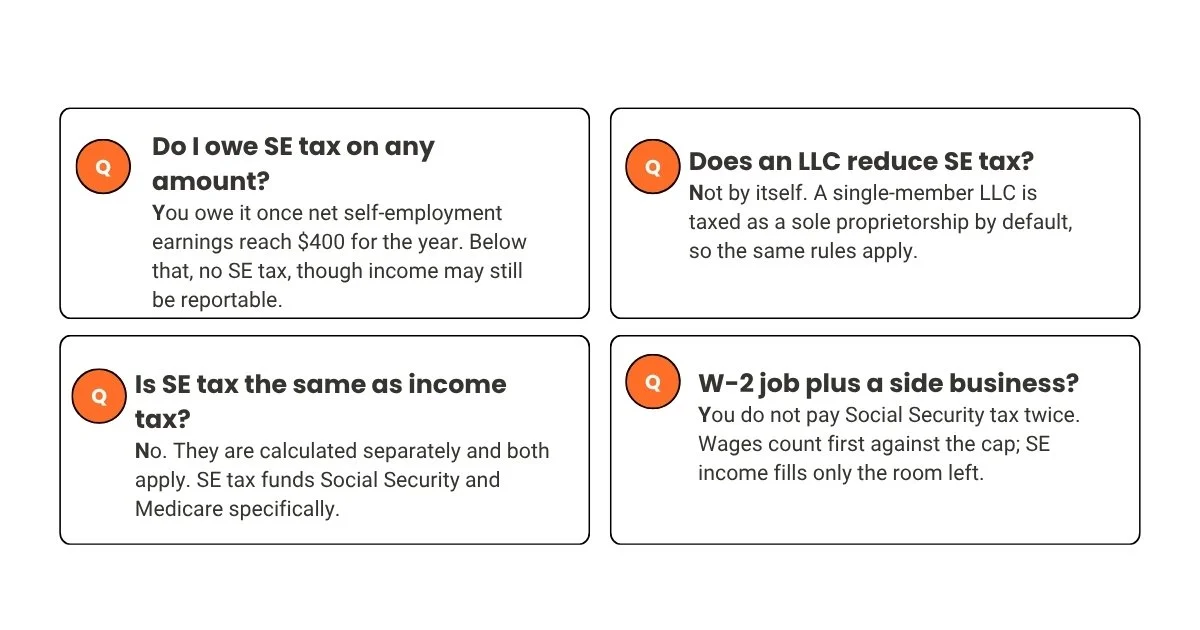
You owe self-employment tax once your net self-employment earnings for the year reach 400 dollars or more. Below that threshold, no SE tax is owed, though the income may still be reportable for other purposes.
-
Not by itself. A single-member LLC is taxed as a sole proprietorship by default, so the same self-employment tax rules apply exactly as they would without the LLC. Electing S corp tax treatment can reduce the amount subject to payroll-style tax, which we cover in our S corp vs. LLC guide, but that's a separate election, not something the LLC structure does automatically.
-
No, they're calculated separately and both apply. Self-employment tax funds Social Security and Medicare specifically. Income tax is calculated on your total taxable income, including your net business profit, at your regular tax brackets. Most self-employed people owe both.
-
No. Your W-2 wages count first against the annual Social Security wage base. Your self-employment income only gets taxed for the Social Security portion on whatever room remains below that cap, not on top of what your wages already used up.
Self-employment tax is one of the biggest and most predictable costs of working for yourself. A tax professional can help you plan for it accurately and make sure you're not missing ways to reduce your overall bill.