How to Elect S Corporation Status with Form 2553
Deciding that S corp election makes sense for your business is only half the process. Actually making it happen requires filing Form 2553 by a specific deadline, with specific information, mailed or faxed to the right place, not e-filed.
Miss the window and the election doesn't take effect until the following year, unless you qualify for relief. Here's exactly how the timing and filing work.

The Standard Deadline
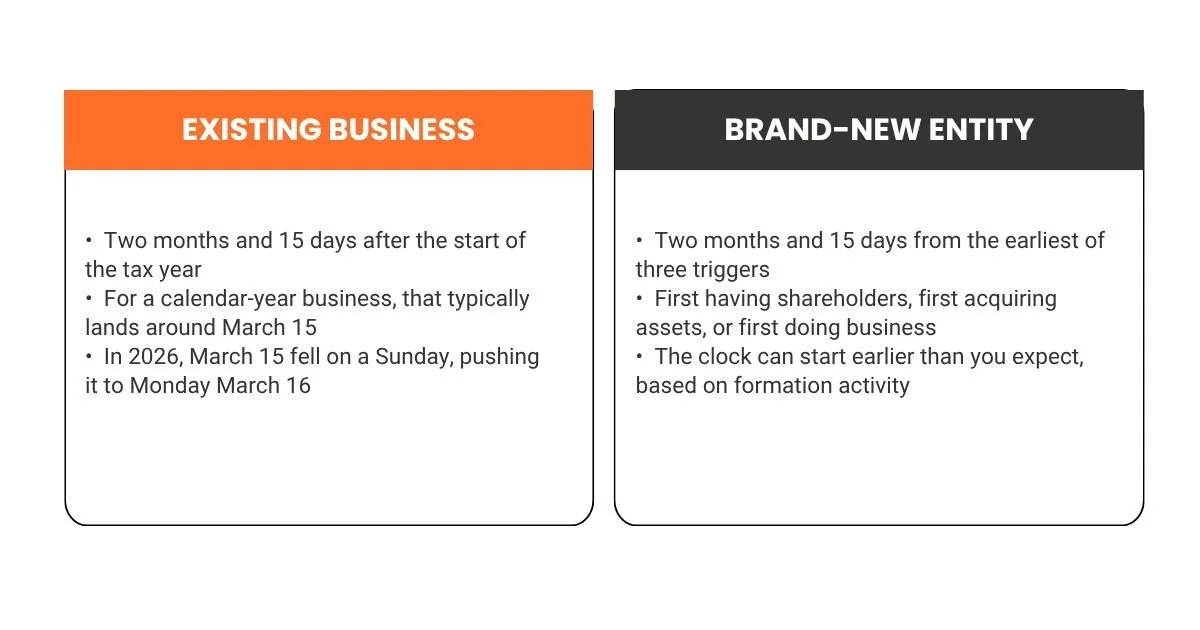
For an existing business wanting S corp treatment starting with the current tax year, Form 2553 generally has to be filed within two months and 15 days after the start of that tax year. For a calendar-year business wanting the election effective January 1, that typically lands around March 15, though the exact date shifts slightly depending on weekends. In 2026, for example, March 15 fell on a Sunday, pushing the actual deadline to Monday, March 16.
A brand-new entity works differently. It gets two months and 15 days from the earliest of three trigger events: the date it first has shareholders, the date it first acquires assets, or the date it first starts doing business, whichever comes first. This means the clock can start running before you might expect, based on formation activity rather than a calendar year boundary.
What the Form Actually Requires
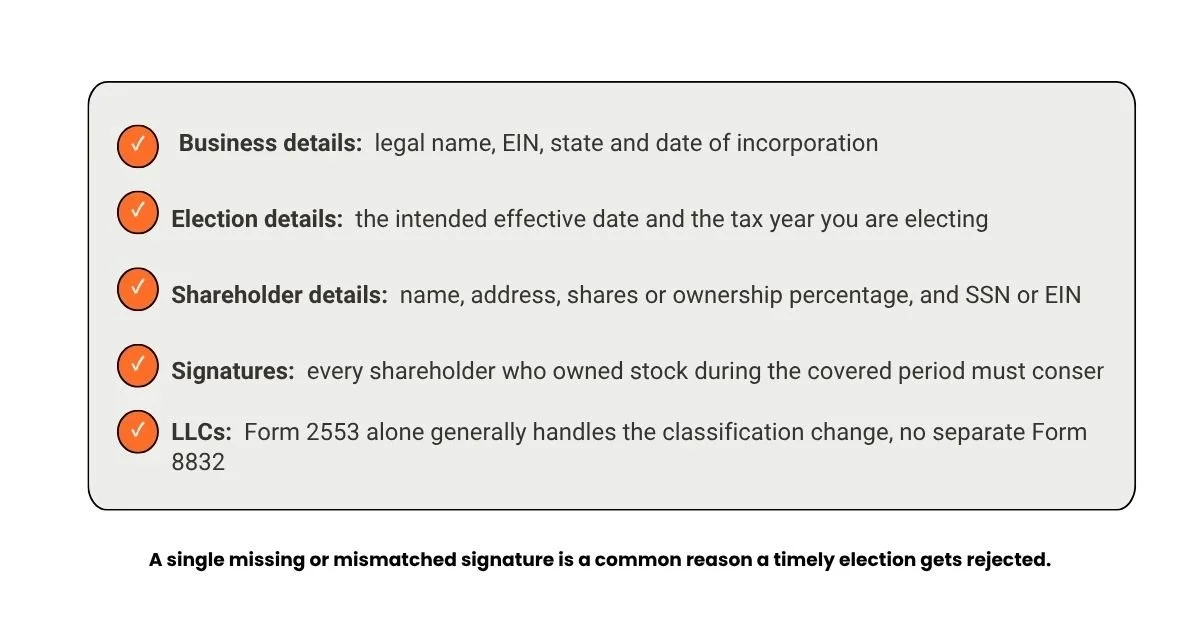
Form 2553 asks for the business's legal name, EIN, state and date of incorporation, the intended effective date of the election, the tax year you're electing, and information for every shareholder, name, address, number of shares or percentage of ownership, and Social Security number or EIN. Every shareholder who owned stock at any point during the period covered has to sign consenting to the election, not just current owners if there's been a change.
A single missing or mismatched signature is one of the most common reasons an otherwise timely election gets rejected or delayed.
For an LLC electing S corp treatment, Form 2553 alone generally handles the underlying entity classification change, a separate Form 8832 usually isn't required first, the relevant section of Form 2553 covers it.
How to Actually File It
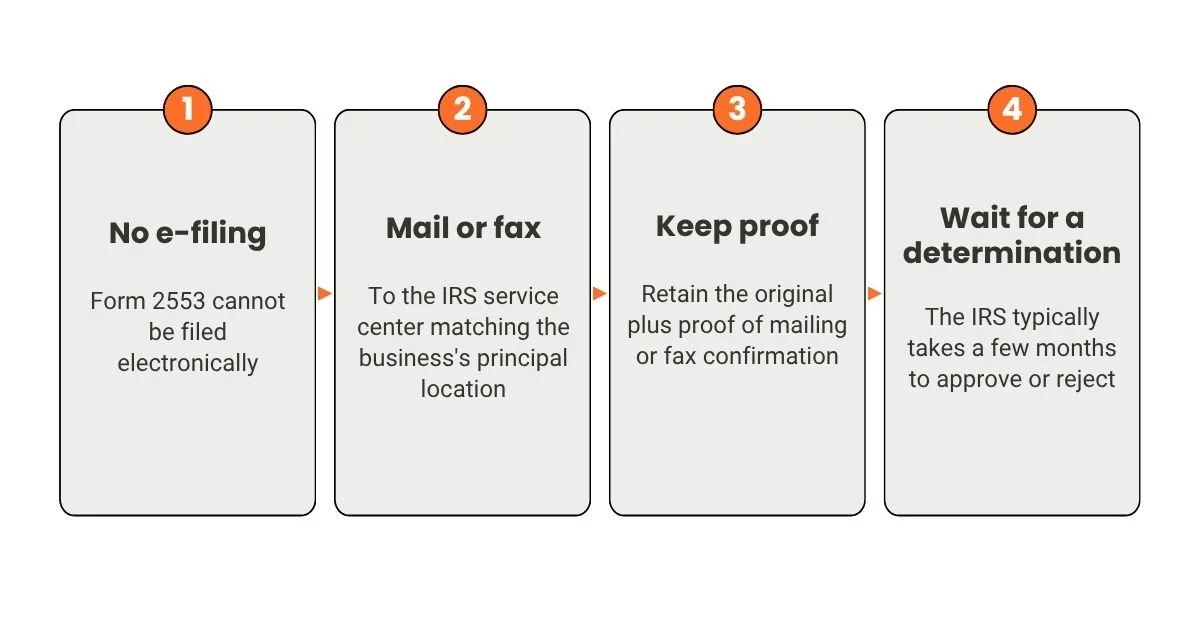
Form 2553 can't be filed electronically. It has to be mailed or faxed to the IRS service center that corresponds to the business's principal location, and the specific address or fax number depends on where the business is based.
Keep the original, along with proof of mailing or fax confirmation, in your permanent business records. The IRS typically takes a few months to respond with a formal determination, either an approval or, less commonly, a rejection that requires understanding why before refiling.
If You Miss the Deadline
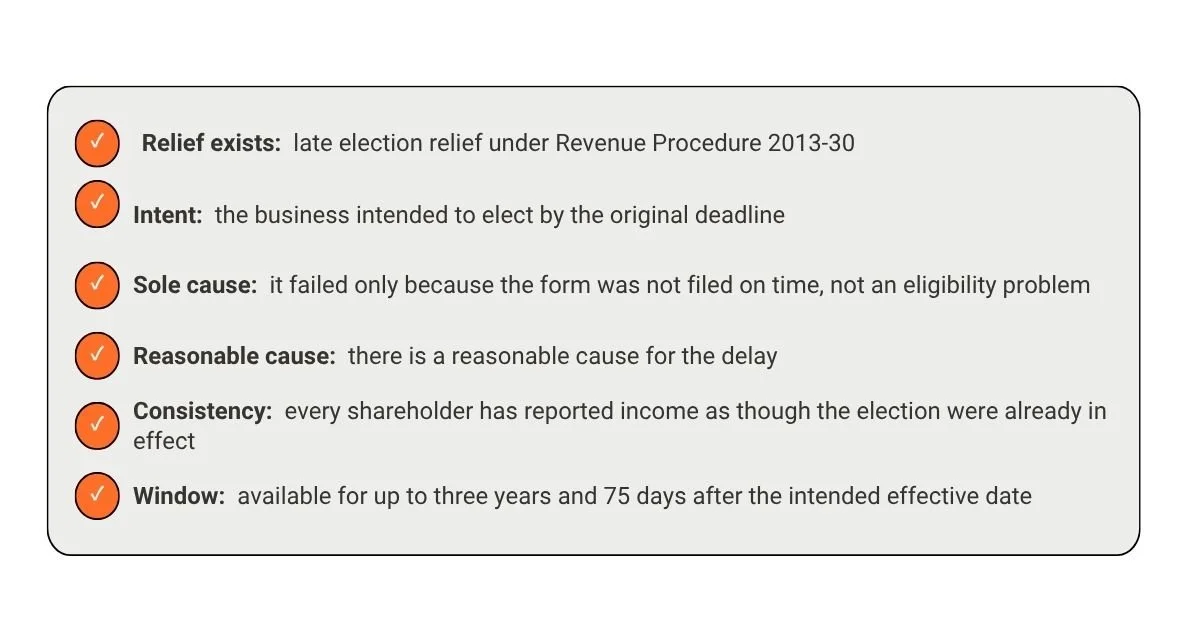
Missing the standard deadline doesn't necessarily mean waiting an entire extra year. The IRS offers late election relief under Revenue Procedure 2013-30, available if the business intended to elect S corp status by the original deadline, failed to qualify solely because the form wasn't filed on time, not for a separate eligibility problem like an ineligible shareholder, has reasonable cause for the delay, and every shareholder has been reporting income consistently as though the election had already been in effect.
This relief is available for up to three years and 75 days after the originally intended effective date. We cover the full mechanics of requesting this relief, including exactly how to document reasonable cause, in our dedicated late S corp election guide.
Frequently Asked Questions
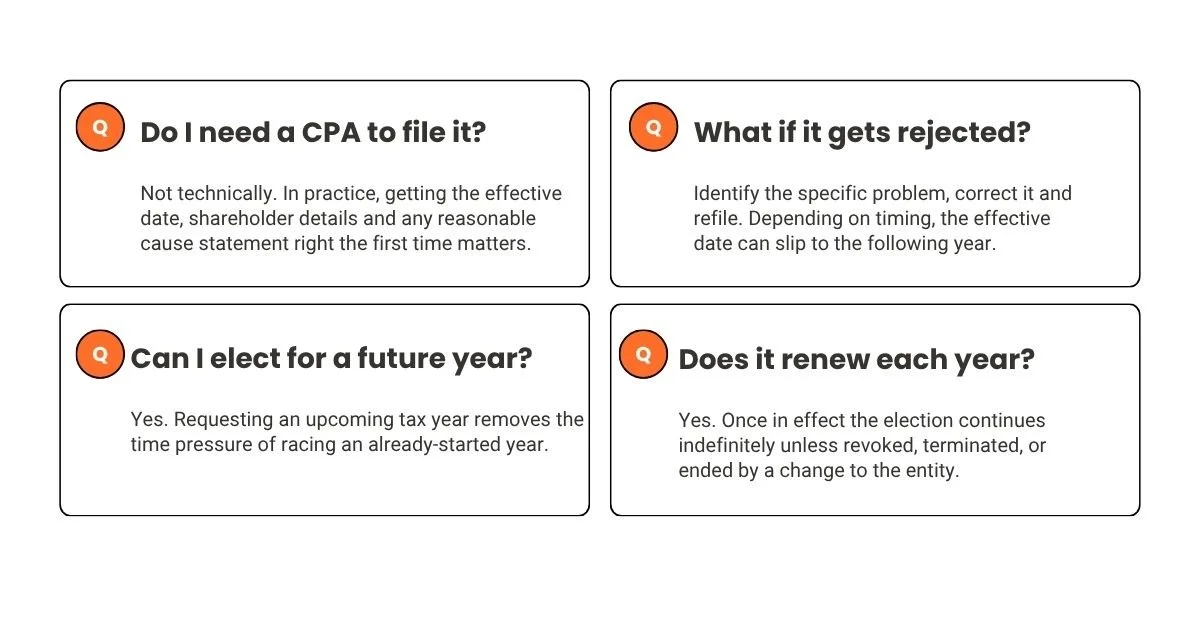
-
Not technically, the form itself doesn't require professional preparation.
In practice, getting the effective date, shareholder information, and any reasonable cause statement right the first time matters enough that professional help is worth it, especially since a late or defective election can have real financial consequences if it's rejected.
-
You'll typically need to identify the specific problem, an eligibility issue, a missing signature, an incomplete section, correct it, and refile.
Depending on timing, this can push your effective date to the following year unless the correction happens quickly enough or you separately qualify for late election relief.
-
Yes. You can file Form 2553 requesting an effective date for the upcoming tax year rather than the current one, which removes the time pressure of the standard deadline since you're not racing an already-started tax year.
-
Yes. Once the election is in effect, it continues indefinitely without needing to be refiled annually, unless it's formally revoked, terminated due to an eligibility failure, or the entity itself changes in a way that ends the election.