Passive Activity Loss Rules Explained for Rental Property Owners
A rental property that loses money on paper doesn't necessarily lower your tax bill the way you'd expect. The passive activity loss rules, one of the most consequential and misunderstood parts of the tax code for real estate investors, often trap that loss on your return instead of letting it offset your salary. Here's how the rules actually work, and the two main ways around them.

Why These Rules Exist
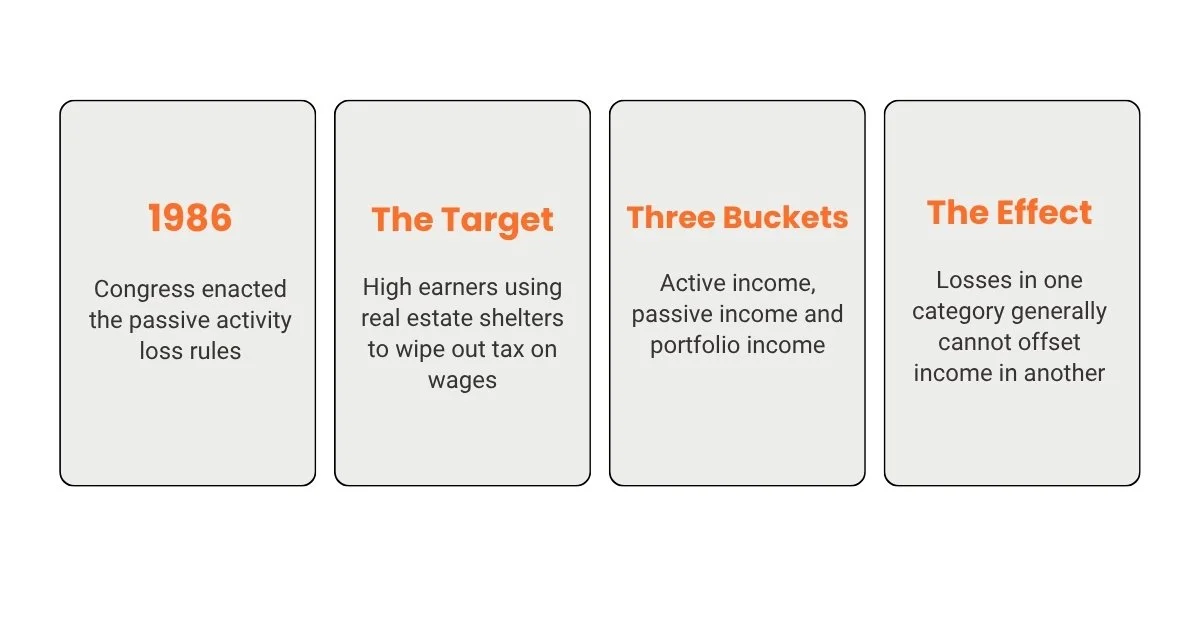
Congress enacted the passive activity loss rules in 1986, specifically to stop high earners from using real estate tax shelters to wipe out tax on wages and other active income. The rules sort income into categories, active income like wages and self-employment earnings, passive income like rental real estate, and portfolio income like interest and dividends, and generally prevent losses in one category from offsetting income in another.
The Basic Rule: Passive Losses Only Offset Passive Income
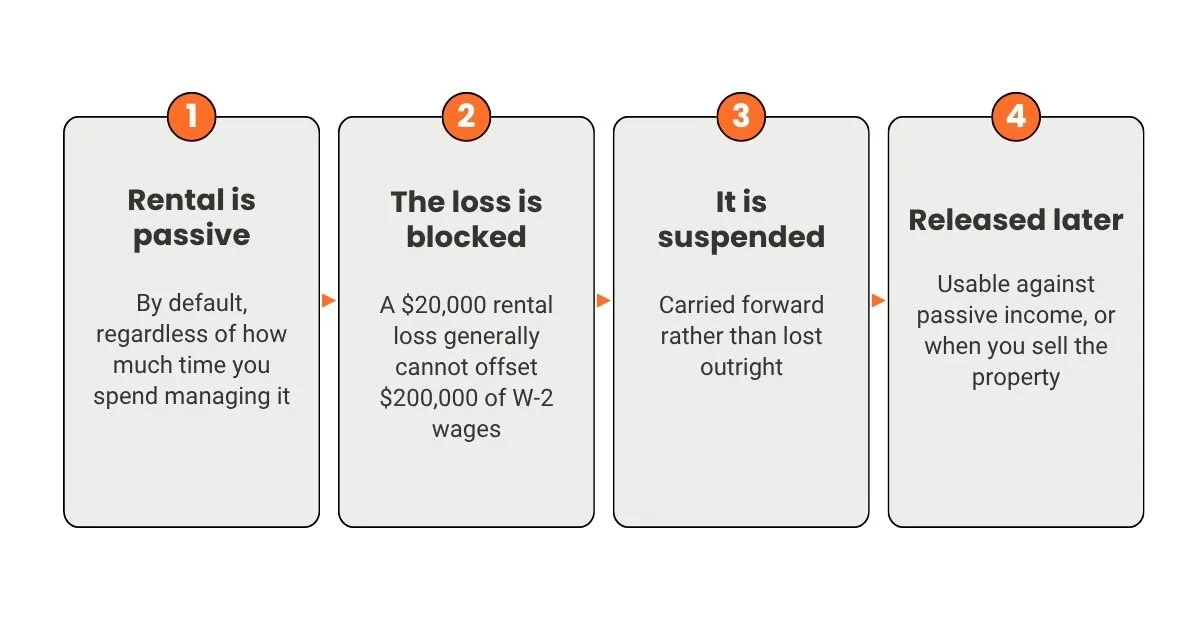
Rental real estate is, by default, treated as a passive activity, regardless of how much time you personally spend managing it. If you earn 200,000 dollars in W-2 wages and your rental generates a 20,000 dollar loss for the year, you generally can't deduct that 20,000 dollars against your wages. Instead, it becomes a suspended passive loss, carried forward to future years rather than lost outright, usable once you have passive income to offset, or when you eventually sell the property.
The $25,000 Special Allowance
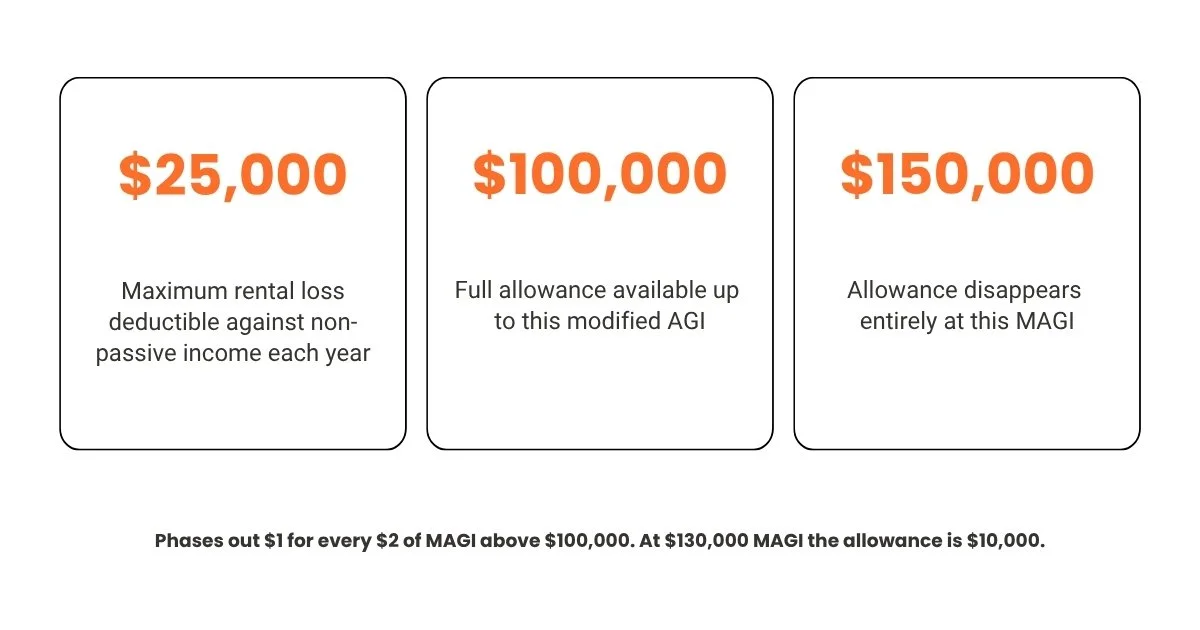
There's a meaningful exception built into the rules. Under IRC Section 469(i), if you actively participate in a rental real estate activity, meaning you're involved in management decisions like approving tenants or setting rental terms, even without meeting the higher material participation bar, you can deduct up to 25,000 dollars of rental losses against your non-passive income each year.
This allowance phases out as income rises. It's available in full up to 100,000 dollars of modified adjusted gross income, then reduces by 1 dollar for every 2 dollars of MAGI above that, disappearing entirely once MAGI reaches 150,000 dollars. At 130,000 dollars of MAGI, for example, the allowance shrinks to 10,000 dollars. This phase-out is exactly why a lot of higher-earning W-2 professionals find themselves unable to use this exception at all, even though it exists.
The Real Estate Professional Escape Hatch
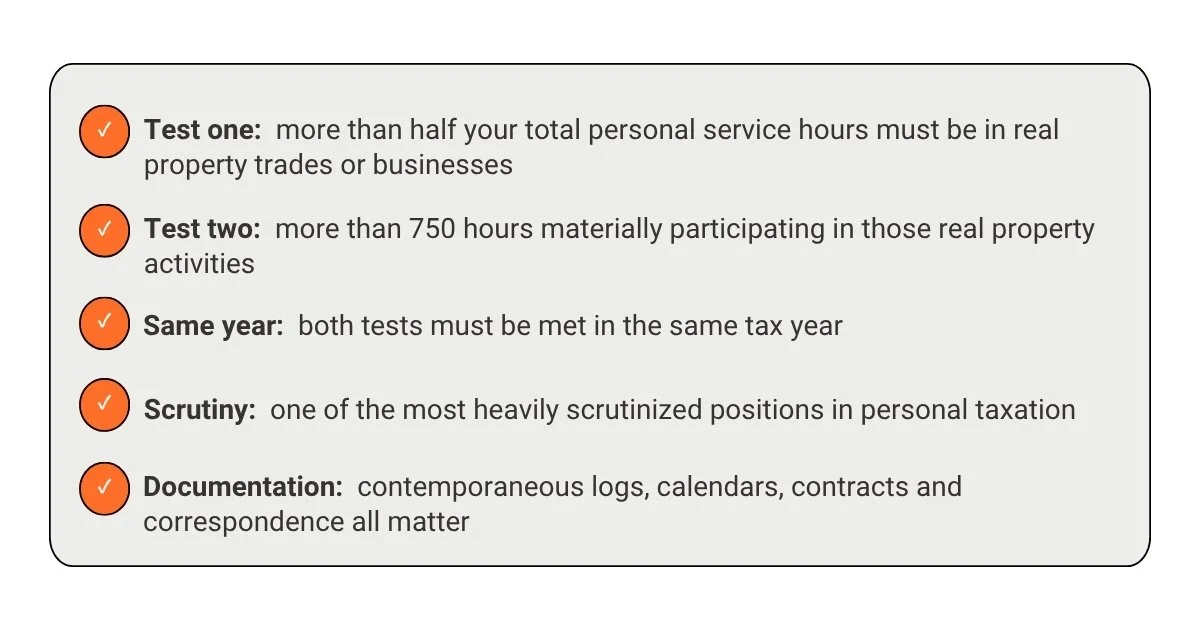
If your income is too high for the 25,000 dollar allowance, the only remaining way to deduct rental losses against ordinary income is qualifying as a real estate professional under IRC Section 469(c)(7). This requires meeting two tests in the same tax year: more than half of your total personal service hours across all activities have to be in real property trades or businesses, and you have to spend more than 750 hours materially participating in those real property activities.
This status is genuinely valuable for high earners, and it's also one of the most heavily scrutinized positions in personal taxation. The IRS looks closely at whether the hours claimed are real and well documented, contemporaneous logs, calendars noting specific tasks, and supporting records like contracts and correspondence all matter significantly if this position is ever questioned.
The Multi-Property Trap
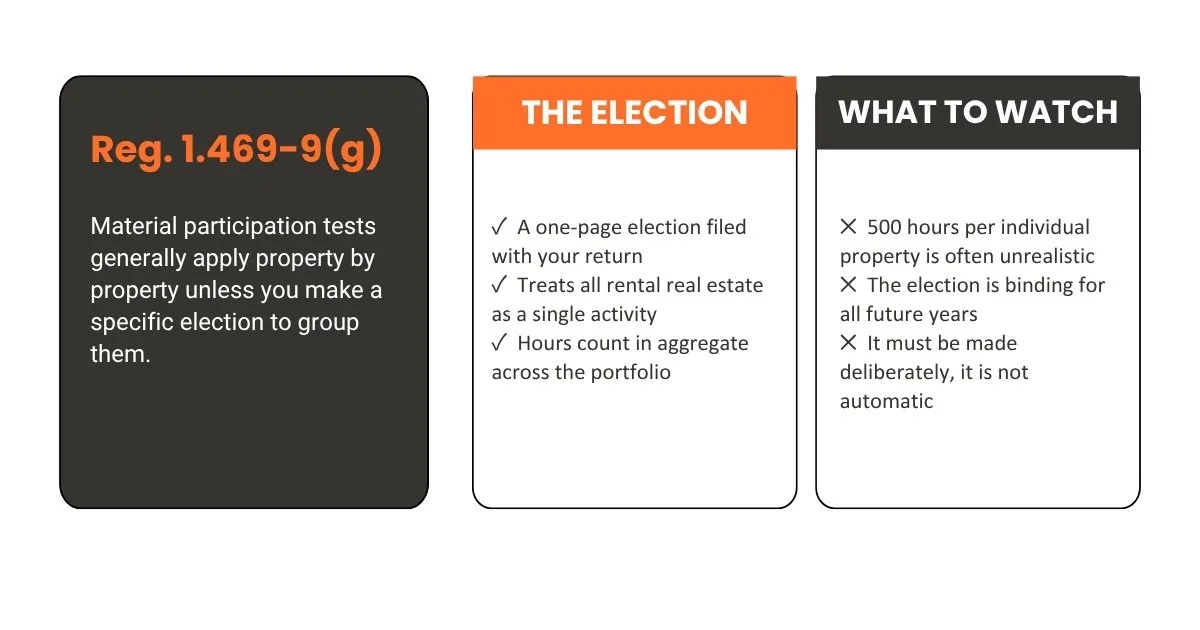
Here's a detail that catches investors with more than one rental off guard. Material participation tests generally apply property by property unless you make a specific election. For an investor with several rental units, meeting the 500-hour material participation threshold separately on each individual property is often unrealistic. A one-page election under Treasury Regulation Section 1.469-9(g), filed with your return, lets you treat all your rental real estate as a single combined activity, so your hours count in aggregate across the whole portfolio rather than being tested property by property. Two things worth knowing about this election: it's binding for all future years unless a specific circumstance allows revocation, and it needs to be made deliberately, it isn't automatic.
A Simple Example
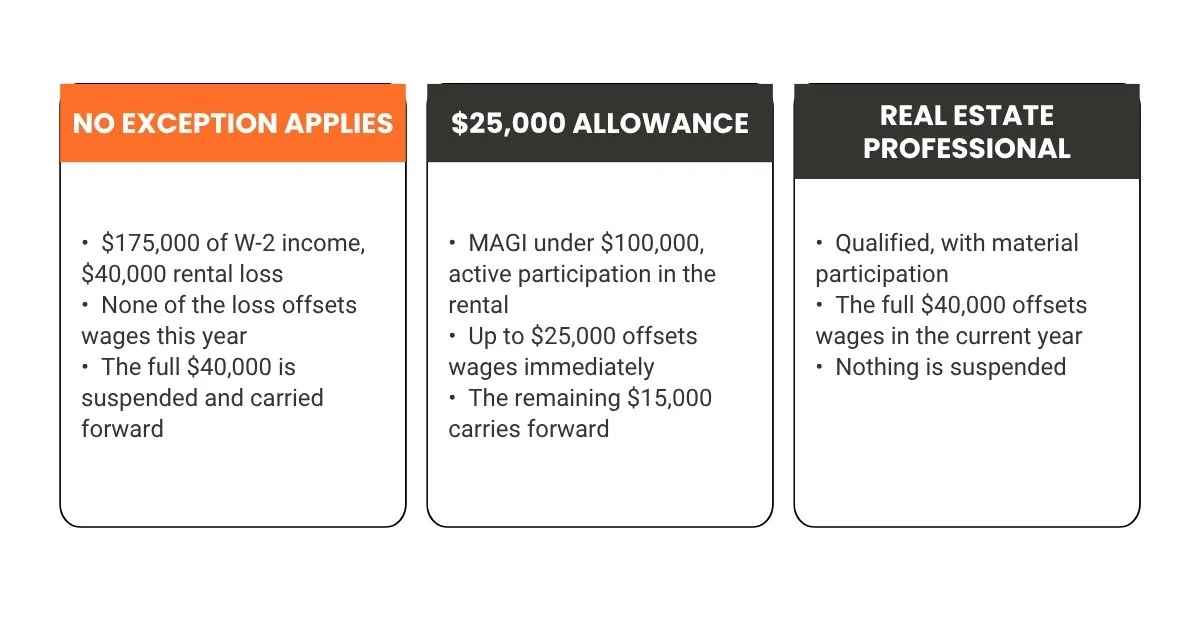
Say you have 175,000 dollars in W-2 income and a rental property that generates a 40,000 dollar loss this year. Without qualifying for an exception, none of that 40,000 dollars offsets your wages this year, it becomes a suspended loss carried forward. If your MAGI were instead under 100,000 dollars and you actively participate in the rental, up to 25,000 dollars of that loss could offset your wages immediately, with the remaining 15,000 dollars carried forward. If you qualified as a real estate professional with material participation, the full 40,000 dollars could offset your wages in the current year.
Frequently Asked Questions
-
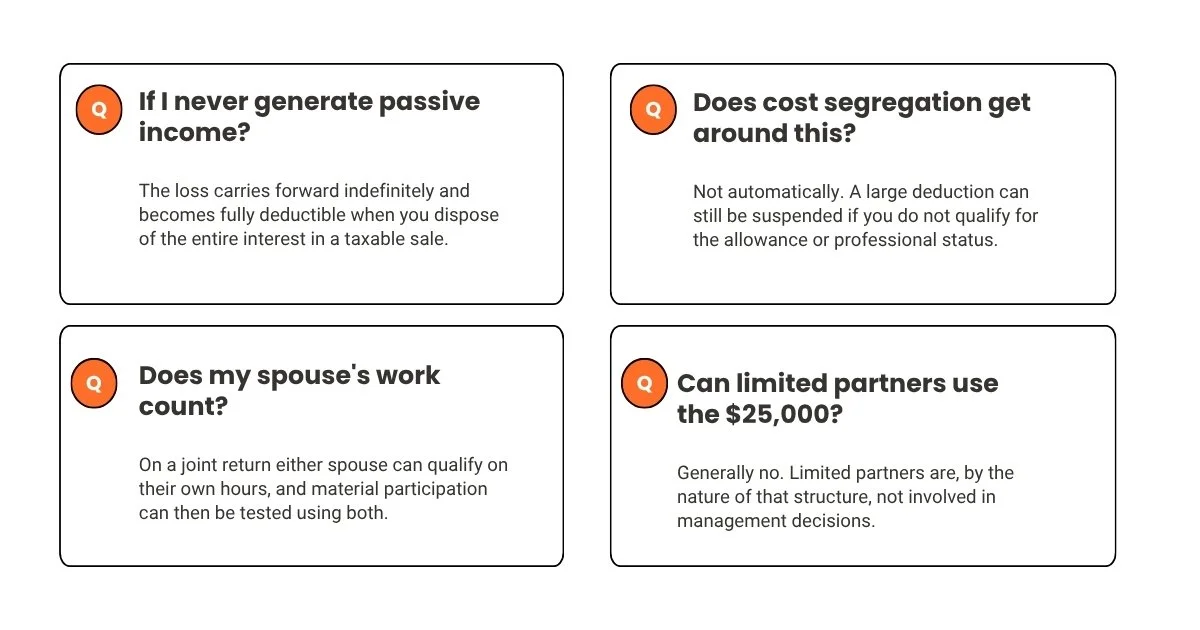
It carries forward indefinitely and becomes fully deductible in the year you dispose of the entire interest in the activity in a fully taxable transaction, typically when you sell the property outright.
-
Not automatically. A large deduction from a cost segregation study on a property you don't materially participate in can still get suspended under these same rules if you don't otherwise qualify for the 25,000 dollar allowance or real estate professional status. The deduction isn't lost, but its immediate value can be significantly delayed. This is worth coordinating directly with a tax professional before assuming a large depreciation deduction will offset your other income right away.
-
On a joint return, either spouse can independently qualify as a real estate professional based on their own hours, and if one spouse qualifies, the material participation requirement can be tested using the combined participation of both spouses in the specific rental activity.
-
Generally no. The active participation standard required for the 25,000 dollar allowance is typically not met by limited partnership interests, since limited partners are, by the nature of that structure, generally not involved in management decisions.
Whether your rental losses are usable this year or trapped until you sell can come down to income thresholds and documentation most investors don't realize matter. A tax professional can help you plan around these rules before the loss happens, not after.