The overall odds of being audited are low, roughly 0.4 percent of individual returns, about 4 in 1,000. But that average number hides a lot of variation. Certain income levels, deduction patterns, and reporting mismatches push the real odds meaningfully higher, and the IRS's tools for catching them have gotten sharper, not weaker, even as the agency's staff has shrunk. Here's what actually moves the needle.

Audits Are Mostly Not What You Picture
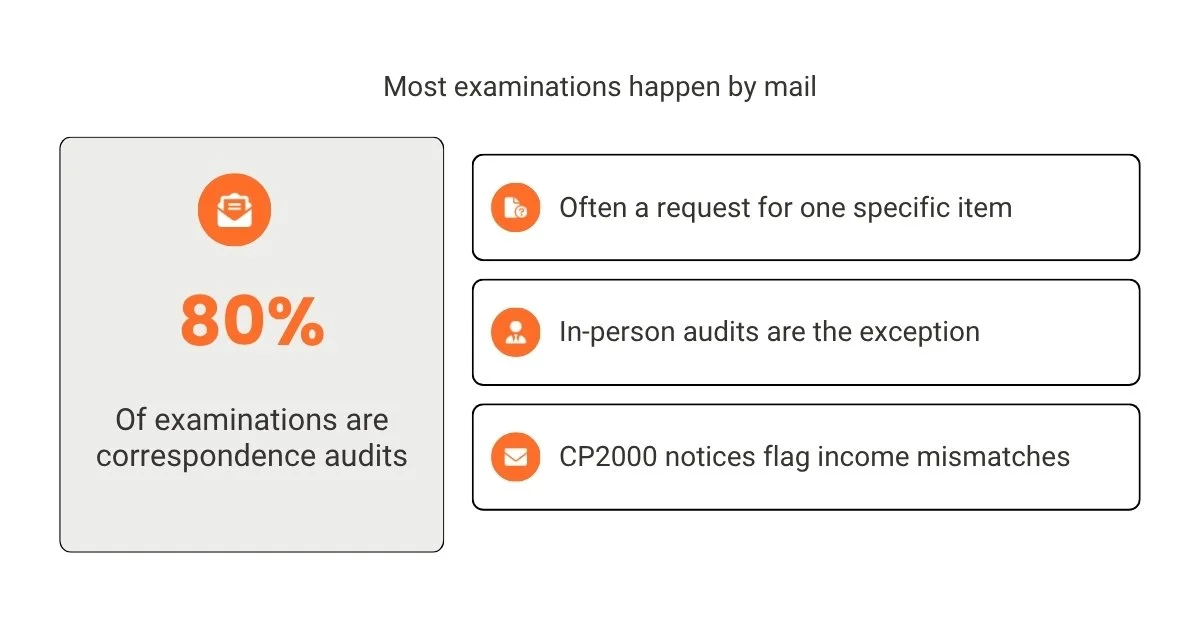
When people imagine an audit, they usually picture an in-person meeting with an IRS agent. In practice, that's the exception. Roughly 80 percent of examinations happen through correspondence, meaning by mail, often starting as a request for documentation on a specific item rather than a full review of the return. A related but distinct process is the automated underreporter program, which compares your return against W-2s, 1099s, and other third-party records and sends a CP2000 notice proposing a change if something doesn't match. A CP2000 isn't technically an audit, but it functions like one in practice and stems from the same underlying data-matching that drives audit selection.
The IRS Now Runs on AI, Not Just Random Selection
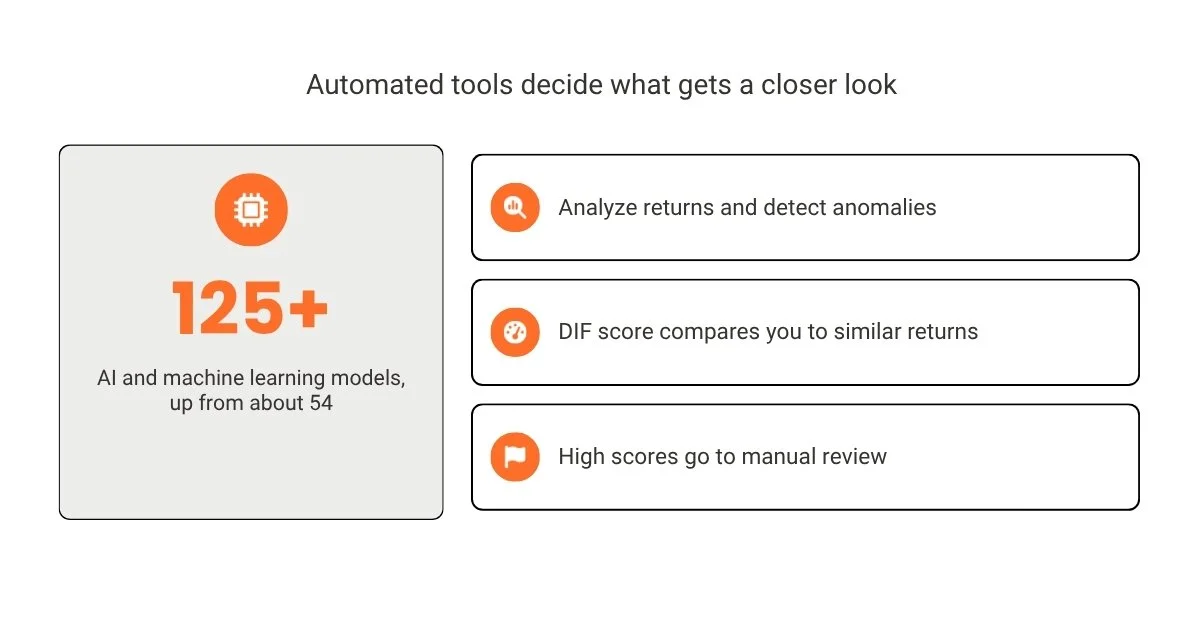
The agency's return-selection process has changed meaningfully in recent years. The IRS has deployed more than 125 artificial intelligence and machine learning models to analyze returns, detect anomalies, and prioritize enforcement, up sharply from around 54 such models just a couple of years earlier, even as the agency's overall staffing has declined significantly. Every return is also assigned a Discriminant Information Function score, an automated comparison against statistical norms for similar income levels and return types, and returns that score unusually high get flagged for closer manual review.
Income Level Is the Single Biggest Factor
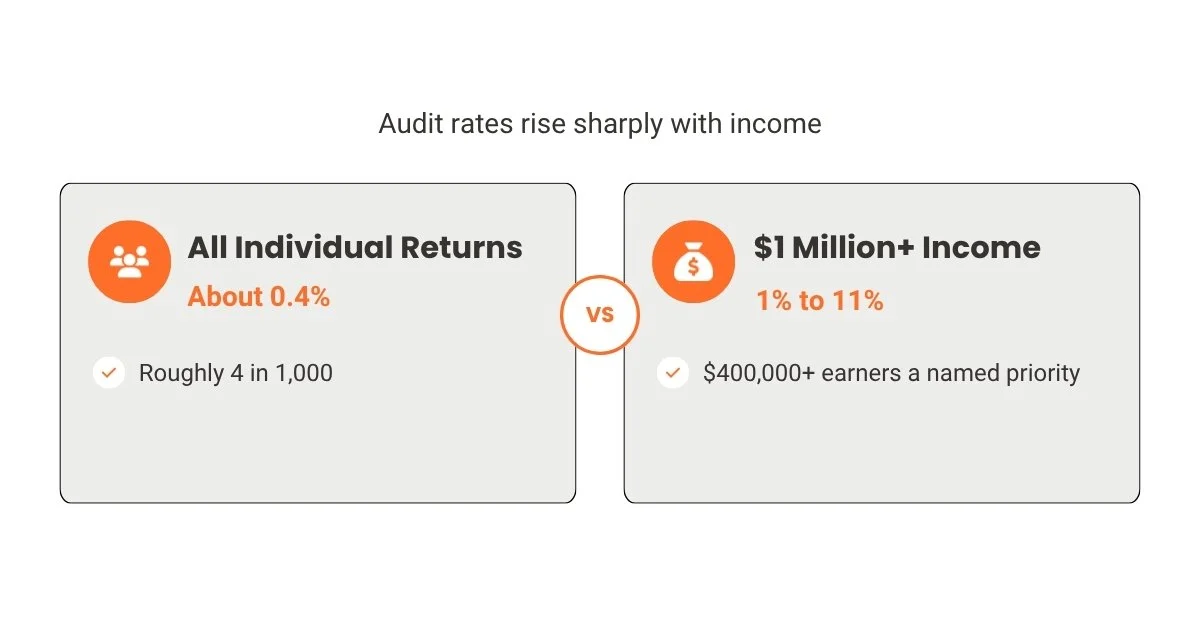
Audit rates rise sharply with income. While the overall individual audit rate sits around 0.4 percent, taxpayers reporting over 1 million dollars in income face audit rates in the range of 1 to 11 percent, a dramatically different picture than the headline average suggests. The IRS has also specifically flagged high-income earners, generally those above 400,000 dollars annually, as a heightened enforcement priority in recent guidance.
Self-Employment and Schedule C Income
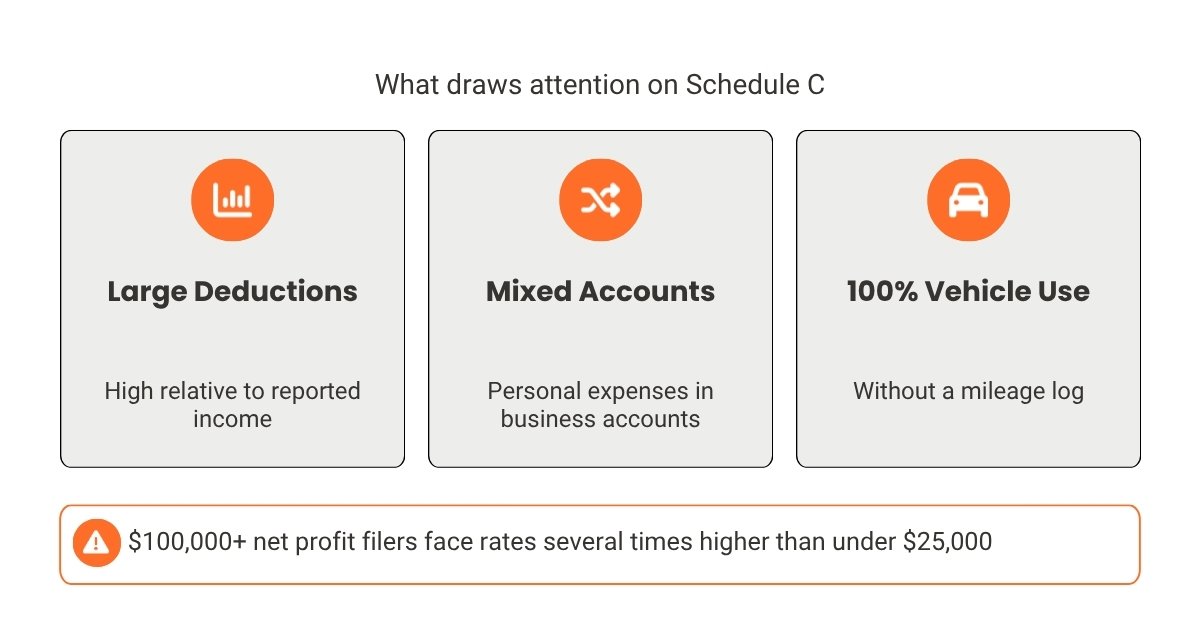
Self-employed filers face meaningfully elevated scrutiny compared to W-2 wage earners, largely because Schedule C gives the taxpayer control over both reported income and claimed deductions, an area the IRS has identified as a significant contributor to the overall tax gap. Schedule C filers reporting over 100,000 dollars in net profit face audit rates several times higher than those reporting under 25,000 dollars. Common issues that draw attention include deductions that seem large relative to reported income, personal expenses mixed into business accounts, and vehicle use claimed at 100 percent business without a supporting mileage log.
Income Mismatches Are Nearly Automatic
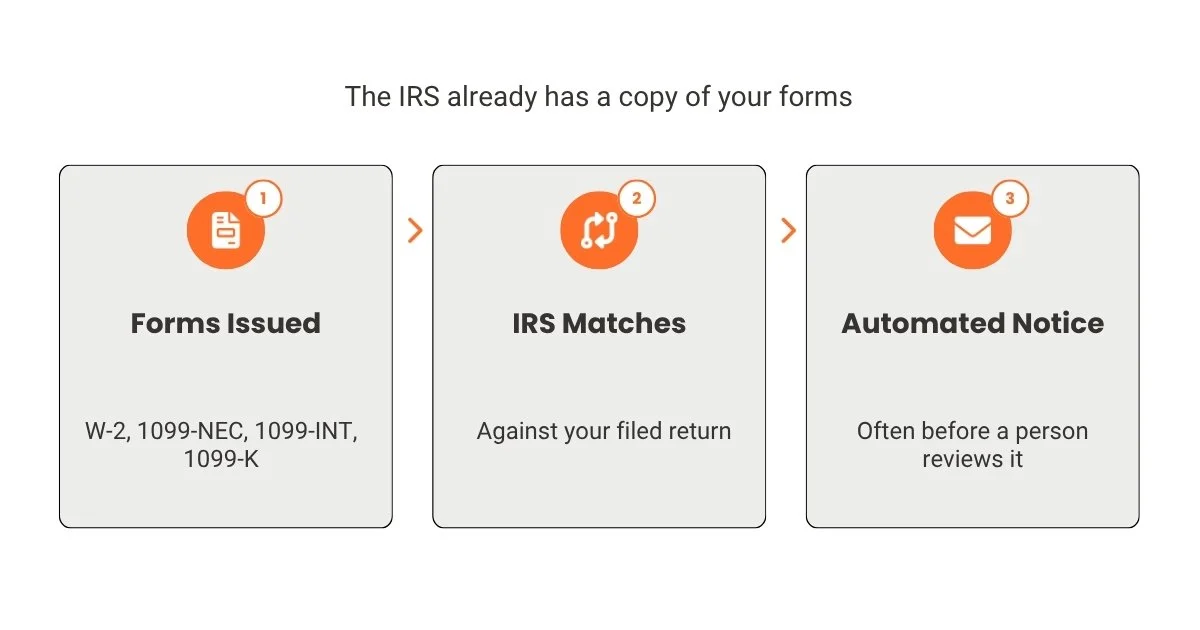
This is one of the most reliable triggers, and one of the easiest to avoid. The IRS receives a copy of every W-2, 1099-NEC, 1099-INT, and 1099-K issued in your name, directly from the employer, client, or platform that issued it. If your return doesn't reflect that same income, the system flags the mismatch automatically, often resulting in an automated notice well before any human ever looks at the return. This has become a bigger issue in recent years as 1099-K reporting thresholds for payment platforms have dropped significantly, pulling far more gig and side-income earners into the reporting net than in past years.
Cryptocurrency Is a Named Enforcement Priority
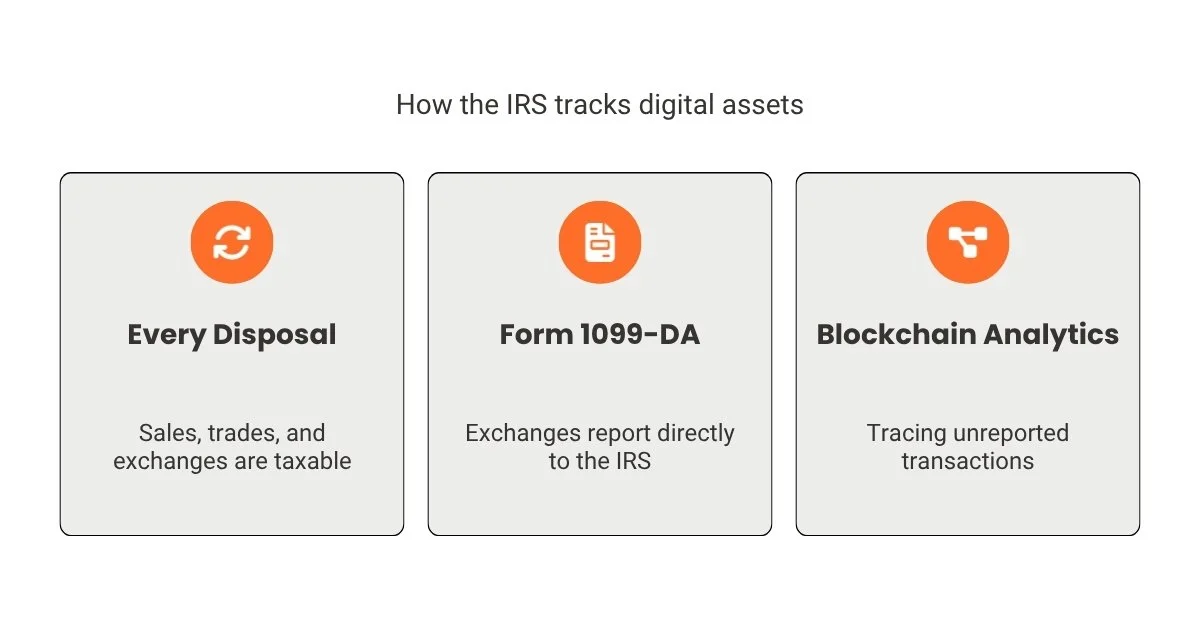
Digital asset compliance is one of the IRS's explicit enforcement priorities right now. Every crypto sale, trade, or exchange is a taxable event, exchanges now issue Form 1099-DA directly to the IRS, and the agency has partnered with blockchain analytics firms specifically to trace transactions that don't show up on a filed return. We cover the mechanics of proper crypto reporting in our Form 8949 and Schedule D guide.
Other Specific Patterns Worth Knowing
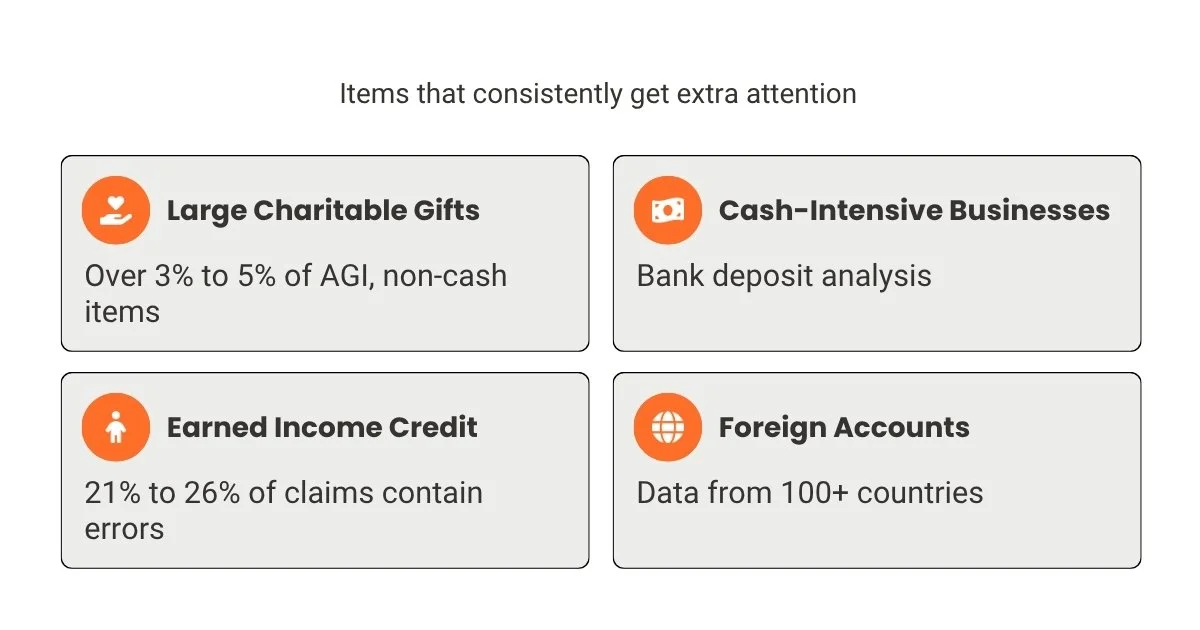
A few additional items consistently draw extra attention. Charitable contributions exceeding roughly 3 to 5 percent of adjusted gross income, particularly non-cash donations like vehicles, art, or real estate where valuation is inherently subjective, get closer review. Cash-intensive businesses face scrutiny through bank deposit analysis and comparison against industry benchmarks, since cash is inherently harder to trace than electronic payments. The Earned Income Tax Credit, despite targeting lower and moderate-income taxpayers, carries its own elevated audit rate given how complex the eligibility rules are and how often errors occur, an estimated 21 to 26 percent of EITC claims contain some kind of error. Unreported foreign accounts remain a standing enforcement priority too, which we cover in our FBAR guide, since the IRS now receives account information from more than 100 countries.
Frequently Asked Questions
-
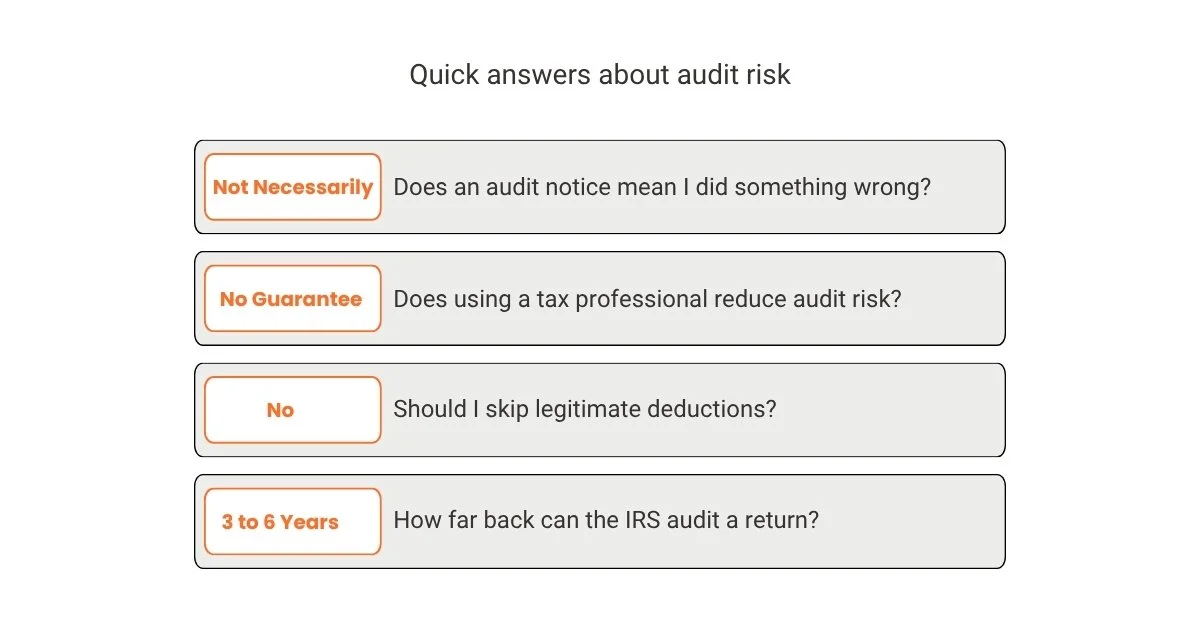
Not necessarily. Many audits and CP2000 notices start from an automated data mismatch or a statistical anomaly, not evidence of wrongdoing. Plenty of audits close with no change at all once documentation is provided.
-
It doesn't guarantee anything, audit selection is driven by the substance of the return itself, not who prepared it. What a professional does provide is a more accurate return with proper documentation from the start, and representation if an audit does happen, both of which meaningfully change the experience even if they don't change the odds of being selected in the first place.
-
No. You're entitled to claim any deduction you legitimately qualify for. The issue was never the deduction itself, it's having proper documentation to support it if it's ever questioned. Underclaiming legitimate deductions out of audit fear just costs you money for no real protection.
-
Generally three years from the filing date, though that extends to six years if income was substantially understated, and there's no time limit at all in cases involving fraud or an unfiled return.
The best audit defense is a well-documented return in the first place, not a strategy for after a notice arrives. A tax professional can help make sure your return holds up to the same scrutiny the IRS's own systems are applying.