Is Social Security Taxable? A Retiree's Guide
Whether your Social Security benefits get taxed isn't a yes-or-no question, it depends on your total income, and the answer can range from zero tax to up to 85 percent of your benefits being taxable. What makes this genuinely important right now: the income thresholds that decide this haven't moved since the 1980s and 1990s, which means more retirees cross into taxable territory every single year, even without any change in the law.

The Combined Income Formula
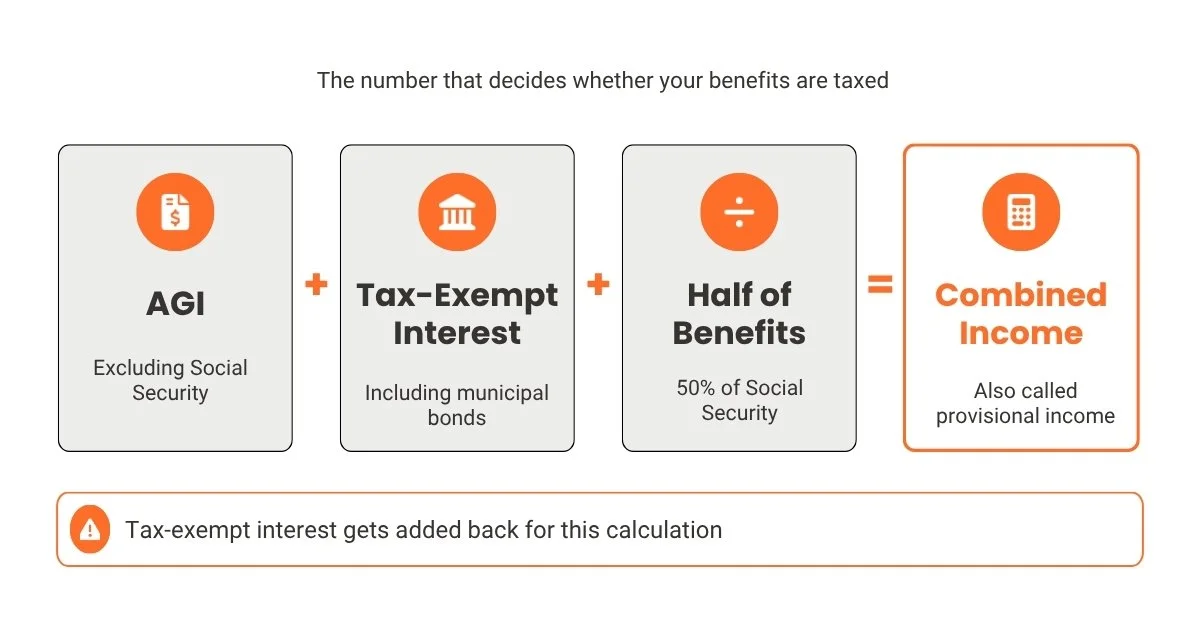
Whether your benefits are taxed depends on what the IRS calls combined income, sometimes called provisional income: your adjusted gross income excluding Social Security, plus any tax-exempt interest, including municipal bond interest, plus half of your Social Security benefits for the year. That last part catches people off guard, tax-exempt interest, which is excluded from your regular AGI, gets added back specifically for this calculation.
The Thresholds
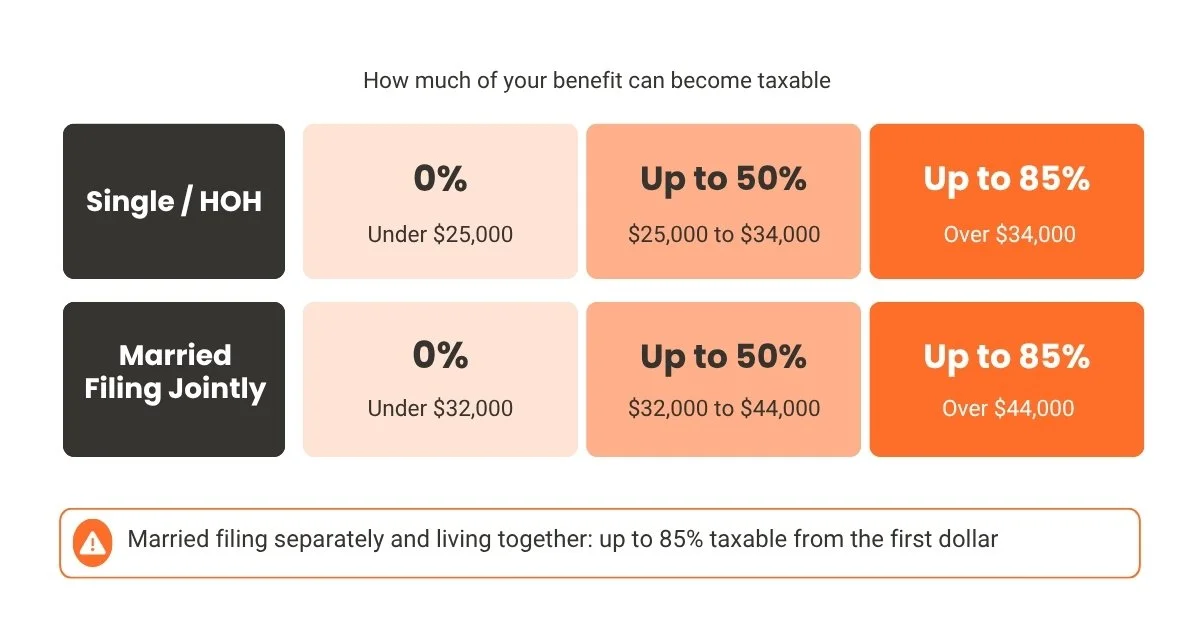
For single filers, heads of household, and qualifying widows or widowers, none of your Social Security is taxable if combined income is below 25,000 dollars. Between 25,000 and 34,000 dollars, up to 50 percent of your benefits can become taxable. Above 34,000 dollars, up to 85 percent can become taxable.
For married couples filing jointly, the same structure applies at higher numbers: no tax below 32,000 dollars combined income, up to 50 percent taxable between 32,000 and 44,000 dollars, and up to 85 percent taxable above 44,000 dollars.
Married filing separately gets treated far less favorably. If you lived with your spouse at any point during the year, up to 85 percent of your benefits can be taxable starting from your very first dollar of combined income, there's no zero-tax floor at all in that situation.
Why These Numbers Never Change
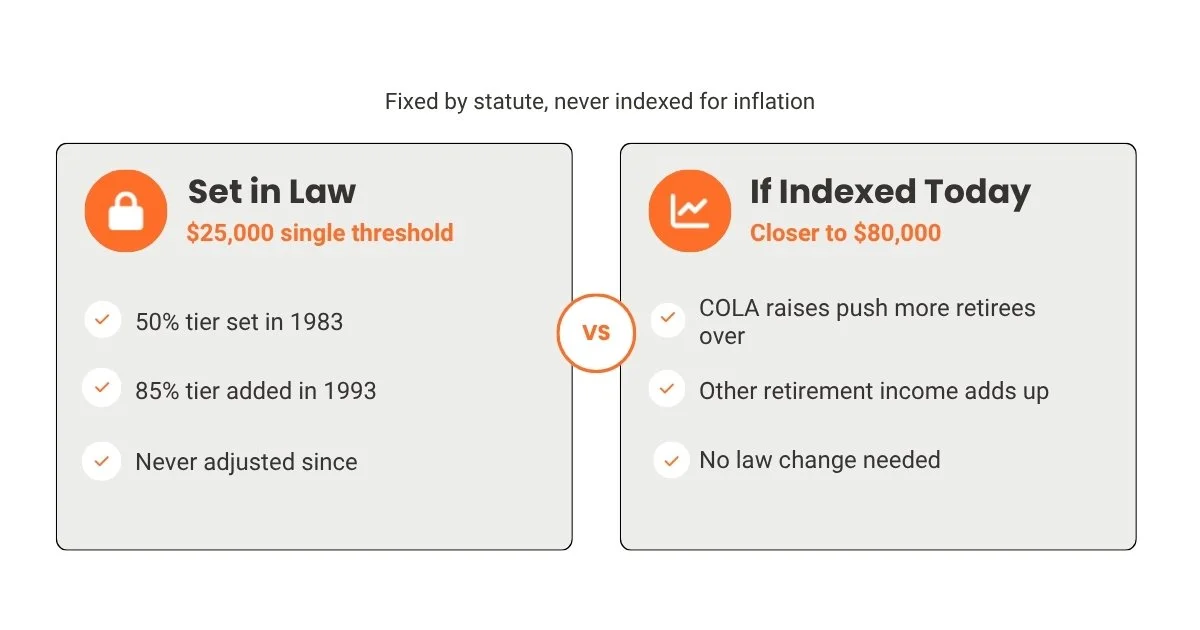
Unlike income tax brackets and the standard deduction, which the IRS adjusts every year for inflation, these Social Security thresholds are fixed by statute and have not been updated since 1983, for the original 50 percent tier, and 1993, when the 85 percent tier was added. Had they been indexed to inflation from the start, the single-filer 25,000 dollar threshold would sit closer to 80,000 dollars today. Because they weren't, cost-of-living increases to Social Security itself, combined with any other retirement income, steadily push more retirees over these thresholds every year, without Congress ever having to change the law.
"Up to 85 Percent" Is a Ceiling, Not a Rate
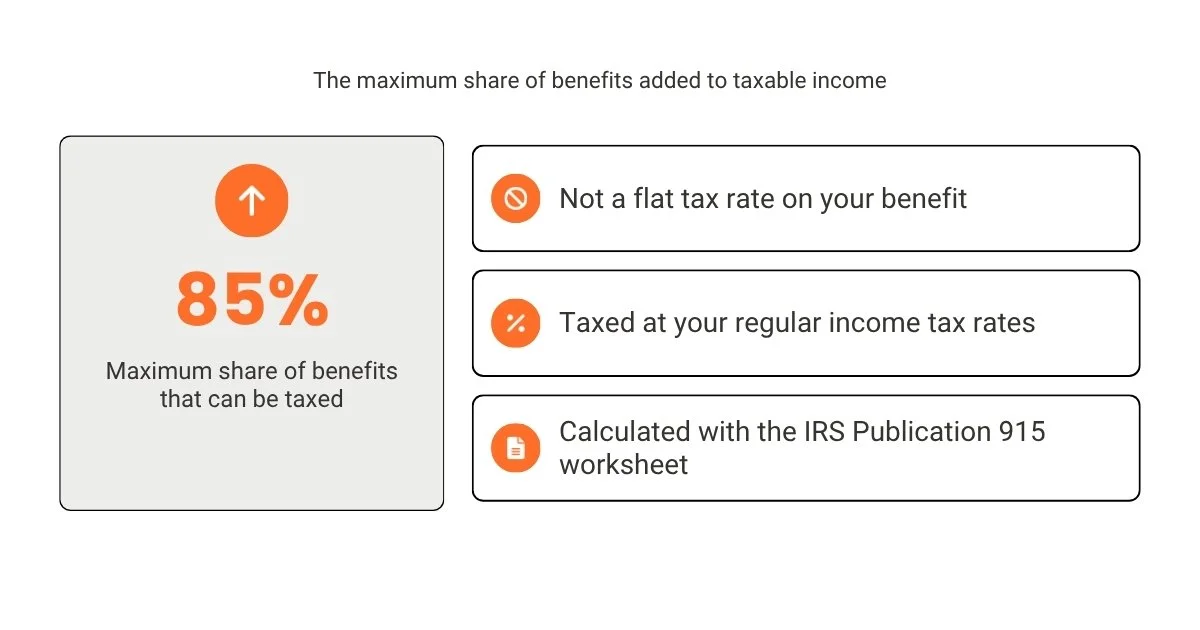
This is worth stating clearly since it's commonly misunderstood: 85 percent is the maximum share of your benefits that can ever be taxed, not a flat rate applied the moment you cross the upper threshold, and it never means 85 percent of your benefit disappears in tax, only that up to 85 percent of it gets added to your taxable income, which is then taxed at your regular rates. The actual calculation is genuinely more layered than a simple threshold test, and follows a specific worksheet in IRS Publication 915.
A couple of quick examples make this more concrete. A single retiree with 20,000 dollars in Social Security and 12,000 dollars in pension income has combined income of 22,000 dollars, under the 25,000 dollar threshold, so none of the Social Security is taxable. That same retiree with 20,000 dollars more in pension income instead, 20,000 dollars total, lands at 30,000 dollars combined income, inside the 50 percent tier, with a portion, not all, of the benefit becoming taxable.
The New Senior Deduction Doesn't Fix This the Way People Expect
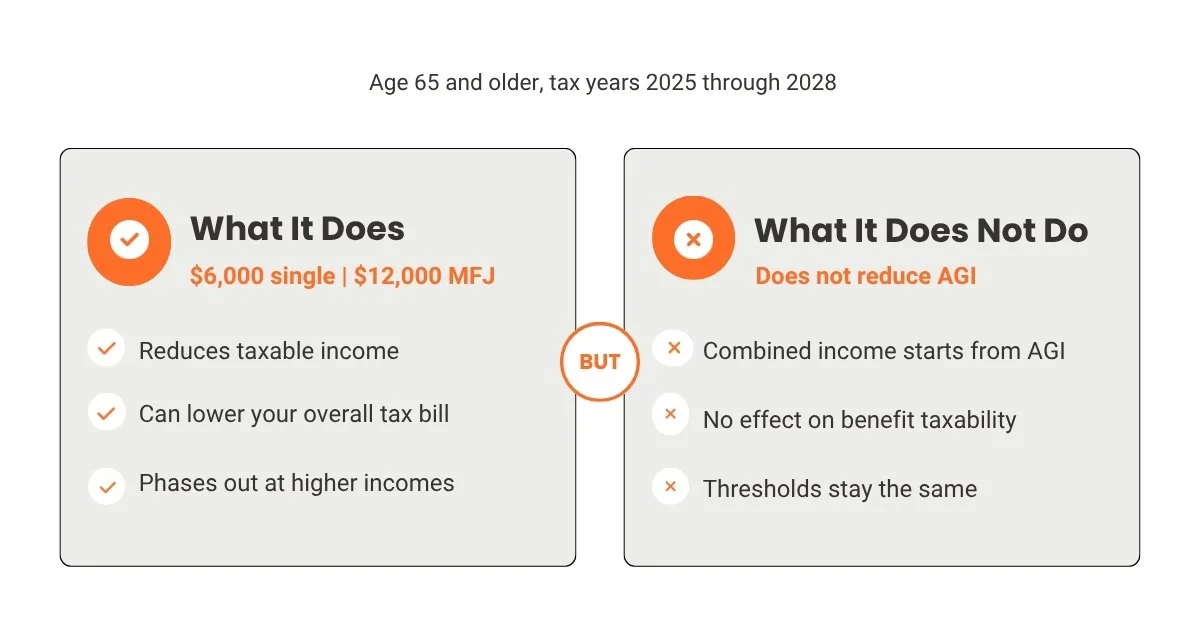
Recent federal legislation, the One Big Beautiful Bill Act, introduced a new deduction specifically for taxpayers 65 and older, 6,000 dollars for single filers, 12,000 dollars for married couples filing jointly, available for tax years 2025 through 2028, phasing out at higher income levels. Here's the part that surprises people: this deduction reduces your taxable income, but it does not reduce your AGI. Since the combined income calculation that determines Social Security taxability starts from AGI, this new senior deduction has essentially no effect on how much of your Social Security ends up taxable. It can meaningfully lower your overall tax bill, but it doesn't move the needle on the Social Security-specific thresholds discussed above.
A Planning Lever Worth Knowing About
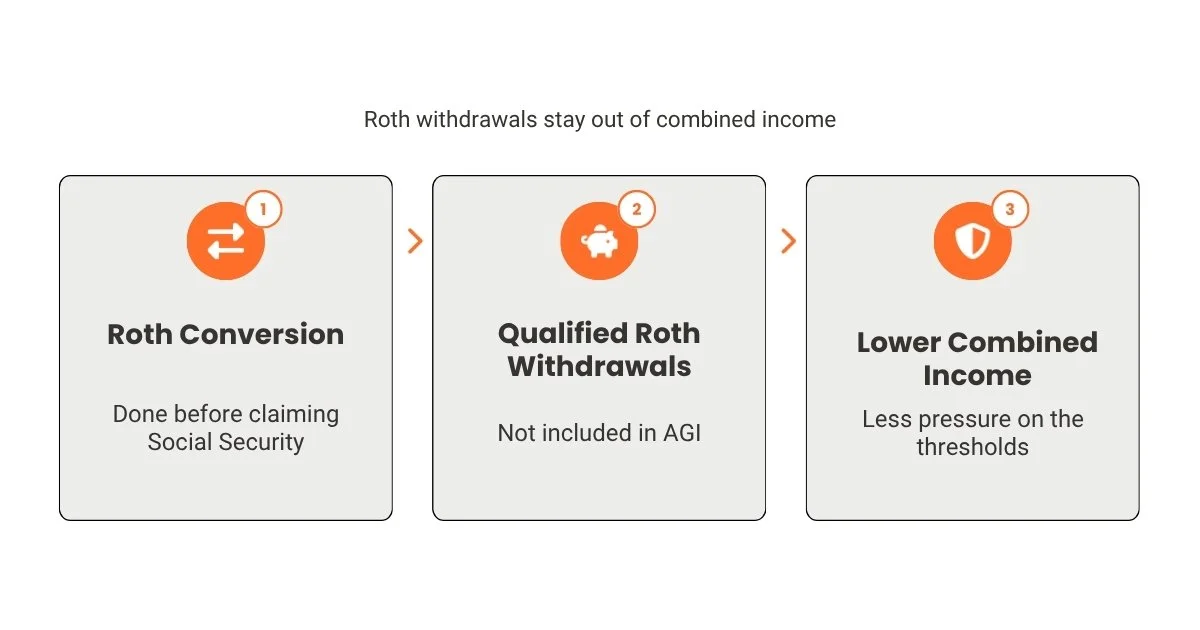
Qualified withdrawals from a Roth IRA don't count toward combined income at all, since they're not included in AGI in the first place. This is part of why Roth conversions done before claiming Social Security, which we cover in our Roth conversion strategy guide, can be a genuinely effective way to manage future Social Security taxability, money that's already in a Roth doesn't push you over these thresholds later the way a traditional IRA withdrawal would.
Frequently Asked Questions
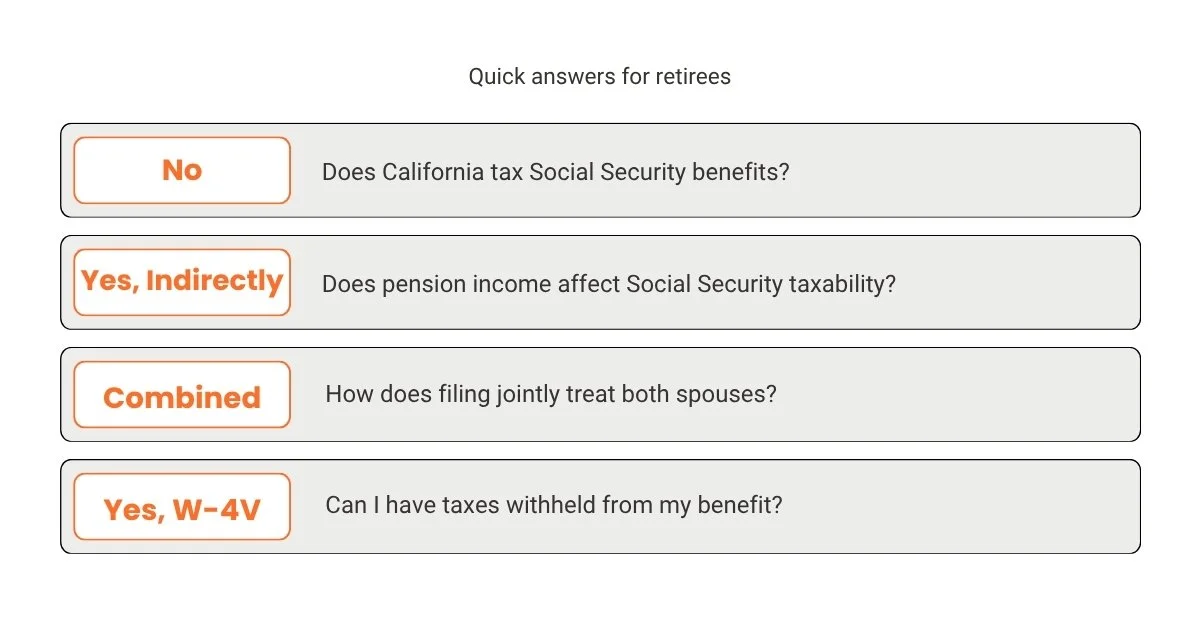
-
No. California is among the majority of states that don't tax Social Security benefits at all, even though the state taxes most other retirement income. This is a genuine advantage for California retirees compared to the handful of states that still partially tax Social Security.
-
Yes, indirectly. Pension income is included in your AGI, which is a direct input into the combined income calculation. More pension income means higher combined income, which can push you into a higher Social Security taxability tier even if your Social Security benefit itself hasn't changed.
-
When filing jointly, both spouses' income and benefits are combined into a single calculation, using the married filing jointly thresholds, regardless of whether one or both spouses actually receive Social Security.
-
Yes. You can voluntarily request federal withholding from your Social Security benefits using Form W-4V, which can help avoid an unexpected bill or underpayment penalty at filing time rather than needing to make separate estimated payments.
The thresholds that determine Social Security taxability haven't moved in decades, which means the math changes every year even if your income doesn't. A tax professional can help you see exactly where you stand and what, if anything, can be done about it.