We introduced real estate professional status in our passive activity loss guide as the escape hatch for high earners whose income is too high for the standard 25,000 dollar rental loss allowance. This post goes deeper into what qualifying for that status actually requires, because it's genuinely one of the most heavily scrutinized positions in personal taxation, and the requirements are more layered than a single hour count.

Three Separate Tests, Not One
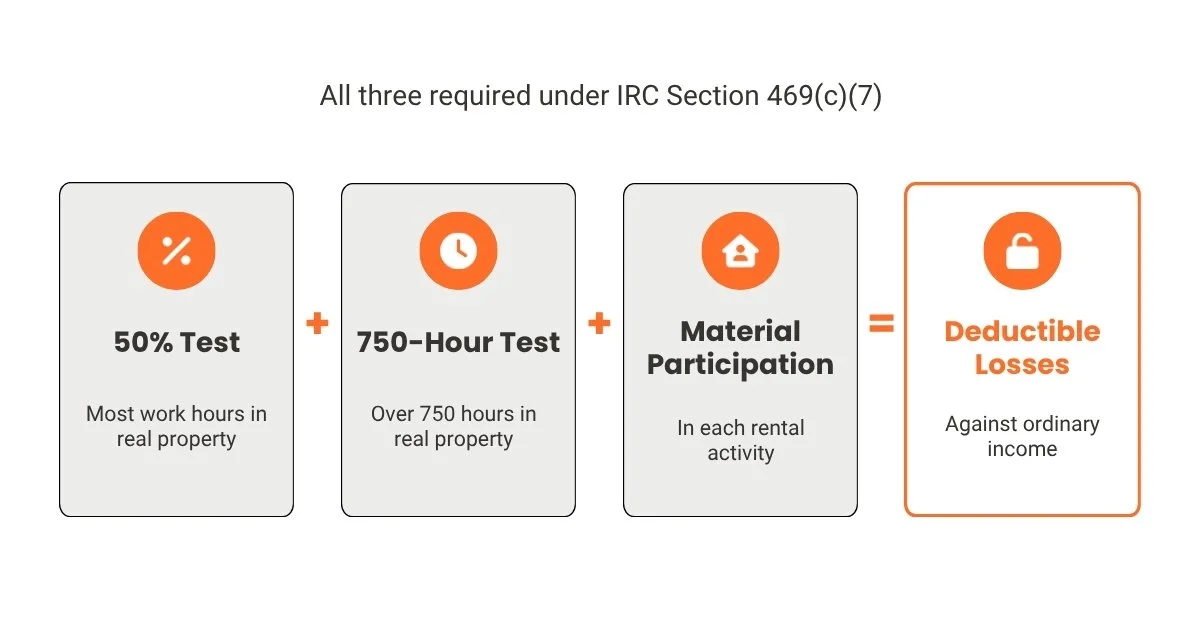
Qualifying involves three distinct requirements under IRC Section 469(c)(7), and all three have to be satisfied. First, the 50 percent test: more than half of the personal services you perform across all your trades and businesses for the year has to be in real property trades or businesses. Second, the 750-hour test: you have to perform more than 750 hours of service in those same real property trades or businesses during the year. Third, and often overlooked, you separately have to materially participate in each specific rental activity generating the losses you want to deduct. Meeting the first two tests earns you the real estate professional designation itself, but it doesn't automatically mean your rental losses are deductible, the material participation test on the specific activity is a separate hurdle entirely.
What Counts as a Real Property Trade or Business
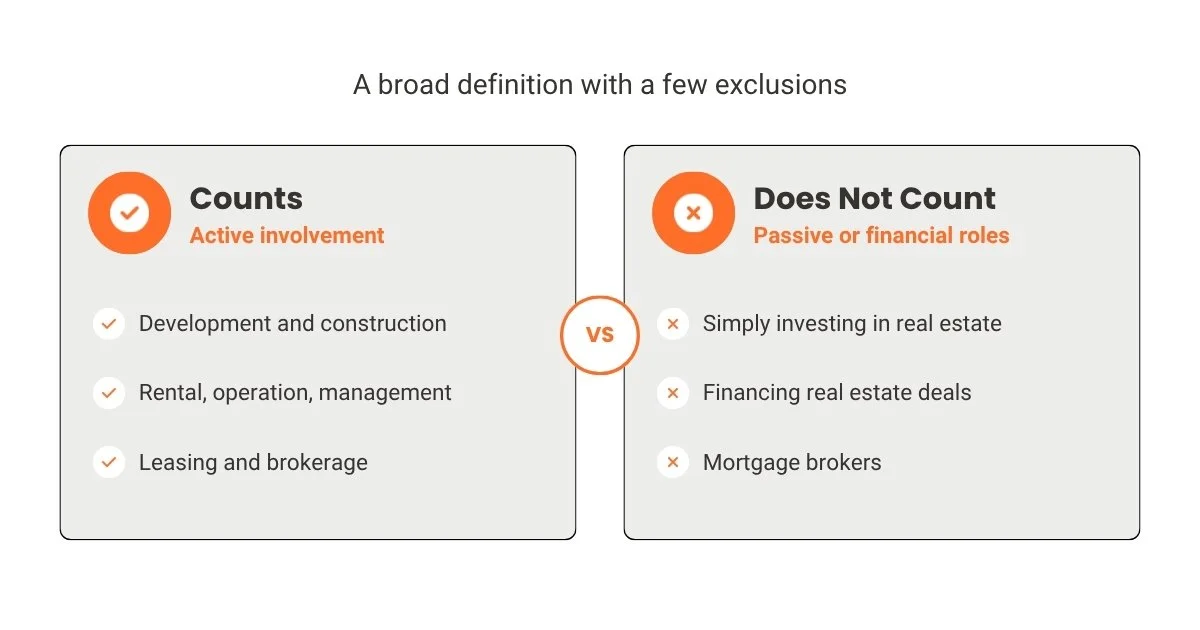
The IRS defines this broadly: development, redevelopment, construction, reconstruction, acquisition, conversion, rental, operation, management, leasing, or brokerage of real property. What doesn't count is narrower than people expect. Simply investing in real estate or financing real estate transactions, without active participation in the trade or business itself, generally doesn't qualify, a distinction the Tax Court has upheld directly. Real estate brokers are included, but mortgage brokers dealing in the financial instruments used to purchase property are not.
The Math Problem for Anyone With a Full-Time Job
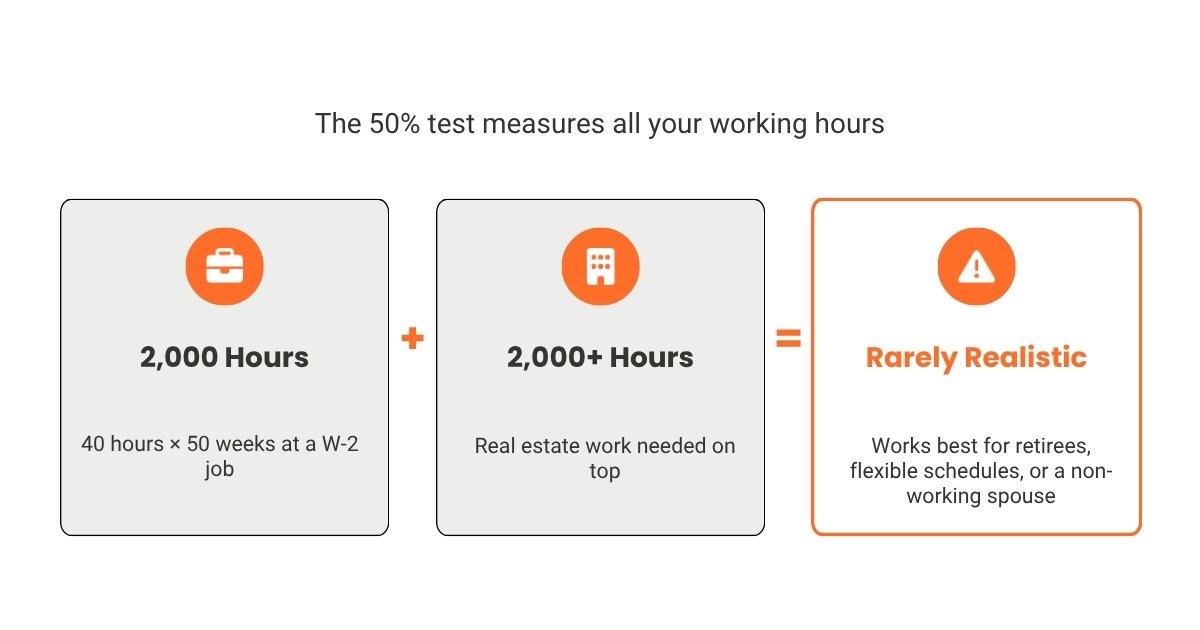
This is the detail that eliminates most W-2 employees from qualifying, and it's worth being direct about it. The 50 percent test measures real estate hours against your total working hours across everything you do. If you work a standard 40-hour-a-week job for 50 weeks a year, that's already 2,000 hours. To clear the 50 percent test, you'd need more real estate hours than that, over 2,000 hours of real estate work on top of a full-time job, which is generally not realistic for most people. This is exactly why real estate professional status tends to work best for investors without another full-time job, retirees, self-employed people who can flex their time, or a spouse who isn't working outside the home and manages the rental portfolio directly.
Material Participation: Seven Tests, Only One Needed
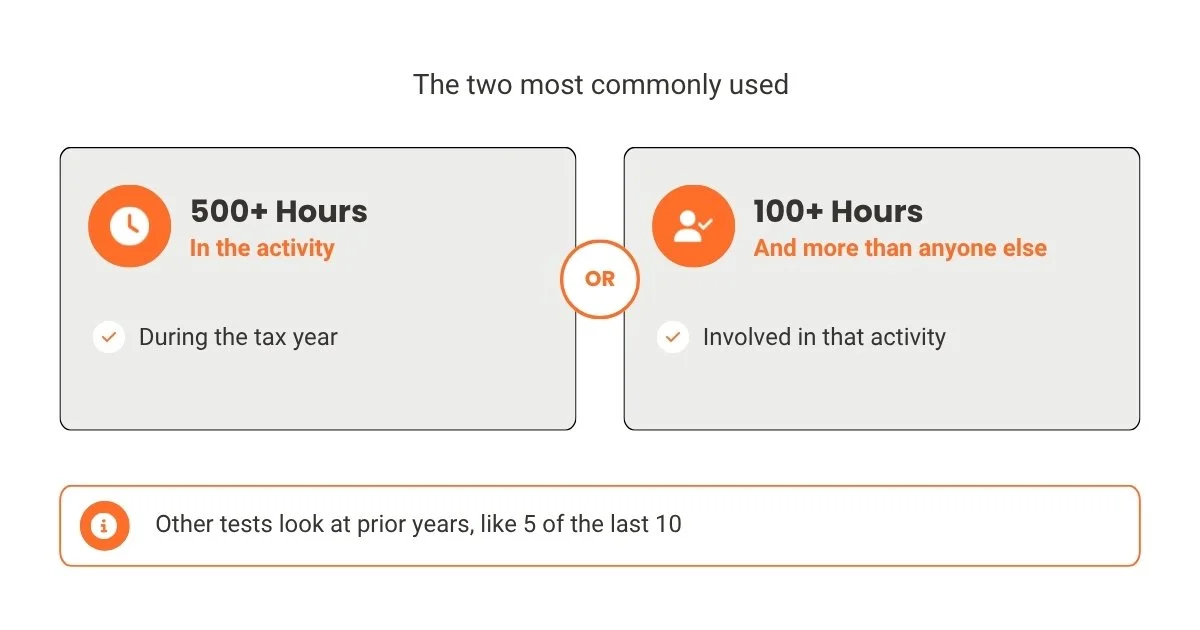
Once you've cleared the 50 percent and 750-hour tests, you still need to materially participate in each specific rental activity. The IRS provides seven different ways to establish this, under Treasury Regulation Section 1.469-5T(a), and you only need to satisfy one of them for a given activity. In practice, most real estate investors rely on one of two: participating more than 500 hours in the activity during the year, or participating more than 100 hours and more than anyone else involved in that activity. Other tests cover things like having materially participated in the activity for five of the prior ten years, or, for licensed real estate professionals specifically, having materially participated for three of the prior five years.
The Multi-Property Grouping Election
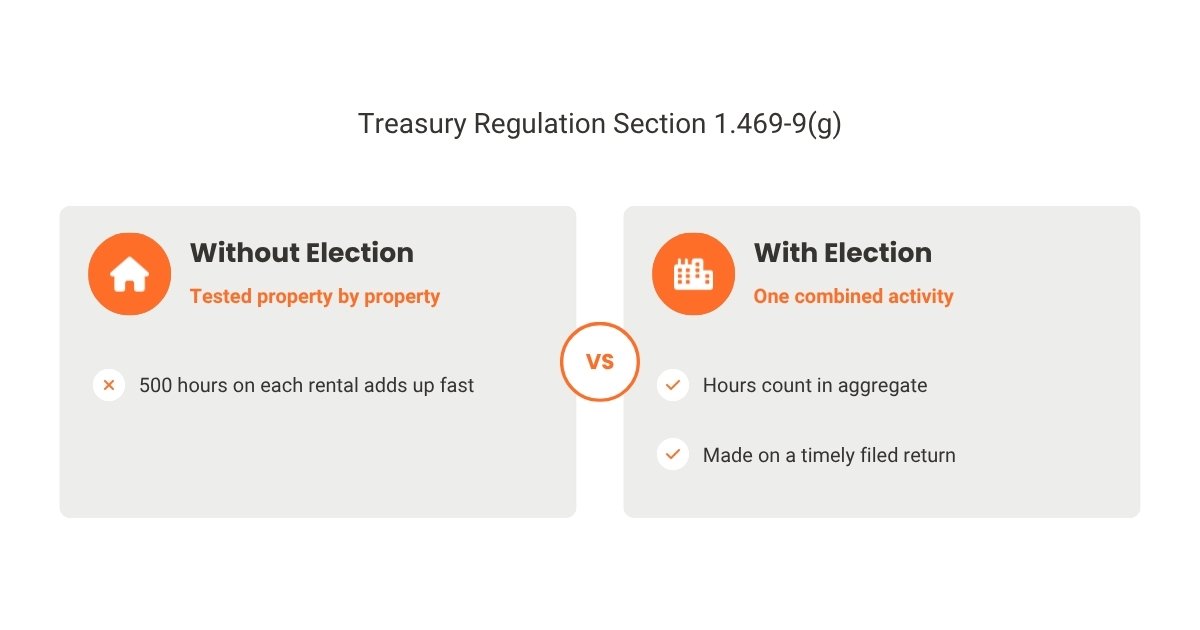
If you own more than one rental property, testing material participation separately on each individual property is often unrealistic, hitting 500 hours on every single property you own adds up fast. A grouping election under Treasury Regulation Section 1.469-9(g), made on a timely filed return, lets you treat all your rental real estate as a single combined activity for material participation purposes, so your hours count in aggregate rather than being tested property by property. We cover this election in more detail in our passive activity loss guide, since missing it is one of the most common, and most avoidable, mistakes investors make.
How Married Couples Qualify
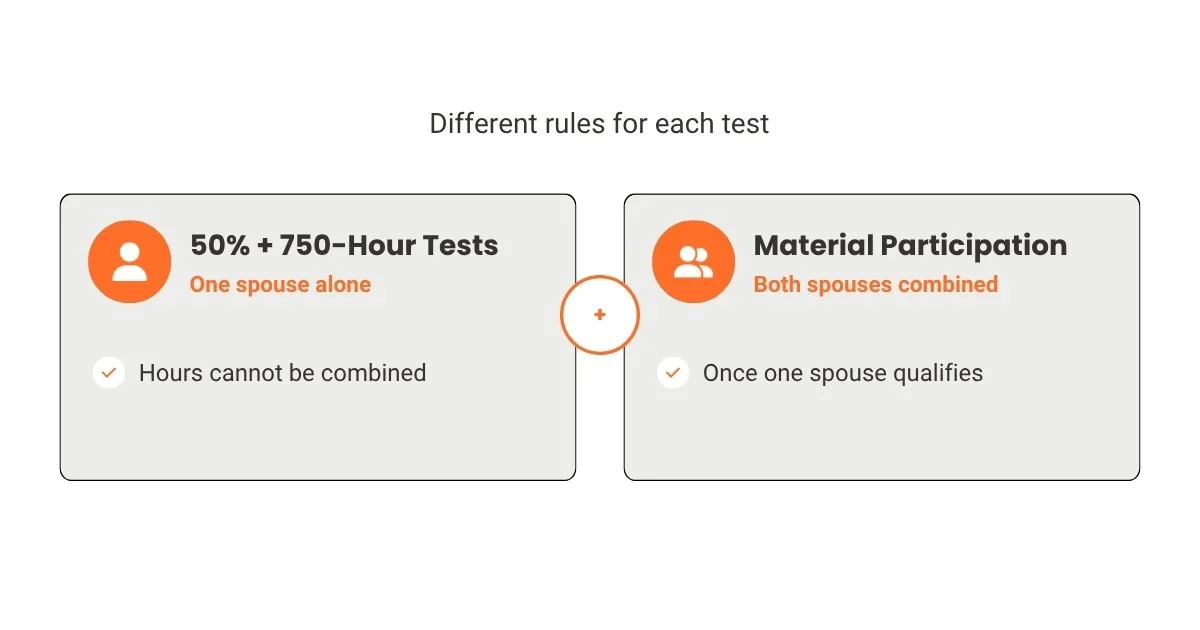
For a married couple filing jointly, only one spouse needs to independently meet both the 50 percent test and the 750-hour test, the other spouse's hours don't count toward that spouse's qualification. Once one spouse qualifies as a real estate professional, though, the material participation test for a specific rental activity can be met using the combined participation of both spouses in that activity. This makes a genuine difference in practice, a spouse who doesn't work outside the home and actively manages the family's rental properties is often the most realistic path to qualifying for a two-income household.
Documentation Is Not Optional
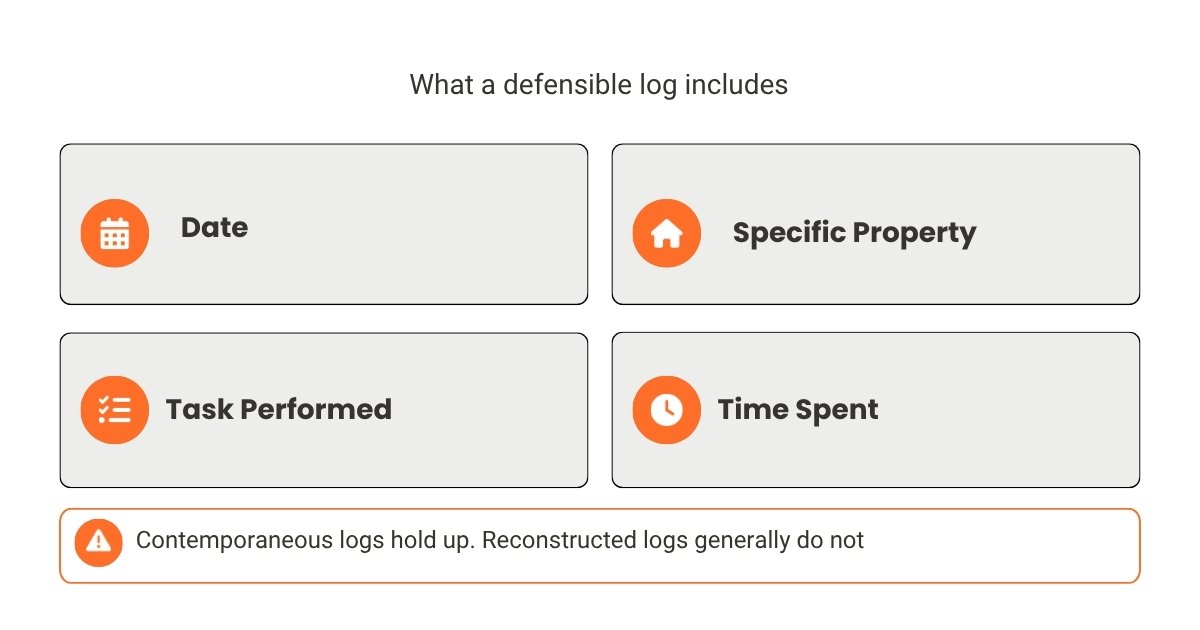
This status gets challenged in audits and in Tax Court more than almost any other real estate tax position, and the outcome consistently comes down to documentation quality. Contemporaneous logs, records created at or near the time the work was actually done, hold up. Logs reconstructed months or years later from memory generally don't. A defensible log includes the date, the specific property, the task performed, and the time spent, supported where possible by calendar entries, emails, invoices, and other corroborating records. This isn't a box to check once a year at filing time, it's a habit to build starting on day one of the tax year.
Frequently Asked Questions
-
No. The 750-hour and 50 percent tests have to be met every single year. Qualifying one year doesn't carry forward, and falling short in a later year means reverting to the standard passive activity treatment for that year.
-
Being licensed doesn't automatically satisfy the tests, the hour and percentage requirements still apply based on actual time spent. Licensed professionals do have access to one additional material participation pathway, having materially participated for three of the prior five years, that's specific to their licensed status.
-
That specific property's losses remain subject to the standard passive activity rules, even though you've qualified as a real estate professional overall. The designation and the material participation test operate independently, both need to be satisfied for a given property's losses to become deductible against ordinary income.
-
It depends heavily on your total losses, your income level, and how realistic the hour requirements are given your other work. For many investors with modest losses or a demanding full-time job elsewhere, the standard 25,000 dollar allowance may already cover the situation without needing to pursue this more demanding status.
Real estate professional status can unlock significant deductions, but it's also one of the most scrutinized positions in the tax code. A tax professional can help you determine realistically whether you qualify and build the documentation to defend it.