We cover why S corp owners need to pay themselves reasonable salary in our reasonable compensation guide, and how that salary interacts with distributions in our distributions vs. salary guide. This post is about the part that comes after the decision: what running actual payroll requires, both federally and here in California. It's more involved than a lot of new S corp owners expect.

You're Now an Employer, Not Just an Owner
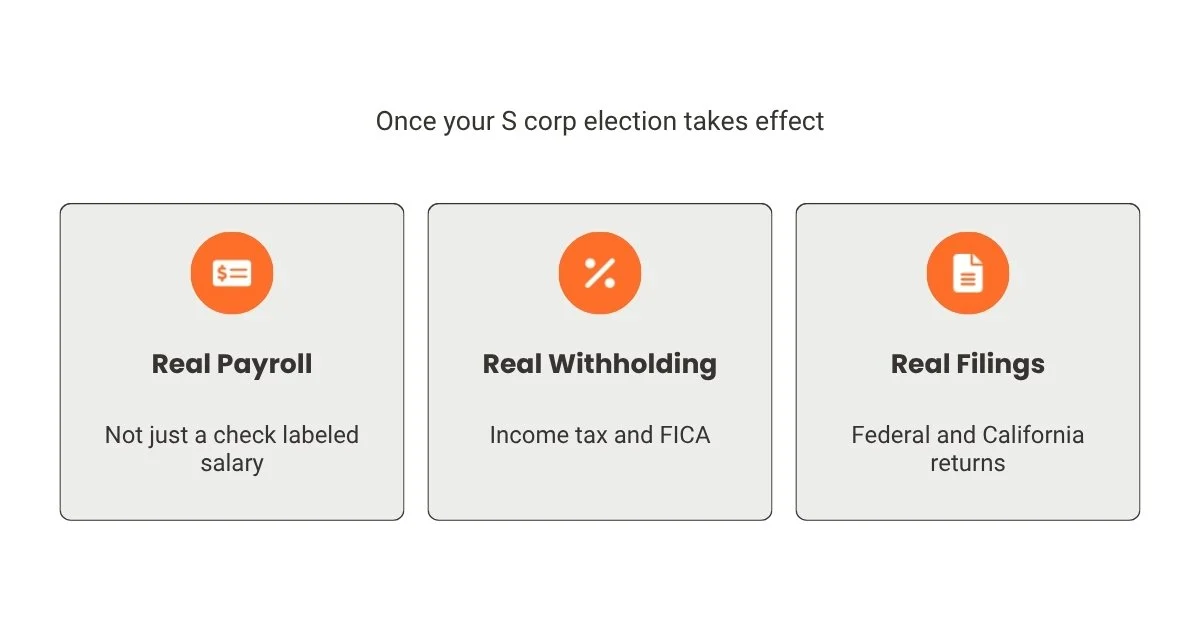
The moment your S corp election takes effect, you become an employer in the full legal sense, at least with respect to your own compensation, even if you don't have a single other employee. That means real payroll, real withholding, and real filing obligations, not simply writing yourself a check labeled "salary."
The Federal Filing Calendar
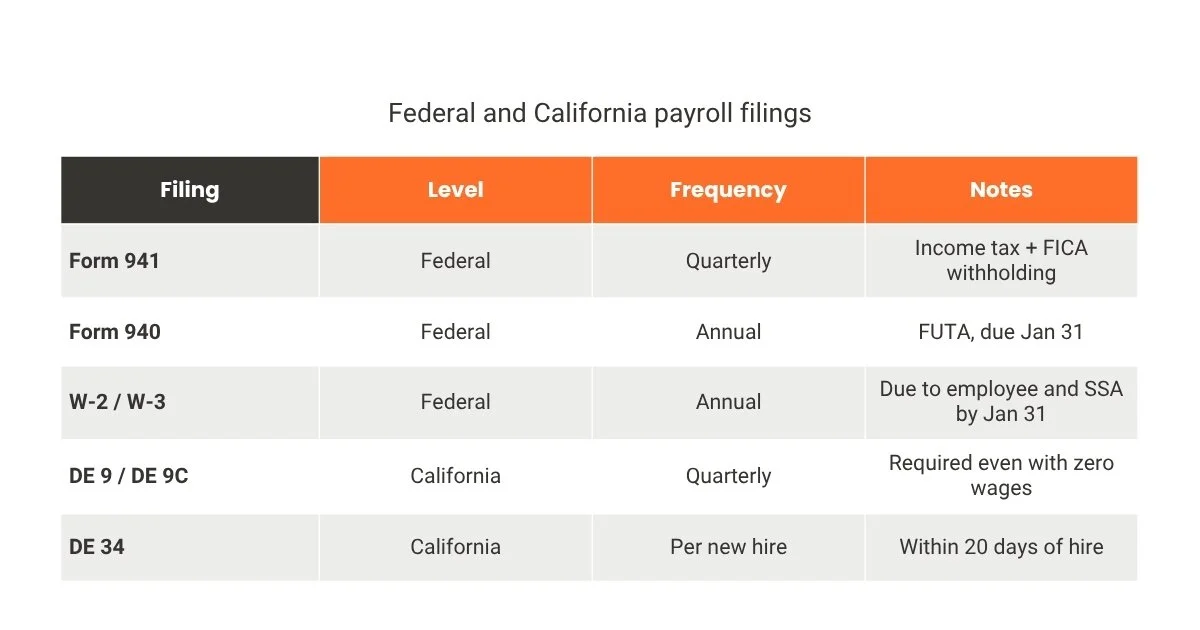
Form 941 reports income tax withholding and FICA (Social Security and Medicare) liability for the quarter, and it isn't optional once you've filed your first one, every subsequent quarter needs a return, even a zero return, unless you've formally closed the business or checked the seasonal employer box in a prior filing. Form 940 reports your annual federal unemployment tax liability. The FUTA rate is 6 percent on the first 7,000 dollars paid to each employee, but most employers who pay their state unemployment tax on time receive a credit of 5.4 percent, bringing the effective rate down to 0.6 percent, roughly 42 dollars per employee per year. W-2 and W-3 forms report the year's total wages and withholding, due to both your employees and the Social Security Administration by January 31.
California Adds Its Own Layer
California requires quarterly wage reporting through Form DE 9 and DE 9C, filed with the Employment Development Department, and this filing is required every quarter regardless of whether wages were actually paid, failing to file, even a zero-wage quarter, can trigger a 50 dollar penalty per return. New hires, including yourself as a new owner-employee, have to be reported to the EDD within 20 days using Form DE 34.
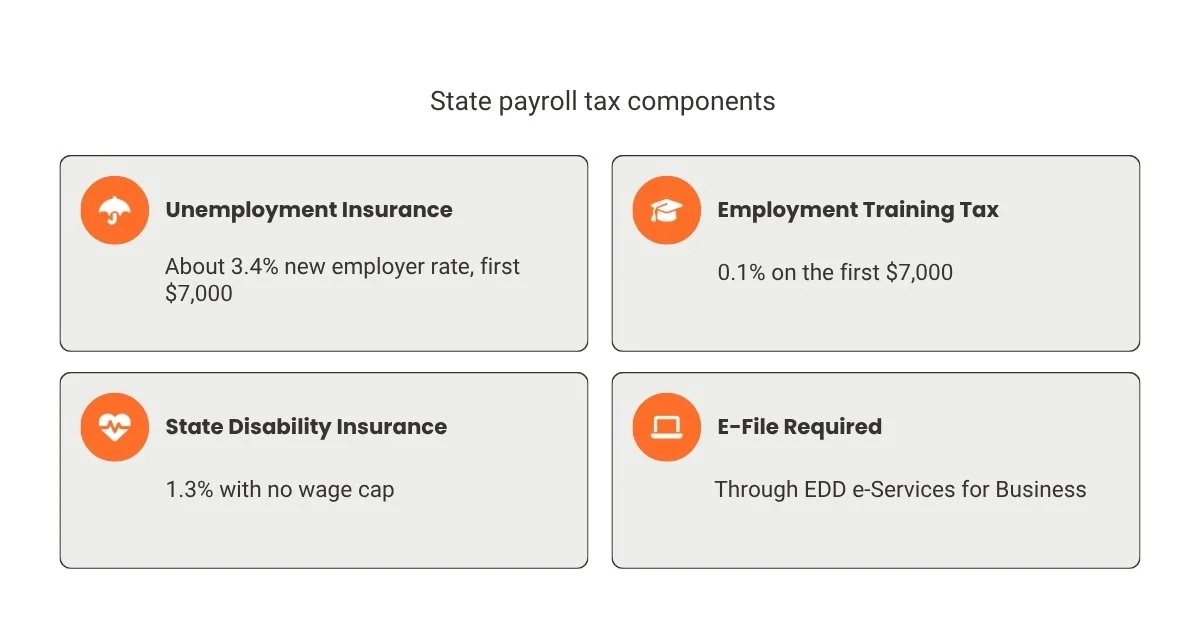
California payroll taxes include several components beyond federal withholding. Unemployment Insurance and the Employment Training Tax both apply to the first 7,000 dollars paid to each employee for the year, at rates set annually, new employers generally start around 3.4 percent for UI, with the Employment Training Tax at a flat 0.1 percent. State Disability Insurance withholds at 1.3 percent, and unlike UI and ETT, SDI has no wage cap at all, it applies to every dollar of wages paid, following a 2024 legislative change that removed the previous ceiling. California also mandates electronic filing and payment for essentially all employer tax obligations through the EDD's e-Services for Business portal, there's no paper filing option for most of this.
Two Things California Requires Beyond Payroll Taxes
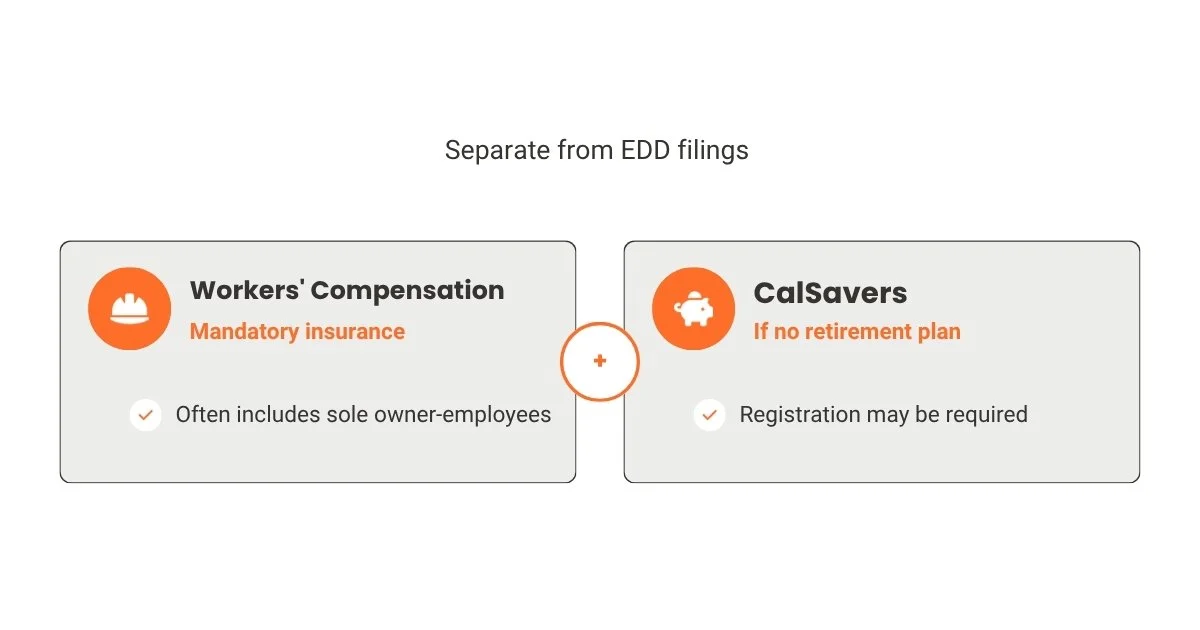
Workers' compensation insurance is mandatory in California for any business with employees, including a sole owner-employee in many cases, and this is separate from anything filed with the EDD. CalSavers, California's state-facilitated retirement savings program, generally applies to employers who don't already offer a qualifying retirement plan, if your S corp doesn't have a 401(k) or similar plan in place, CalSavers registration may be a separate compliance obligation worth confirming.
Do You Need a Payroll Service?
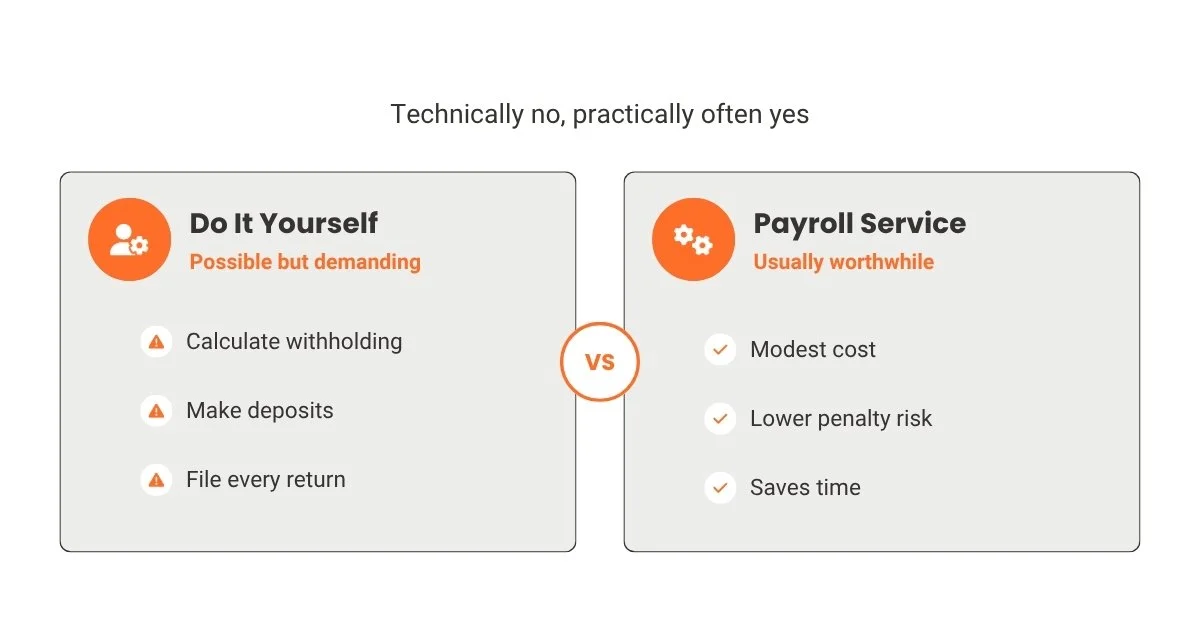
Technically, no, it's possible to run payroll manually, calculate withholding, make the required deposits, and file every quarterly and annual return yourself. In practice, for a single owner-employee, the reporting burden, four federal filings and multiple California filings every year at minimum, usually makes a payroll service worthwhile even for a very simple payroll situation. The cost of a basic payroll service is often modest relative to the time involved and the penalty risk of a missed or incorrect filing.
What Happens If You Don't Run Payroll at All
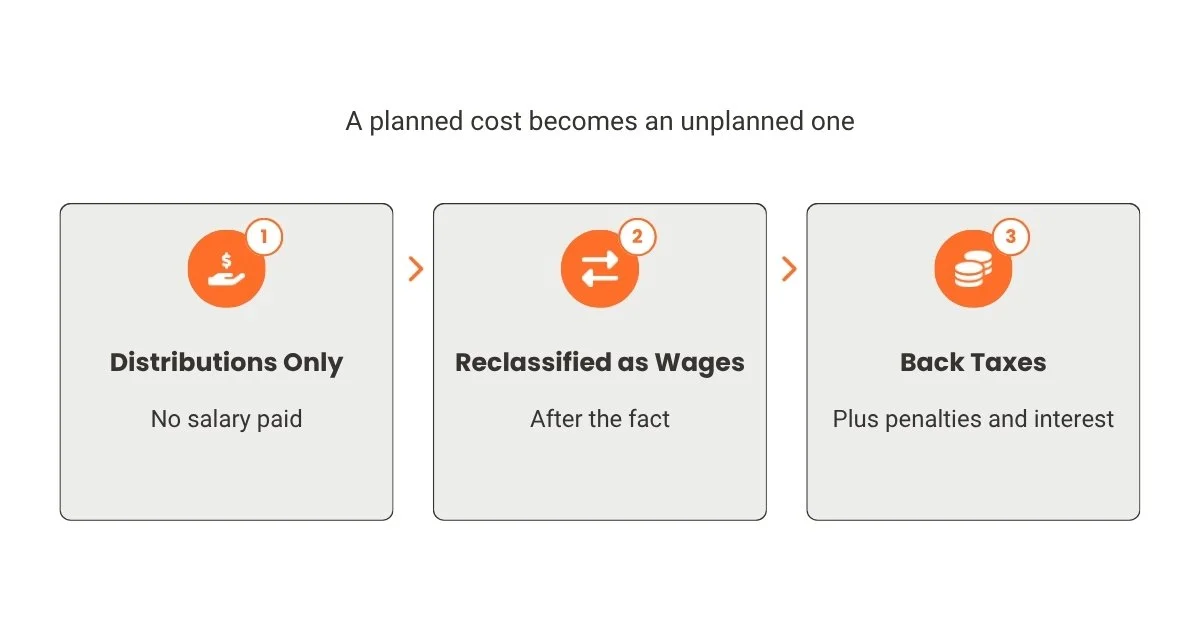
Some S corp owners, particularly in the first year or two, take the position that they'll just pay themselves distributions and skip payroll entirely. This is a real and fairly common mistake. If the IRS or a state agency determines that an S corp owner should have been paid reasonable salary but wasn't, the consequences can include reclassifying some or all distributions as wages after the fact, back payroll taxes, penalties, and interest, on top of whatever the original tax position would have cost if handled correctly from the start. Skipping payroll doesn't avoid the obligation, it just converts a manageable, planned cost into a much larger, unplanned one if it's ever caught.
Frequently Asked Questions
-
If you performed services for the business and reasonable compensation would otherwise apply, generally yes, a loss year doesn't automatically eliminate the salary requirement, though the specifics of your situation are worth discussing directly given how much this can vary.
-
This is generally not advisable. Payroll is expected to reflect a regular, ongoing pay pattern consistent with actual work performed throughout the year, and a single annual payment can look like it's structured to minimize payroll tax timing or avoid the appearance of genuine employment, which invites exactly the kind of scrutiny reasonable compensation rules are meant to address.
-
The same federal and California filing framework applies, just scaled up across more employees, more withholding, and correspondingly higher stakes for getting deposits and filings right and on time.
-
This is fixable, but it needs to be addressed directly and promptly rather than left alone, catch-up payroll, corrected filings, and potentially penalty abatement requests may all be part of the correction. The sooner this gets addressed, the more options are typically available.
Between federal filings and California's additional requirements, S corp payroll compliance has more moving parts than most new owners expect. A tax professional can help you get it set up correctly, or catch it up if it's fallen behind.