Section 121 Exclusion: Selling Your Primary Residence Tax-Free
Sell almost any other appreciated asset, and the IRS wants its share of the gain. Sell your primary residence, and the tax code offers something unusually generous: a hard exclusion of up to 250,000 dollars of gain, 500,000 dollars for married couples, with no requirement to buy another home or roll the money into anything. This is Section 121, and for most homeowners it's the single largest tax break they'll ever use. Here's how it actually works.

The Two Tests You Have to Meet
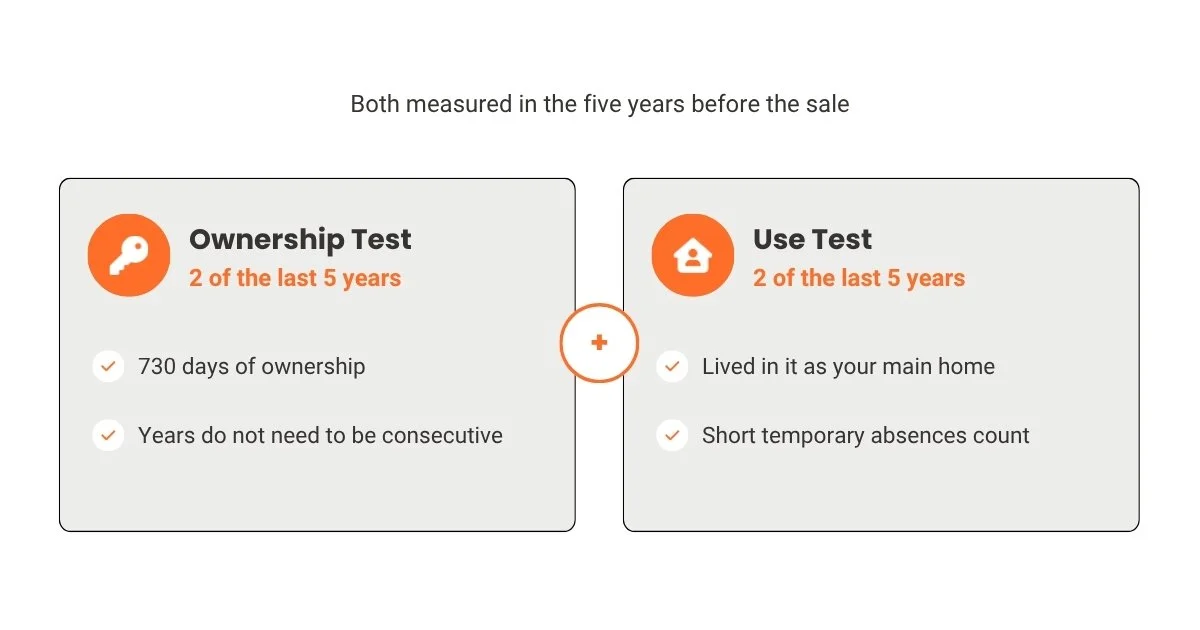
To qualify, you need to pass two separate tests, both measured within the five years leading up to the sale. The ownership test requires that you owned the home for at least two years during that five-year window. The use test requires that you actually lived in it as your principal residence for at least two years during that same window. These are measured in calendar days, not tax years, 730 days of qualifying use satisfies the test, and the two years don't have to be consecutive or the same two years for both tests. Short temporary absences, vacations, brief work assignments, generally still count as use, as long as you intended to return and weren't renting the home out during that time.
The Exclusion Amount
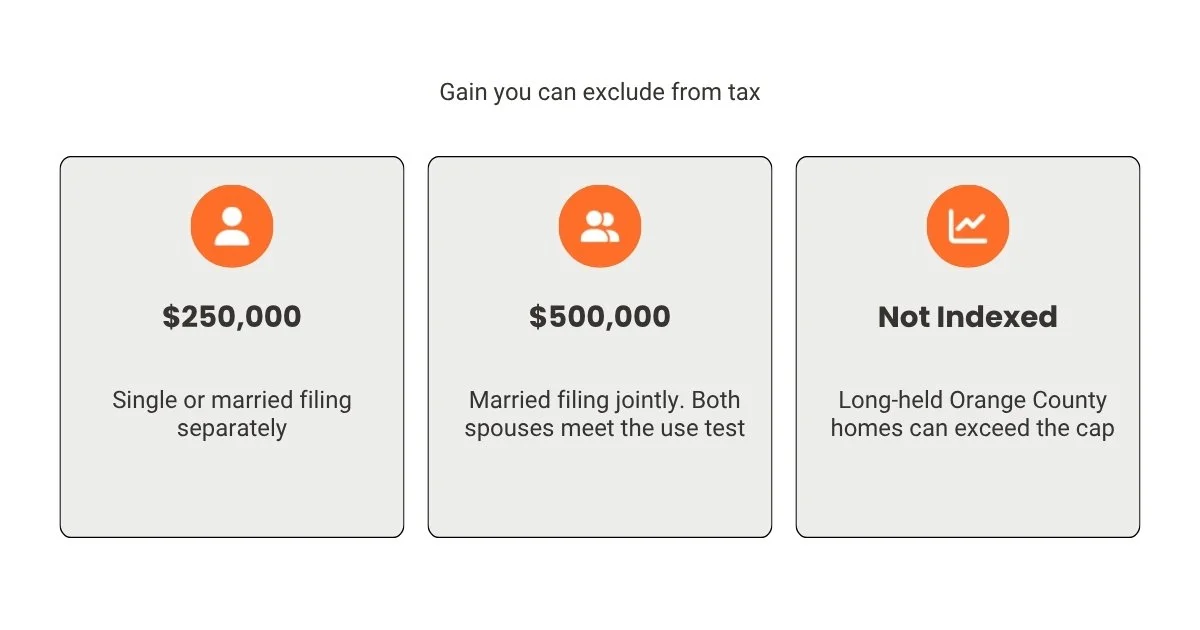
Single filers, and married people filing separately, can exclude up to 250,000 dollars of gain. Married couples filing jointly can exclude up to 500,000 dollars, though the requirements for that full amount are slightly different for each spouse. For the full 500,000 dollar exclusion, only one spouse needs to meet the ownership test, but both spouses need to independently meet the use test. If one spouse hasn't lived in the home long enough, say they moved in after a recent marriage, the couple can still claim a combined 250,000 dollars, just using the qualifying spouse's individual exclusion, rather than losing the benefit entirely.
These dollar amounts are fixed by statute and have not been adjusted for inflation since they were set. In many high-appreciation markets, including much of Orange County, a long-held home's gain can now exceed even the full exclusion amount, which is worth planning around rather than assuming the cap will always fully cover the sale.
The Two-Year Frequency Limit
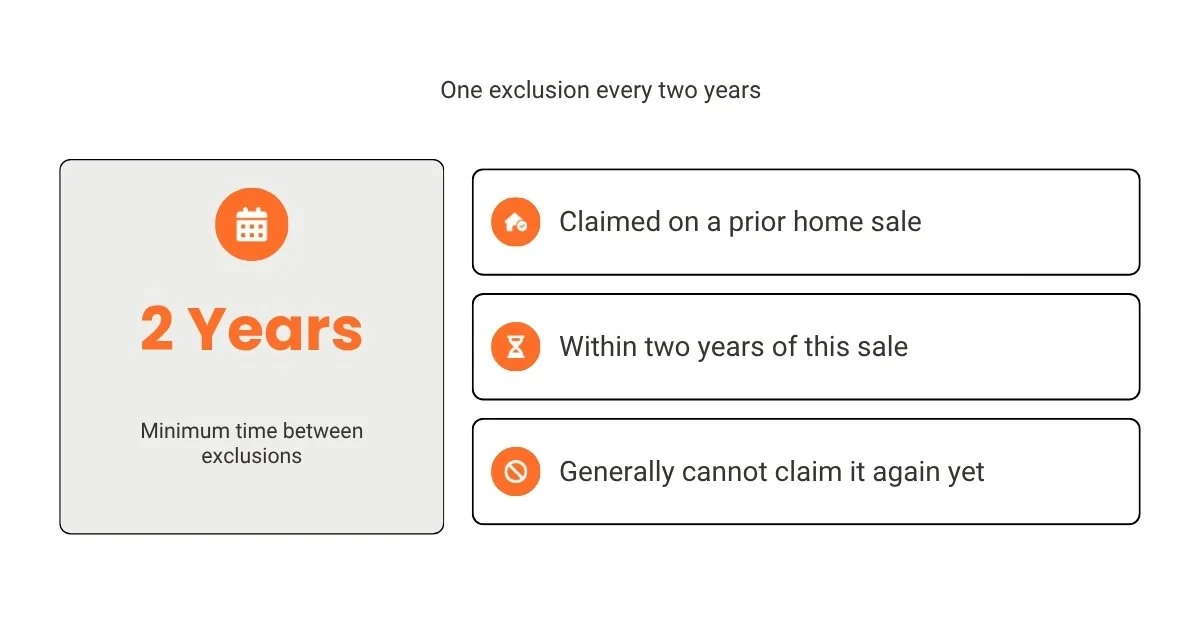
You generally can't use this exclusion more than once every two years. If you sold a different primary residence and claimed the exclusion within the two years before your current sale, you typically can't claim it again yet, regardless of how long you've owned or lived in the new home.
Partial Exclusion If You Don't Fully Qualify
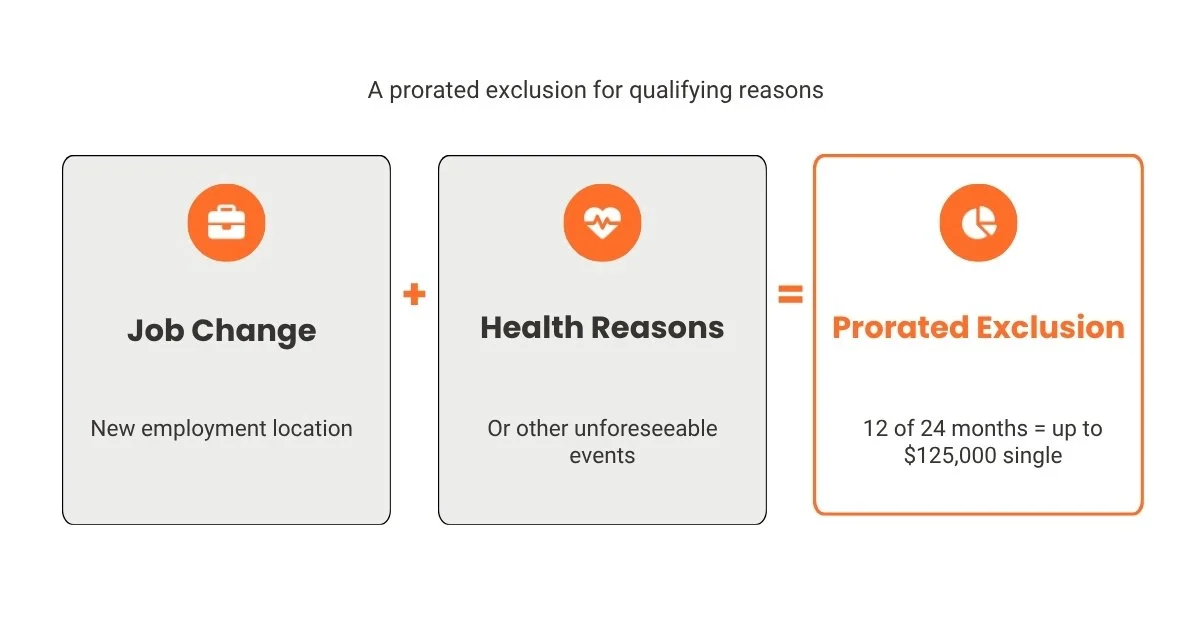
If you sell before meeting the full two-year ownership and use tests, you may still qualify for a reduced exclusion if the primary reason for the sale falls into specific categories: a change in employment location, health reasons, or certain other unforeseeable circumstances. The reduced exclusion is prorated based on how much of the two-year requirement you actually met. For example, a single filer who owned and lived in a home for 12 months before an employment-related move could potentially exclude up to 125,000 dollars, half of the full 250,000 dollar limit, reflecting the 12 out of 24 months completed.
The Non-Qualified Use Trap
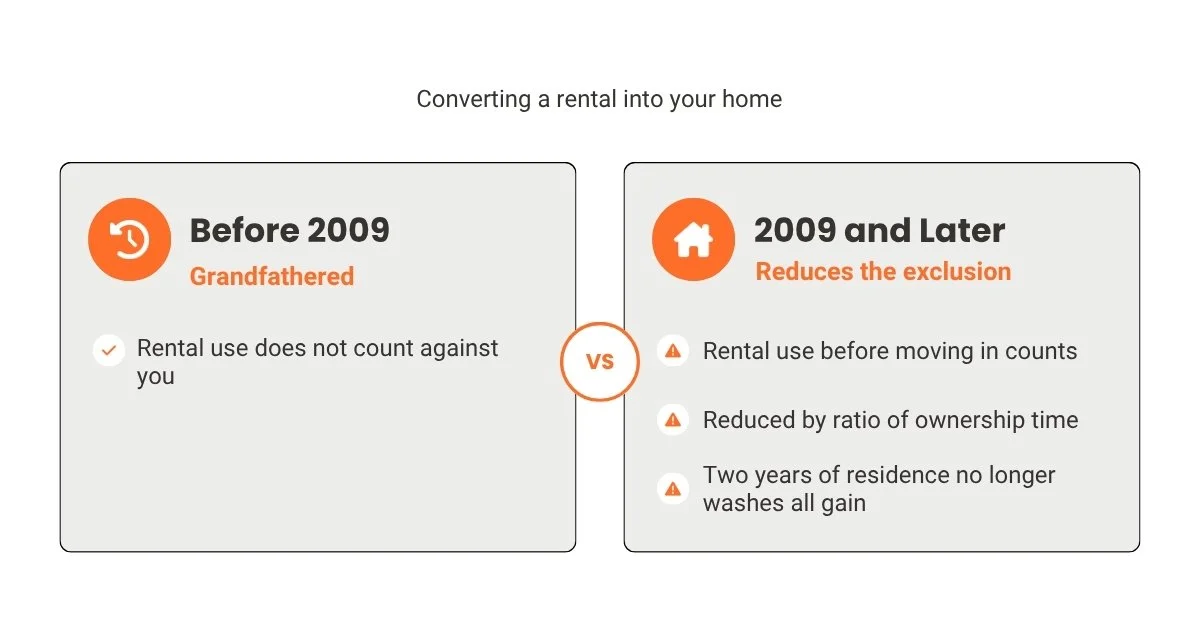
Here's a nuance that catches a lot of people who convert a rental into their primary residence, hoping two years of residence washes the whole gain. Since 2009, any period of non-qualified use, generally time the property was used as something other than your principal residence, like a rental, after you owned it, but before you moved in and started using it as your home, reduces the exclusion proportionally, based on the ratio of non-qualified use to your total ownership period. Rental or non-residence use that happened before 2009 is grandfathered and doesn't count against you, but rental periods after that date do. Simply moving into a former rental for two years before selling no longer washes 100 percent of the gain the way it might have prior to 2009.
Depreciation Recapture Is Never Excluded
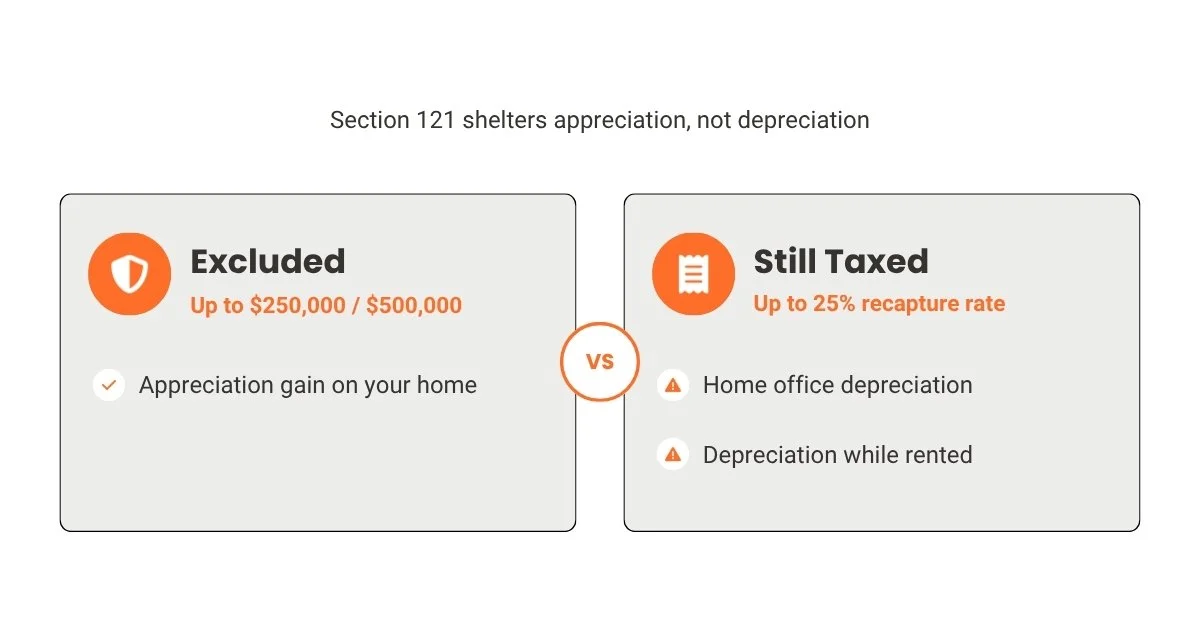
This is worth stating clearly since it surprises people: any depreciation you claimed on the property, whether from a home office deduction or a period when part or all of the home was rented, gets recaptured at the time of sale regardless of Section 121. That recaptured amount is taxed at up to 25 percent under the unrecaptured Section 1250 rules we cover in our depreciation recapture guide, and it sits entirely outside the 250,000 or 500,000 dollar exclusion. The exclusion shelters the appreciation gain, not the portion of gain tied to depreciation you already benefited from.
Frequently Asked Questions
-
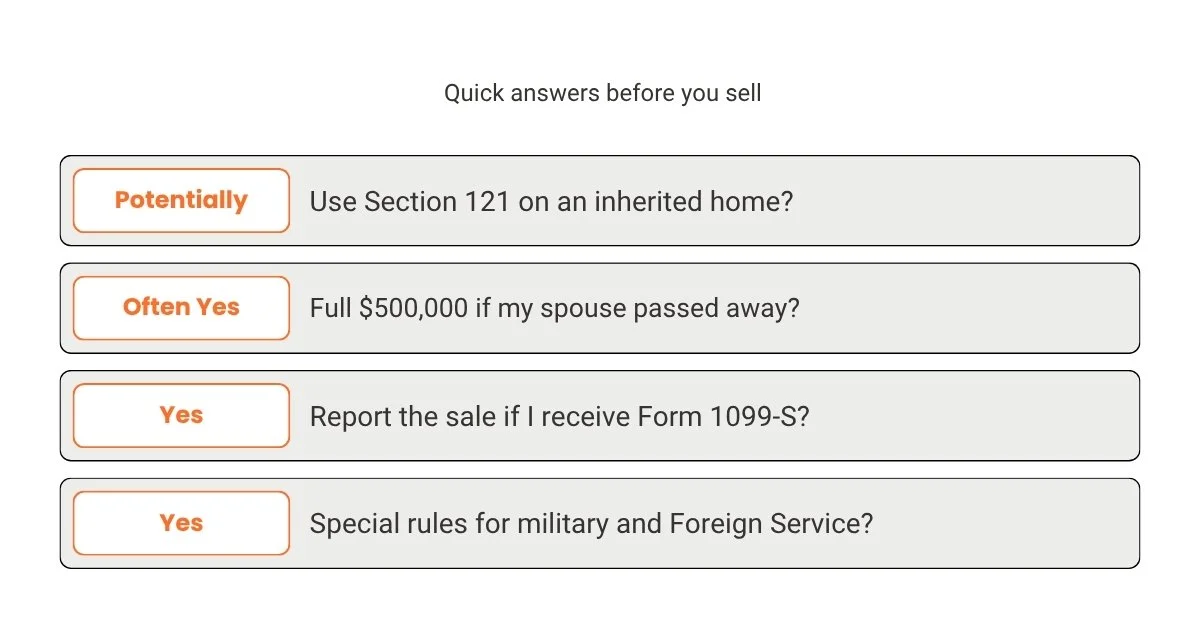
Potentially, yes, on top of the stepped-up basis inherited property already receives. If you move into an inherited home and meet the ownership and use tests going forward, the exclusion can apply to appreciation after you inherited it. The stepped-up basis already eliminates most or all of the appreciation that happened during the original owner's lifetime, so the two provisions work together rather than against each other, though the ownership and use clocks generally start from when you actually took ownership, not from the original owner's history.
-
If you sell within two years of your spouse's death and haven't remarried, you can generally still claim the full 500,000 dollar married exclusion, provided the ownership and use tests were met while your spouse was alive.
-
If you receive a Form 1099-S for the sale, yes, you still have to report the transaction, even if the full gain qualifies for exclusion and no tax is ultimately owed.
-
Yes. Military personnel, intelligence community members, and Foreign Service officers on qualified extended duty can elect to suspend the standard five-year lookback period for up to 10 years, which helps preserve eligibility despite extended time away from the home due to service.
Section 121 is one of the most valuable provisions in the tax code, but the non-qualified use rules and depreciation recapture can meaningfully change what you actually owe. A tax professional can help you calculate your real number before you sell.