California Franchise Tax for Single-Member LLCs Explained
Every LLC doing business in California owes the state's annual $800 franchise tax, on top of whatever the IRS collects federally. What trips people up isn't the amount, it's the timing. Two separate obligations run on two separate deadlines, using two separate forms, and missing either one triggers penalties even if you eventually pay in full. Here's exactly how the calendar works.
The $800 Annual Tax
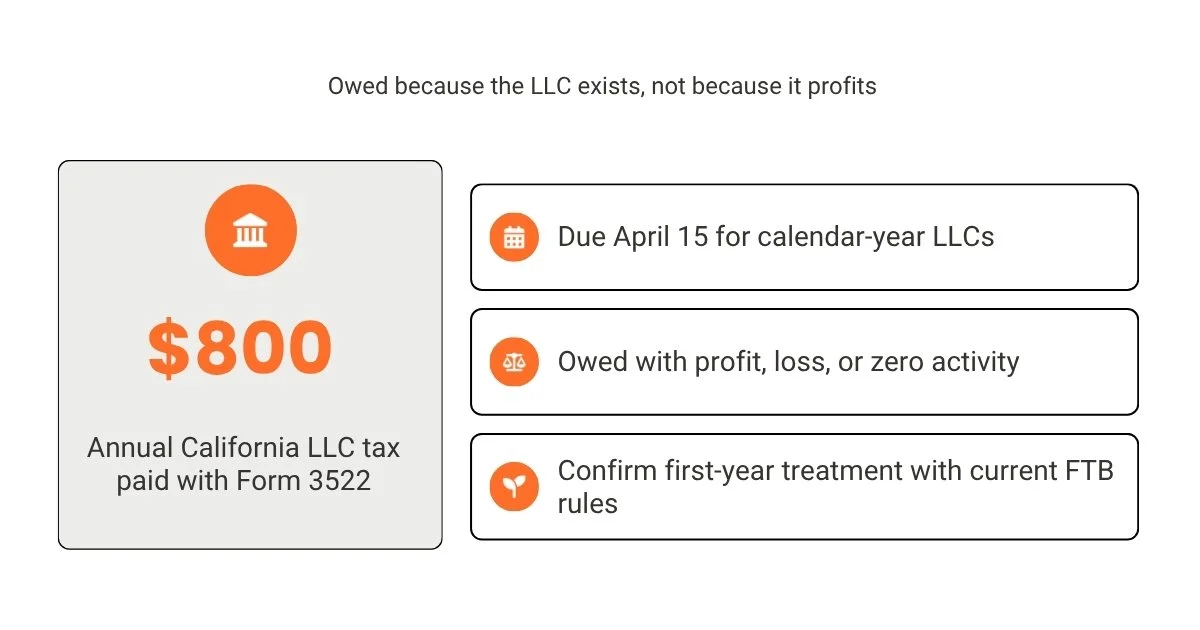
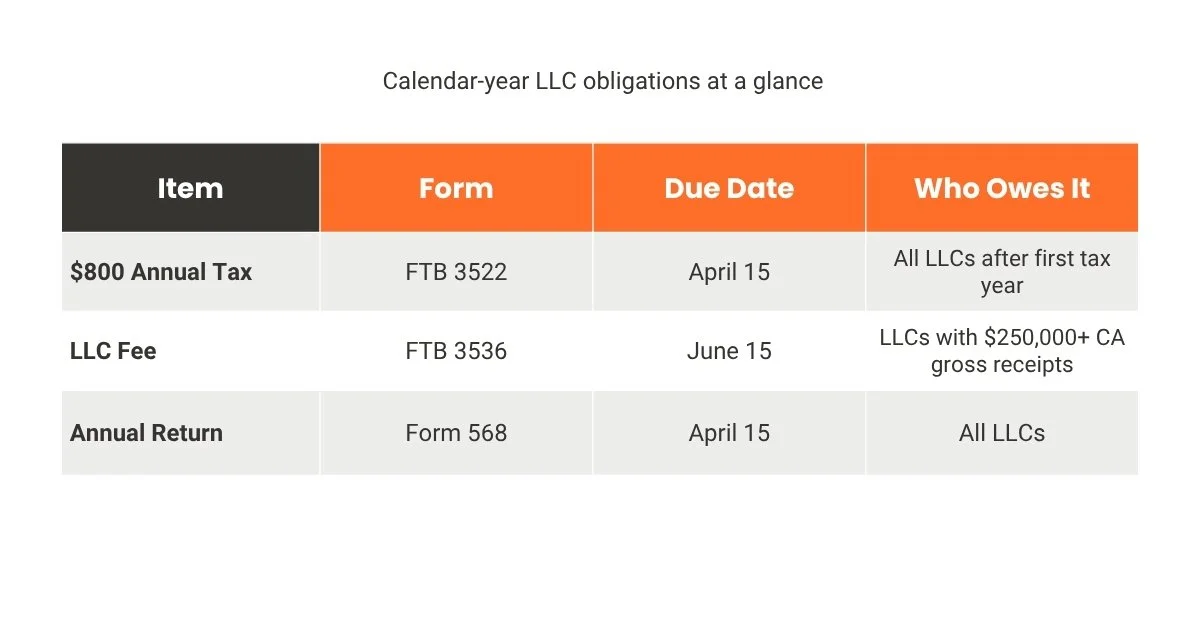
Every LLC registered or doing business in California owes an 800 dollar annual tax to the Franchise Tax Board, using Form 3522. For an existing, calendar-year LLC, this is due April 15 each year, and it's owed regardless of whether the business made any money, lost money, or had zero activity for the year. The tax exists simply because the LLC exists and is registered or doing business in the state.
According to current FTB guidance, a newly formed LLC is not subject to the 800 dollar tax for its first tax year. This first-year treatment has shifted over time with different pieces of legislation, so it's genuinely worth confirming your specific formation date against current FTB rules rather than assuming either way, but as of current guidance, a brand-new LLC's first 800 dollar payment lands in its second tax year, not its first.
For LLCs formed late in the calendar year, particularly in the fourth quarter, timing can get tight between when the first payment comes due and when the next one follows. If this applies to your formation date, it's worth mapping out the specific due dates rather than assuming a full year between payments.
The LLC Fee: A Second, Separate Charge
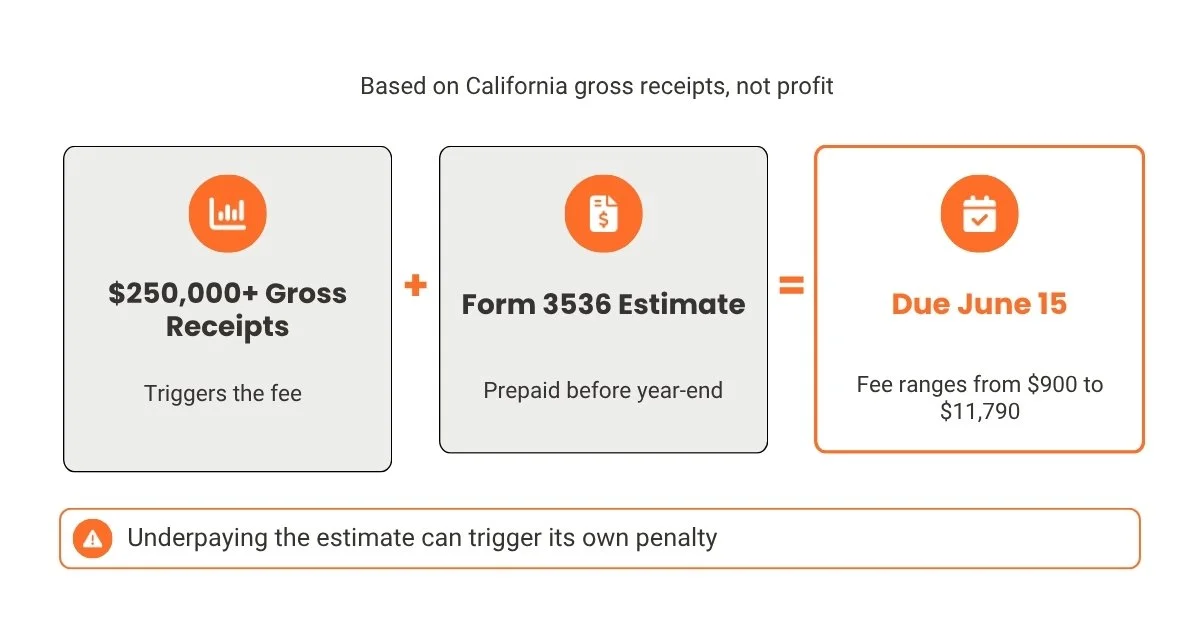
On top of the flat 800 dollar tax, California imposes an additional fee once an LLC's total California gross receipts reach 250,000 dollars for the year. We cover the full tiered fee structure in our single-member LLC tax guide, the fee scales up from 900 dollars at the 250,000 dollar threshold to 11,790 dollars at 5,000,000 dollars and above. This fee is based on gross receipts, not net profit, so a business with thin margins can still owe a meaningful fee in a break-even year.
This fee runs on its own separate deadline. You estimate and prepay it using Form 3536, due the 15th day of the sixth month of the tax year, June 15 for a calendar-year LLC, well before you'd actually know your final gross receipts for the year. Underpaying this estimate can trigger its own penalty, separate from any penalty on the 800 dollar tax.
The Annual Return: Form 568

Beyond the tax and the fee, every LLC also has to file Form 568, the LLC Return of Income, reporting the franchise tax, any LLC fee, and the business's income and losses for the year. This is due the same day as the 800 dollar tax, April 15 for a calendar-year LLC, though it's a separate filing from the Form 3522 payment voucher, not submitted together with it.
The 2026 Deadline Snapshot
What Happens If You Miss a Deadline
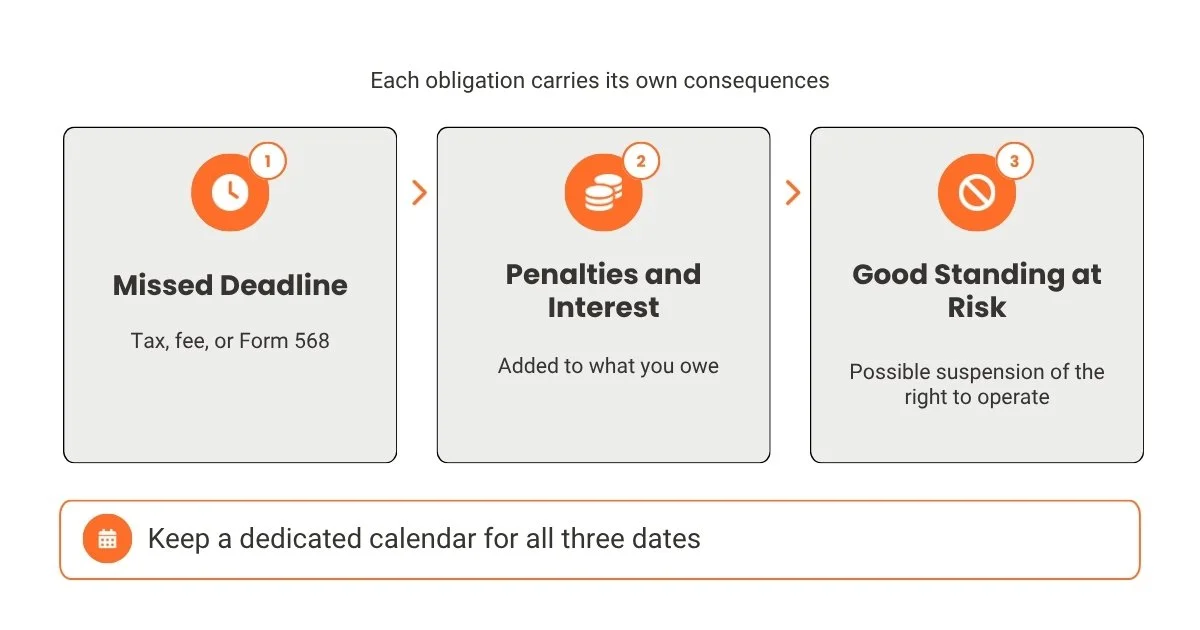
Missing any of these deadlines results in penalties and interest, and continued non-compliance can eventually put the LLC's good standing with the state at risk, including potential suspension of its right to operate. Because the 800 dollar tax, the LLC fee, and Form 568 run on different schedules with different consequences, it's possible to be current on one obligation while inadvertently behind on another, which is exactly the kind of gap that's easy to miss without a dedicated calendar for these dates specifically.
Frequently Asked Questions
-
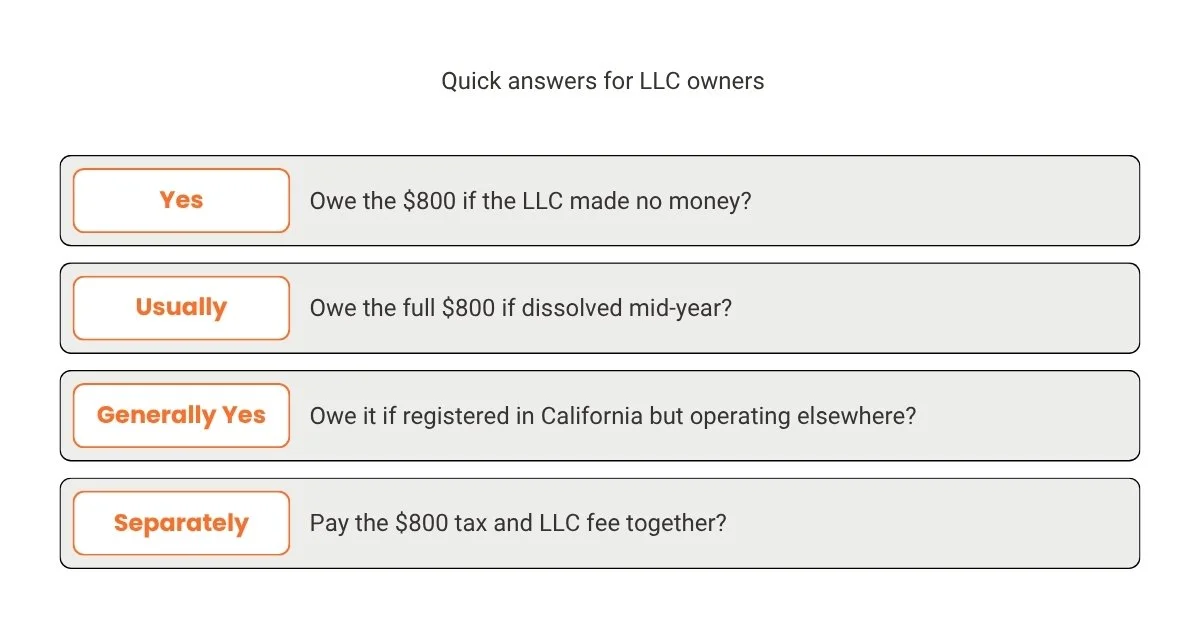
Yes. The 800 dollar tax is a flat annual tax for the privilege of doing business as an LLC in California, unrelated to profit or loss. A business with a net loss for the year still owes it, once past the first-year exemption.
-
There are specific short-year provisions that can reduce or eliminate the tax for very short taxable years, generally around 15 days or less, but outside of that narrow window, the tax is typically still owed for the year in which the LLC was active, even if it dissolves before the year ends. This is worth confirming directly given how specific the short-year rules are.
-
Generally yes. The tax applies to LLCs organized in California as well as LLCs formed elsewhere but registered to do business in California, based on the state's registration and "doing business" standards, not solely on where income is earned.
-
They're calculated and estimated separately, using different forms with different due dates, though both ultimately get reconciled on the same Form 568 annual return. Paying them on their respective schedules, rather than waiting to combine them, avoids separate underpayment penalties on each.
Between the flat annual tax, the gross receipts fee, and the annual return, California's LLC deadlines don't all land on the same day. A tax professional can help you build a calendar that keeps every piece current.