We cover the standard passive activity loss rules that limit most rental losses in our passive activity loss guide. Short-term rentals have a genuine exception built into those same regulations, one that lets a single Airbnb or VRBO property offset your W-2 salary directly, without needing to qualify as a real estate professional at all. Here's how the exception actually works, and what it takes to use it correctly.

Why This Exception Exists
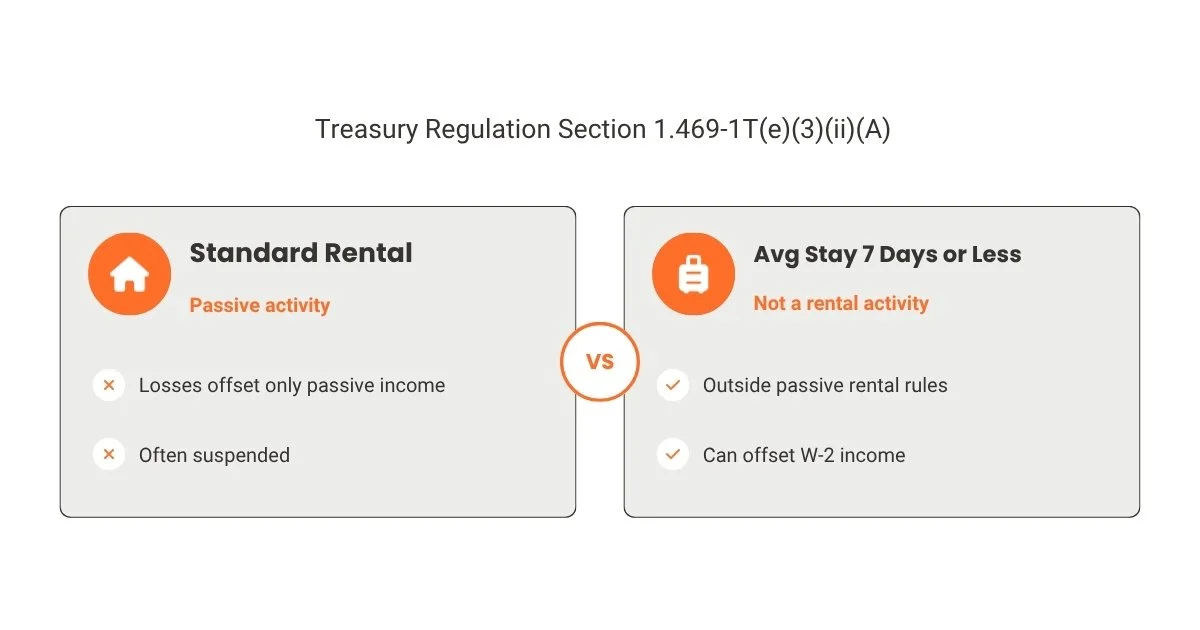
Under the standard passive activity rules, rental losses can only offset passive income, not W-2 wages or business income, which is exactly why most rental losses just sit as suspended losses carried forward. But the regulations that define what counts as a passive rental activity in the first place, specifically Treasury Regulation Section 1.469-1T(e)(3)(ii)(A), contain a built-in exception: if the average period of customer use for a property is seven days or less, the activity isn't treated as a rental activity for passive loss purposes at all. It's outside the category entirely, not an exception carved out of it.
The Two Ways to Qualify
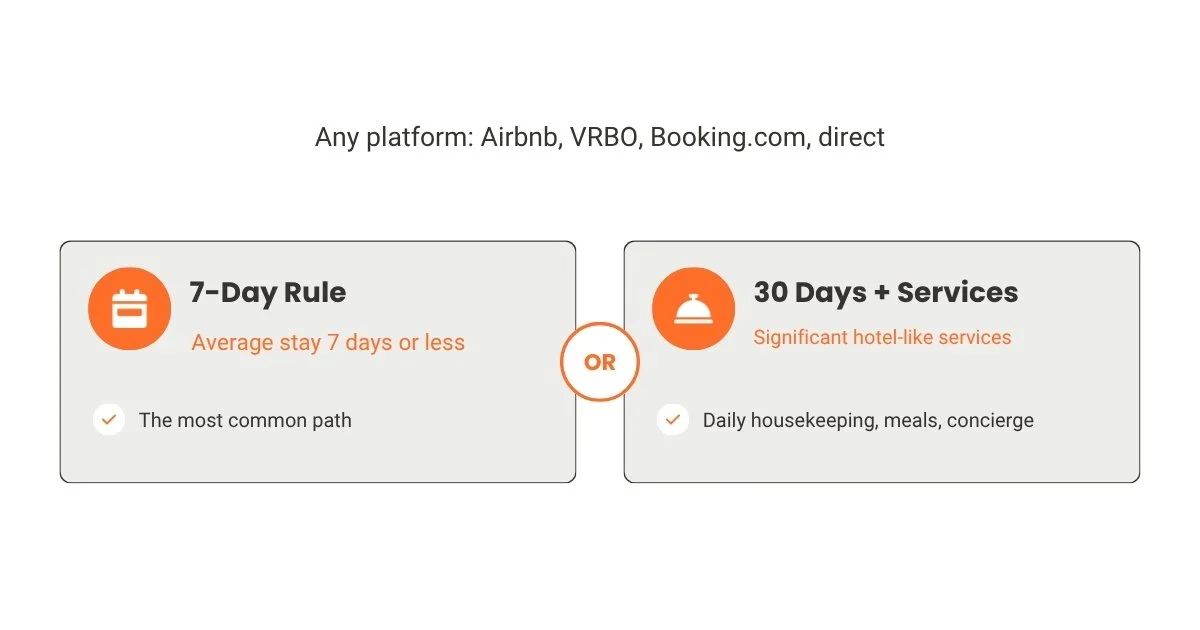
The most common path is the seven-day rule itself: keep your average guest stay at seven days or fewer across the year, and the property drops out of passive rental treatment. There's a second path too, an average stay of 30 days or less combined with significant, hotel-like services provided to guests, daily housekeeping, meals, concierge-type services, though this second path is less commonly used by typical short-term rental hosts and carries its own complexity around what counts as "significant services."
This applies regardless of which platform lists the property, Airbnb, VRBO, Booking.com, or direct bookings all qualify the same way, since the classification depends on the actual guest-stay pattern, not the booking channel.
Material Participation Still Has to Be Met
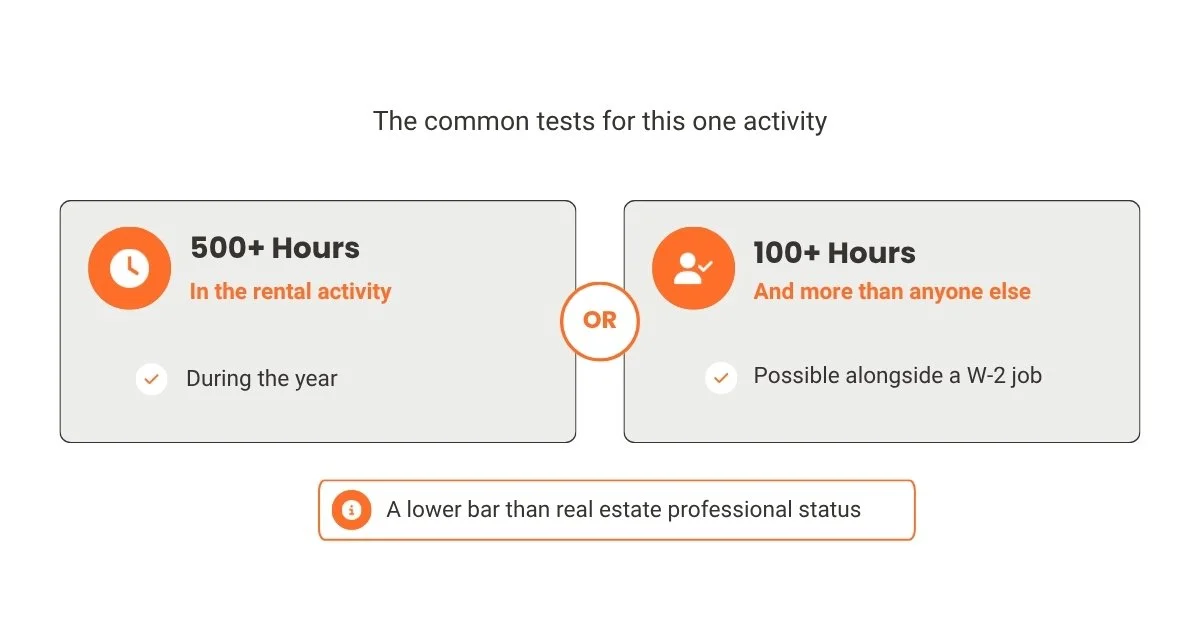
Falling outside rental activity treatment is only step one. You still have to materially participate in the activity, using the same general material participation tests that apply to any trade or business, most commonly participating more than 500 hours during the year, or more than 100 hours and more than anyone else involved. This is a meaningfully lower bar than real estate professional status, which we cover in our real estate professional guide, since it applies to this one activity specifically, not to a 50 percent test measured against all of your work hours across every job you have. A single short-term rental, actively self-managed, can clear this bar even alongside a full-time W-2 job, which is exactly why this strategy works for people who could never qualify as a real estate professional.
Cost Segregation Is What Makes the Losses Large
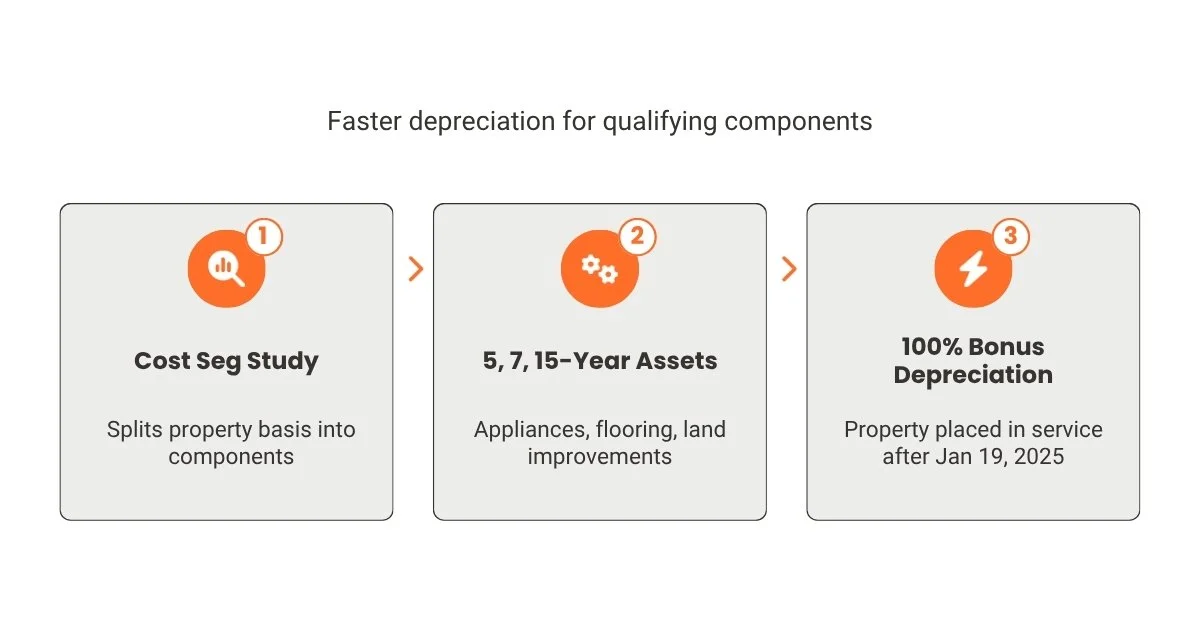
Qualifying for non-passive treatment doesn't create a loss by itself, it just changes what a loss, once it exists, is allowed to offset. Cost segregation is the tool that generates a meaningful loss in the first place. A cost segregation study breaks a property's basis into components, some depreciated over the standard 27.5 or 39-year schedule, and others, like appliances, certain flooring, and land improvements, that qualify for much faster 5, 7, or 15-year depreciation. Under the 100 percent bonus depreciation restored by recent federal legislation, the One Big Beautiful Bill Act, for qualifying property acquired and placed in service after January 19, 2025, those faster-depreciating components can potentially be deducted in full in the very first year.
A Simplified Example
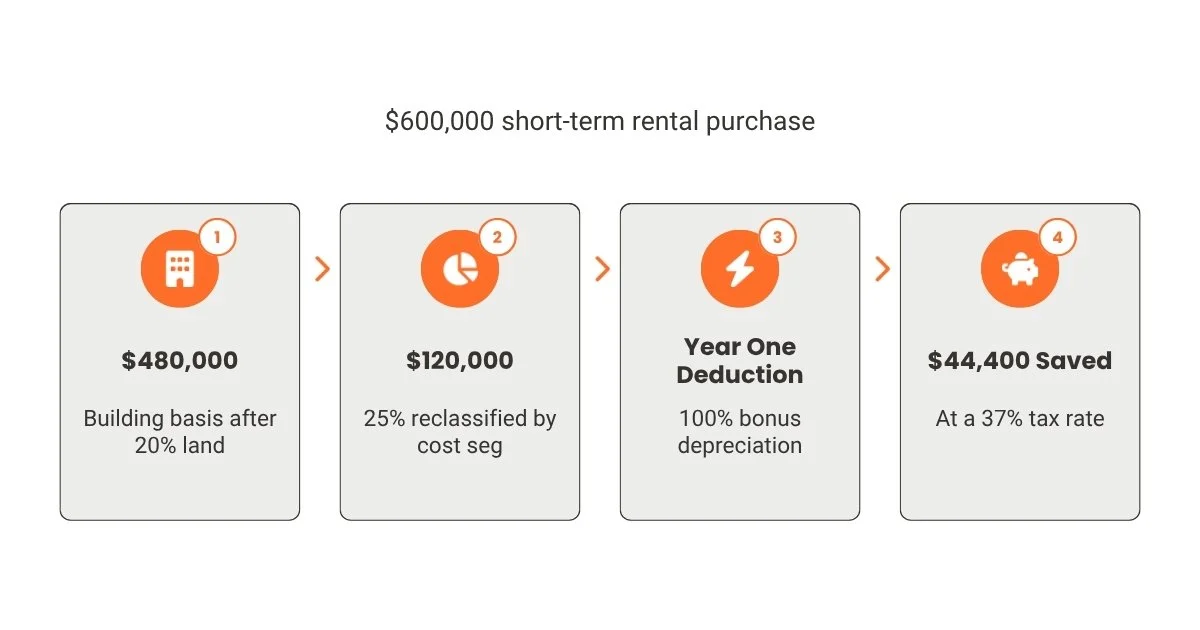
Say you purchase a short-term rental for 600,000 dollars, with 20 percent of that value allocated to non-depreciable land, leaving a 480,000 dollar depreciable building basis. A cost segregation study identifies 25 percent of that basis, 120,000 dollars, as qualifying for accelerated 5, 7, or 15-year treatment. Under 100 percent bonus depreciation, that entire 120,000 dollars could be deducted in year one. At a 37 percent marginal tax rate, that translates to roughly 44,400 dollars in tax savings in the first year alone, assuming the property qualifies for non-passive treatment and the loss isn't limited by other factors like your basis or at-risk amount in the property.
The Two Things That Can Undo the Strategy
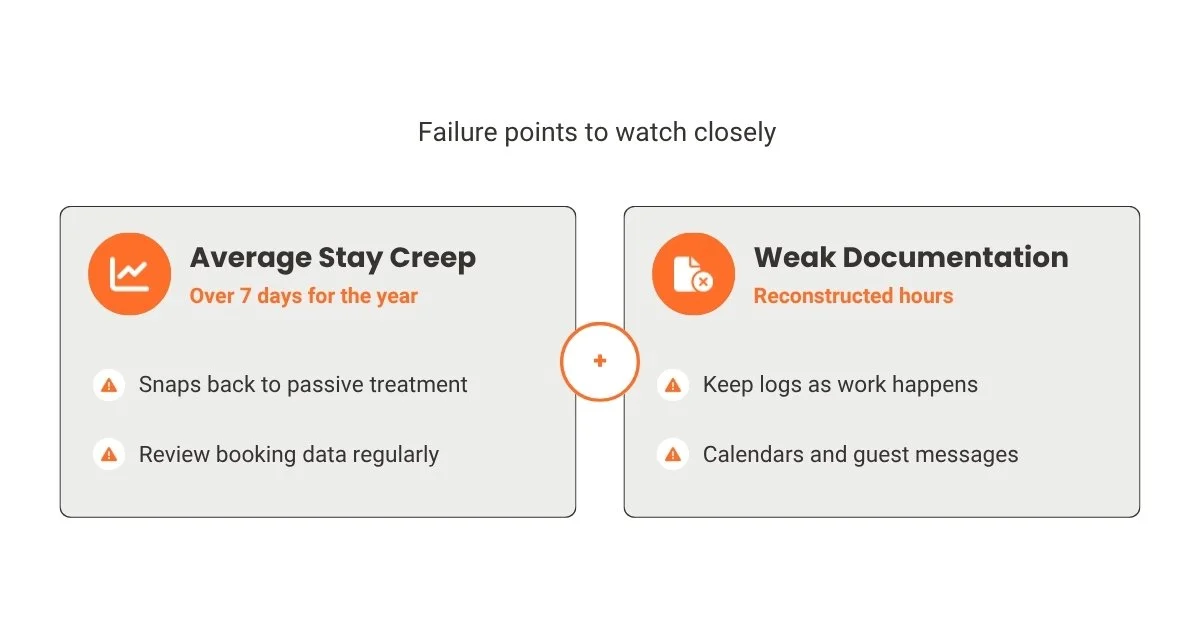
Two failure points come up often enough to call out specifically. First, average stay creep: if your actual average guest stay for the year ends up exceeding seven days, even because of a few longer off-season bookings you didn't track closely, the property snaps back to passive treatment for that year, and the non-passive benefit is lost for that specific year, not permanently, but for the year it happened. Regularly reviewing your actual booking data rather than assuming your listing strategy guarantees compliance matters here. Second, documentation: material participation hours need contemporaneous records, calendar entries, guest-communication logs, and similar records made close to when the work happened, not reconstructed from memory at filing time. This strategy draws real scrutiny specifically because of how valuable it can be, and the documentation is what holds up if it's ever questioned.
This Doesn't Eliminate Tax, It Defers It
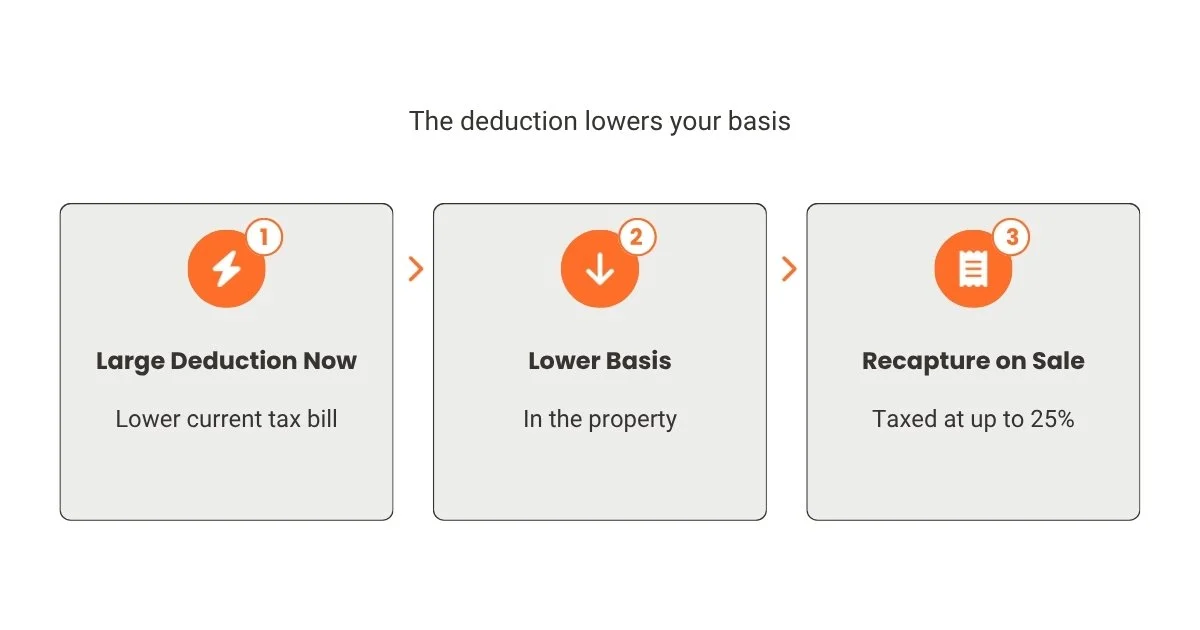
The large first-year deduction reduces your current tax bill, but it also lowers your basis in the property. When you eventually sell, the depreciation you claimed gets recaptured, taxed at up to 25 percent under the unrecaptured Section 1250 rules we cover in our depreciation recapture guide. This strategy is genuinely valuable for managing when you pay tax, shifting a real tax benefit into the years you need it most, but it isn't erasing the tax obligation permanently.
A California-Specific Note
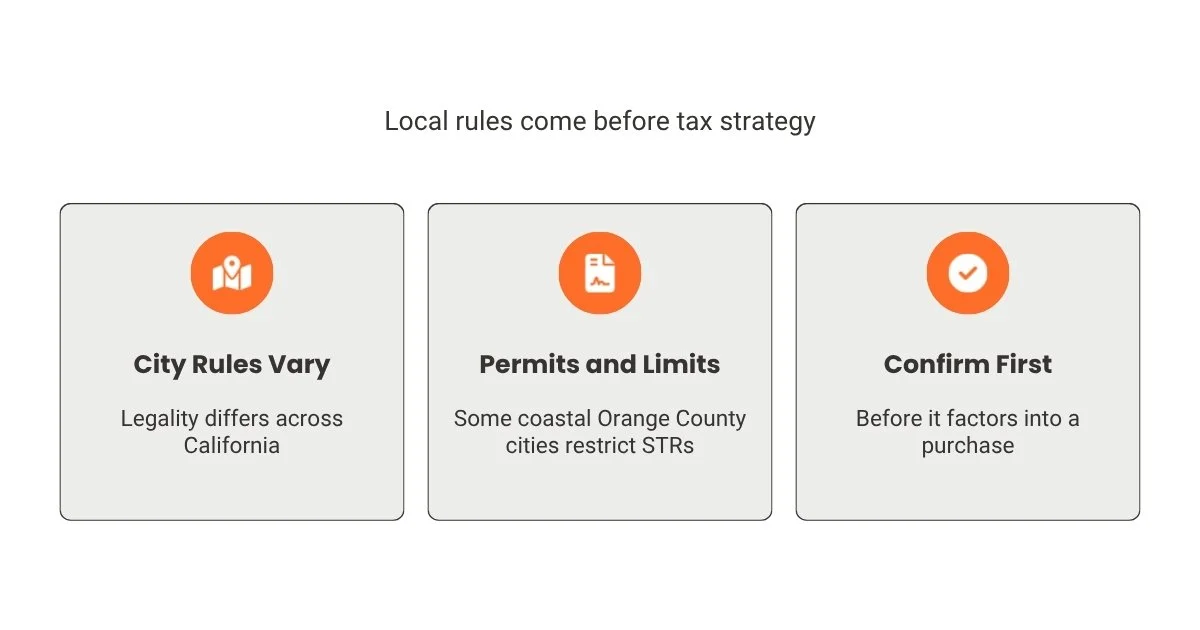
Short-term rental legality varies significantly by city in California, and several coastal Orange County communities have adopted their own restrictions, permit requirements, or outright limits on short-term rental use, entirely separate from anything covered in this post. The tax treatment described here assumes the rental activity is legally permitted where the property is located, that's a local zoning and licensing question worth confirming before this strategy factors into a purchase decision, not something federal tax treatment addresses one way or the other.
Frequently Asked Questions
-
No, this is one of the notable advantages over real estate professional status. A single, actively self-managed short-term rental can qualify, since material participation is tested against that specific activity, not against a broader real estate professional standard.
-
Not automatically, but it makes clearing the material participation bar harder, since hours spent by a property manager generally don't count as your own participation. Owners who use significant property management help often need to be more deliberate about tracking their own remaining hands-on hours to still clear one of the material participation tests.
-
If the loss is limited by basis or at-risk rules rather than the passive activity rules, the disallowed portion generally carries forward to future years, though the specific mechanics depend on which limitation applies. This is worth modeling carefully with a tax professional given how many moving parts are involved.
-
No, they're different provisions that both lead to a similar outcome, non-passive treatment for losses, but through different mechanisms. Real estate professional status requires meeting broad hour thresholds across all of your real estate activity. This short-term rental exception is activity-specific and doesn't require real estate professional status at all.
The short-term rental exception is genuinely powerful, but it depends on precise average-stay tracking, real material participation, and documentation that holds up if questioned. A tax professional can help you structure this correctly before you buy, not after.