A lot of the assumptions people still have about crypto and privacy are years out of date. The blockchain itself is a permanent, public record, and the IRS's ability to connect that record to a real identity has improved dramatically. If you have unreported crypto activity, understanding what the IRS can actually see, and what your realistic options are, matters more than hoping it goes unnoticed.

The Blockchain Doesn't Forget
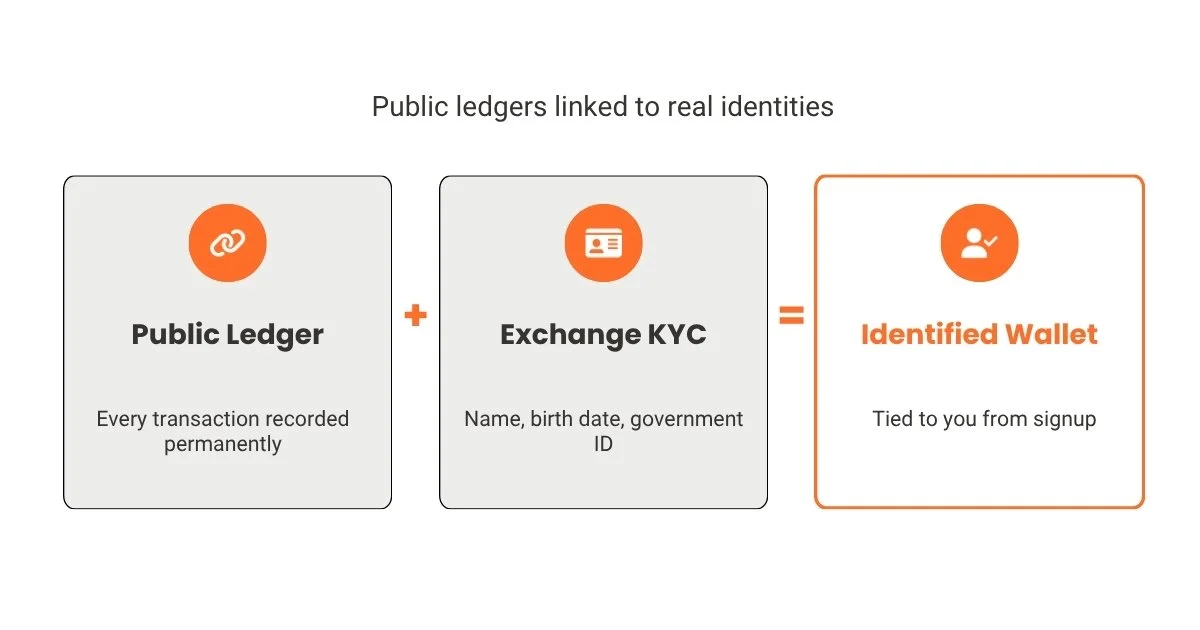
Most major blockchains, including Bitcoin and Ethereum, are public ledgers. Every transaction is permanently recorded and visible to anyone, forever. What used to provide a sense of anonymity was simply that wallet addresses don't show a name attached. That gap has closed substantially. Exchanges operating in the United States are required to collect identifying information under Know Your Customer regulations, name, date of birth, government ID, which means a wallet address used on a major exchange is directly tied to a real identity from the moment of signup.
Blockchain Analytics Changed the Picture
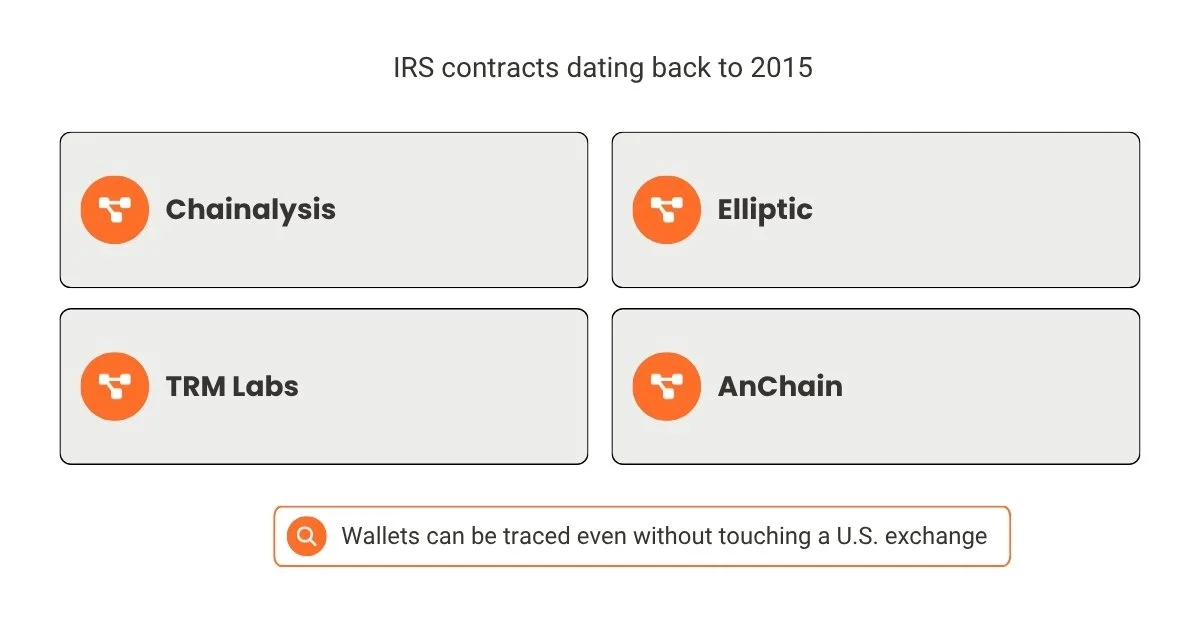
The IRS has contracted with blockchain analytics firms, including Chainalysis, Elliptic, TRM Labs, and AnChain, since as early as 2015, specifically to trace wallet activity, cluster related addresses, and connect pseudonymous transactions to known identities. This capability extends well beyond exchange activity, wallets that never touched a U.S. exchange can still be traced and clustered based on transaction patterns and connections to already-identified wallets.
John Doe Summonses Force Exchanges to Hand Over Records
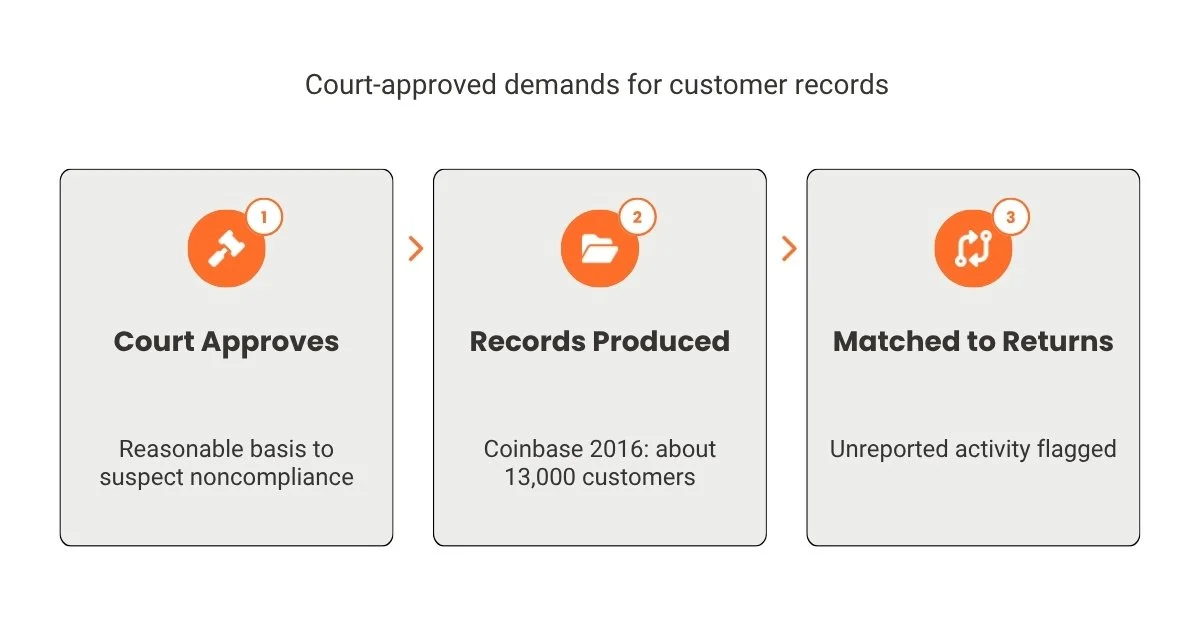
A John Doe summons is a court-approved order letting the IRS demand account records from a company about a group of account holders it can't yet individually name, once a federal judge agrees there's a reasonable basis to suspect noncompliance. The IRS served its first crypto-related John Doe summons on Coinbase in 2016, which produced identifying records for roughly 13,000 customers with transactions over 20,000 dollars. Similar summonses have followed with other major platforms since, including Kraken in 2021. Once records are produced, the IRS compares reported account activity directly against filed tax returns, and significant unreported activity becomes an examination candidate.
The 1099-DA Rollout Adds a New, Standing Data Feed
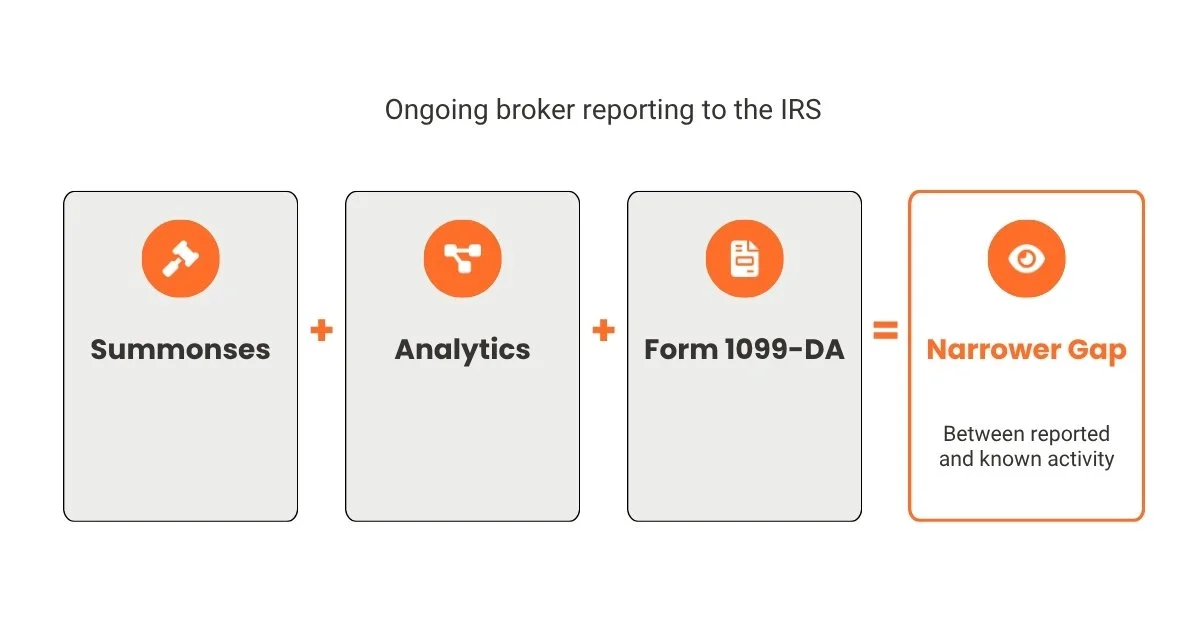
We cover the mechanics of Form 1099-DA in our crypto reporting guide, but from an enforcement standpoint, it matters here too. As this broker reporting requirement phases in, the IRS gains an ongoing, direct data feed of transaction activity from centralized exchanges, adding to the picture built through summonses and analytics. Tax professionals broadly expect this to significantly narrow the gap between what taxpayers report and what the IRS already knows, particularly for anyone with several years of prior unreported activity now becoming visible against current filings.
The Warning Letters Come Before the Audit
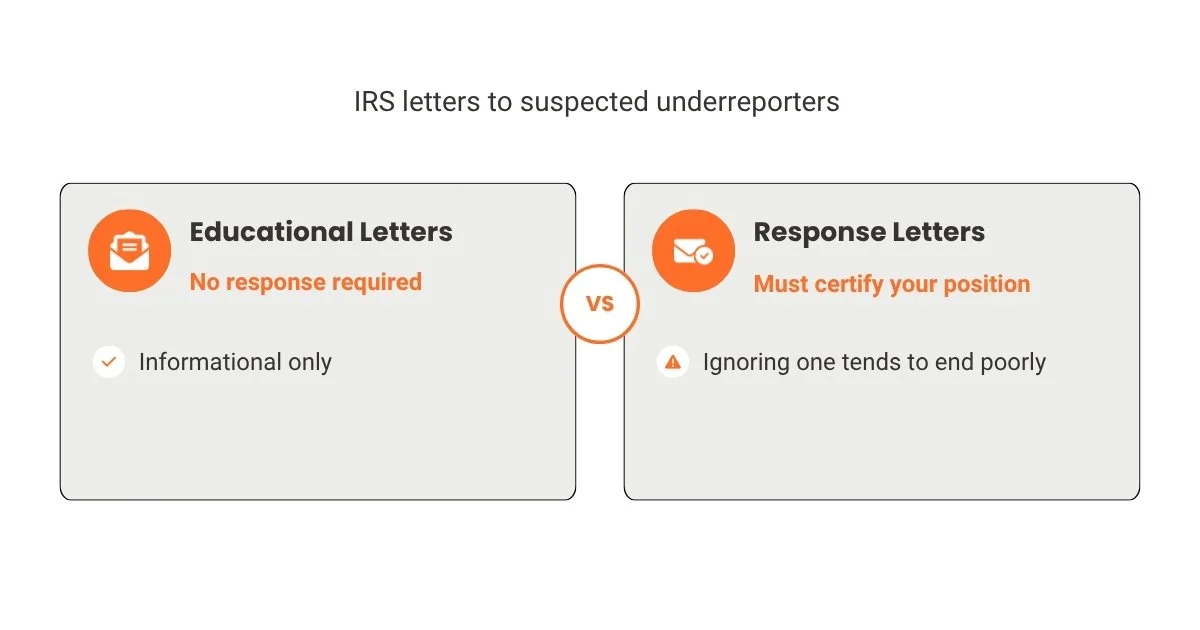
Before opening a full examination, the IRS has sent educational and warning letters, generally referred to by their letter numbers, to taxpayers it believes may have underreported crypto activity. Some of these letters are purely informational and don't require a response. Others explicitly require the taxpayer to respond, certifying their reporting position. Receiving one of these letters and ignoring it is a common pattern that tends to end poorly, since it signals to the IRS that the taxpayer was on notice and chose not to act.
The Realistic Financial and Legal Exposure
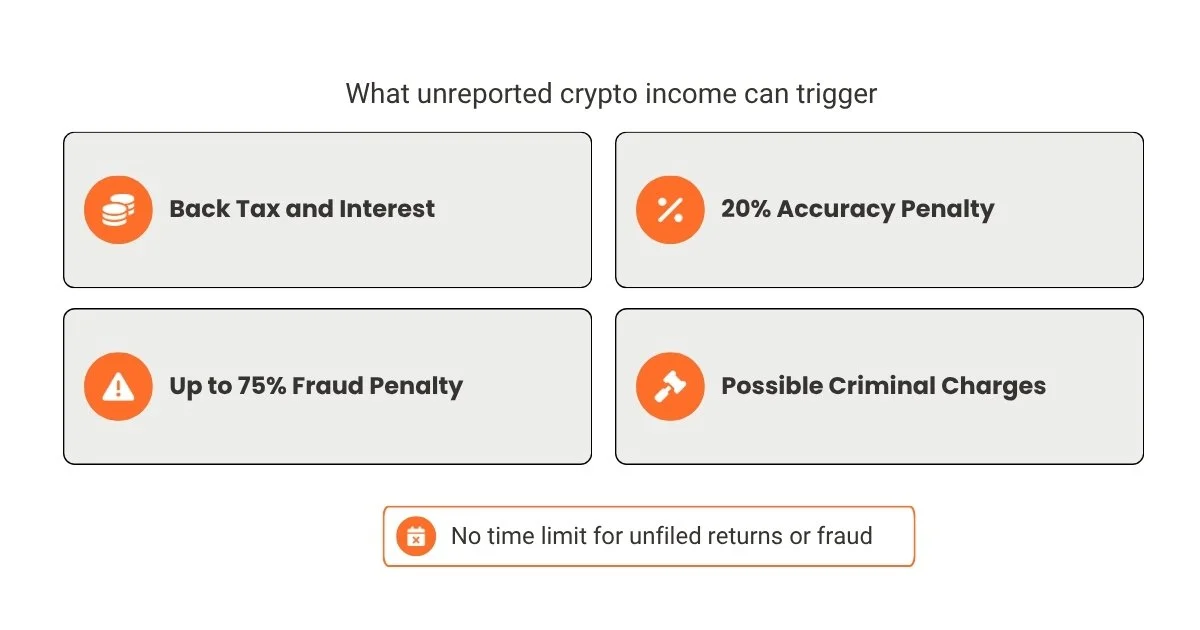
Depending on the specifics, unreported crypto income can trigger back taxes plus interest, an accuracy-related penalty of 20 percent for a substantial understatement, or, in cases the IRS views as willful, a civil fraud penalty of up to 75 percent of the underpayment. In the most serious cases involving deliberate concealment, criminal tax evasion charges are possible, carrying potential fines and imprisonment. The statute of limitations for assessing tax is generally three years, extending to six years for a substantial understatement of income, and there's no time limit at all for unfiled returns or in cases of proven fraud. Older tax years genuinely aren't automatically safe just because time has passed.
Voluntary Disclosure: The Proactive Path
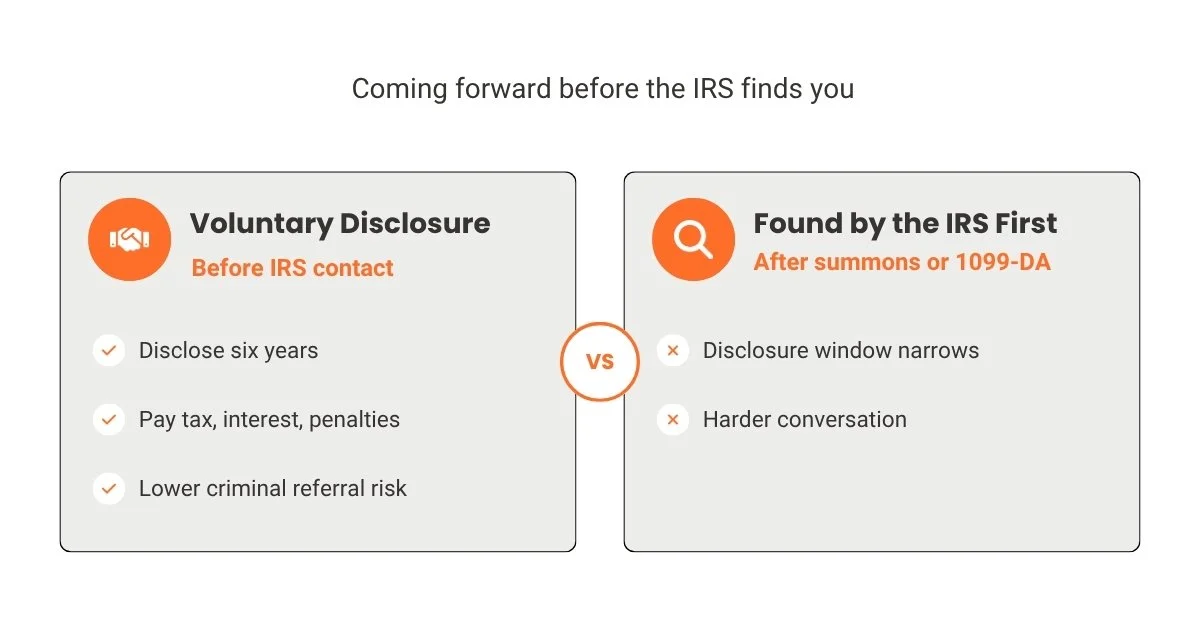
If you have unreported crypto activity and haven't yet been contacted by the IRS, aren't already under audit, and aren't subject to a John Doe summons covering your accounts, the IRS Voluntary Disclosure Practice is generally the strongest available option. It requires disclosing non-compliant activity going back six years, including details on where assets were held, and paying all resulting tax, interest, and penalties. It doesn't guarantee immunity from criminal prosecution, and it doesn't eliminate financial penalties, but it substantially reduces the risk of criminal referral compared to being found through independent enforcement. This window narrows considerably once the IRS already has your data through a summons or 1099-DA reporting, since voluntary disclosure specifically requires that you're coming forward before, not after, the IRS already knows.
Frequently Asked Questions
-
This is a common and genuinely difficult situation, but it doesn't remove the obligation to correct it. A tax professional can help reconstruct activity from whatever records remain, exchange statements, wallet history, blockchain explorers, and determine the most appropriate way to bring prior years into compliance.
-
The underlying principles apply regardless of size, though enforcement resources naturally focus more heavily on larger, more consequential cases. A small unreported gain is still technically noncompliant, and correcting it proactively is still the lower-risk path, even if the practical urgency differs from a large, multi-year gap.
-
Not necessarily, some of these letters are educational and don't indicate an open examination. But they do indicate the IRS has identified your account activity as worth flagging, and ignoring one is a materially worse position than addressing it directly, whether that means confirming your reporting was accurate or correcting it if it wasn't.
-
You can, but prior-year gaps don't disappear simply because current reporting improves, and a sudden, unexplained jump in reported activity can itself draw scrutiny to what came before. Addressing past years directly, rather than hoping they go unnoticed, is generally the more defensible position.
If you have unreported crypto activity, the difference between addressing it proactively and waiting for the IRS to find it first is often the difference between a manageable correction and a much harder conversation. A tax professional can help you understand your realistic options.