We cover the basics of how a 1031 exchange works, and the general shape of the 45 and 180-day deadlines, in our 1031 exchange guide. This post goes deeper into the timeline itself: exactly how the clock runs, what happens if a deadline lands on a weekend, and the one real exception that can buy you more time. If you're actively planning an exchange, these details matter.
The Clock Starts the Day You Close, Not Before
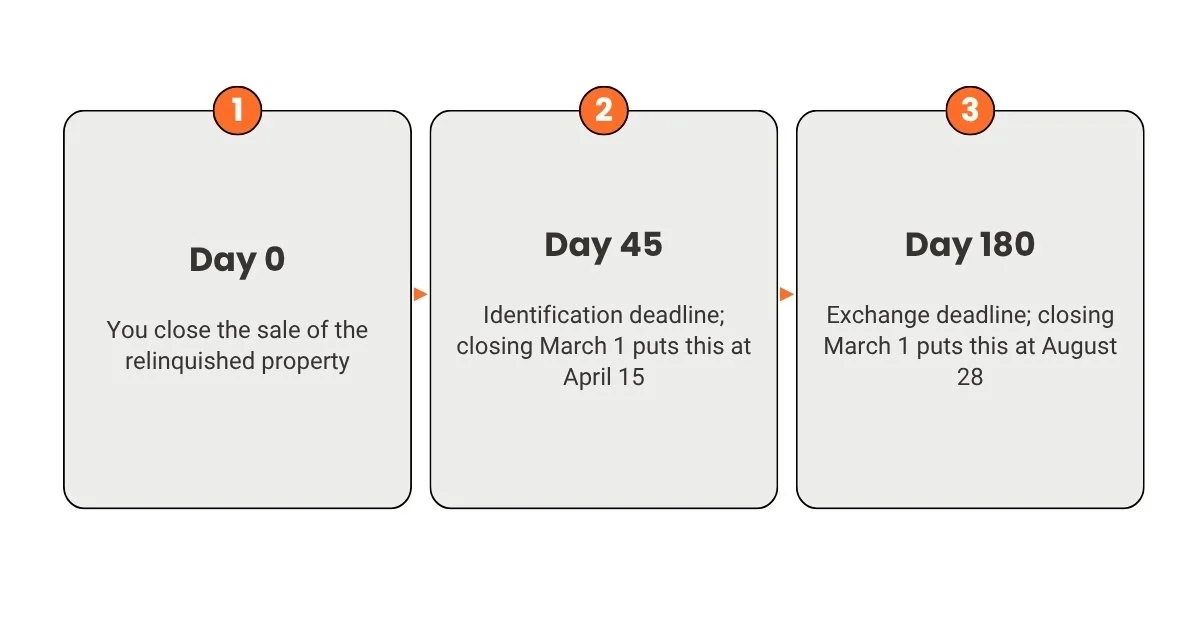
Both the 45-day identification period and the 180-day exchange period begin on the same day, the date you close the sale of your relinquished property. They run at the same time, in parallel, not one after the other. So if you close on March 1, day 45 falls on April 15, and day 180 falls on August 28, both counted from that same March 1 starting point.
These Are Calendar Days, Not Business Days
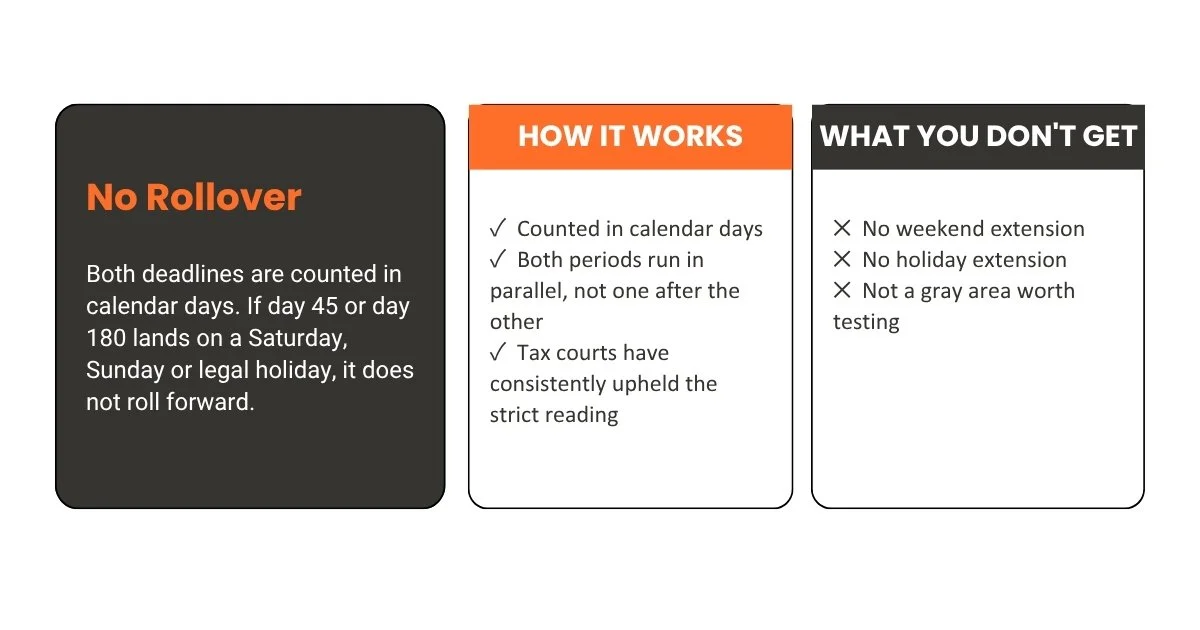
This is the detail that trips people up most often. Both deadlines are counted in calendar days, not business days, and if the 45th or 180th day happens to fall on a Saturday, Sunday, or a legal holiday, it does not roll forward to the next business day. The deadline is the deadline, regardless of what day of the week it lands on. Tax courts have consistently upheld this strict reading, so this isn't a gray area worth testing.
The 180-Day Deadline Has a Hidden Second Trigger
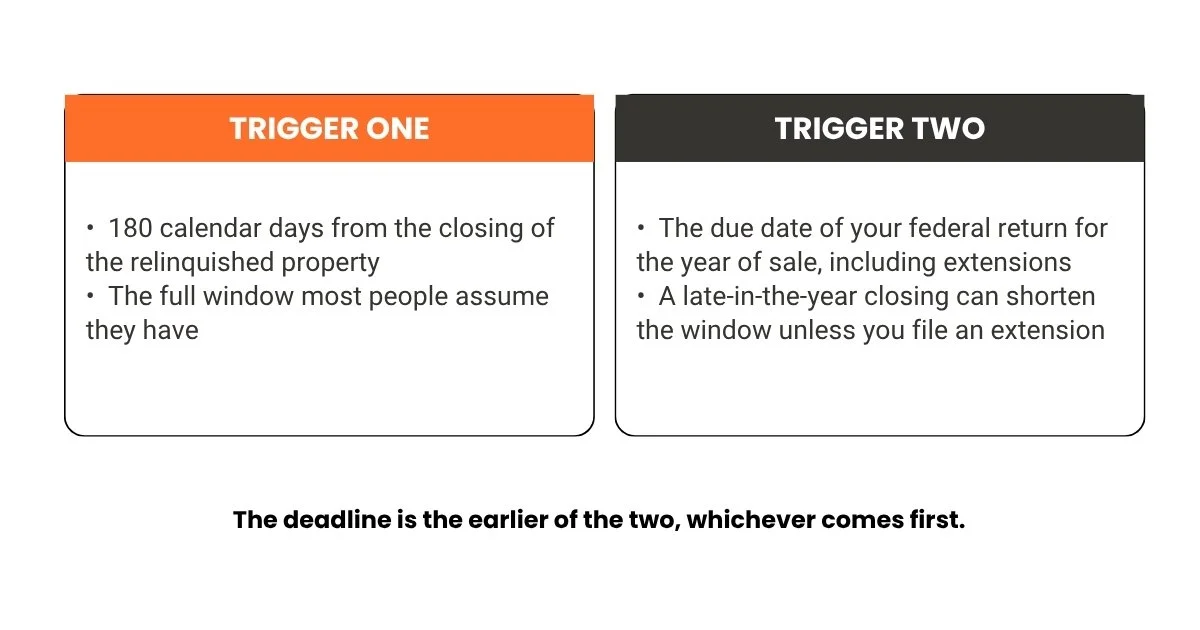
The 180-day period isn't always a full 180 days. It's actually the earlier of 180 calendar days from closing, or the due date of your federal tax return for the year of the sale, including extensions, whichever comes first. If your exchange closes late in the year, this can effectively shorten your 180-day window unless you file an extension on your tax return to preserve the full 180 days.
The One Real Exception: Federally Declared Disasters
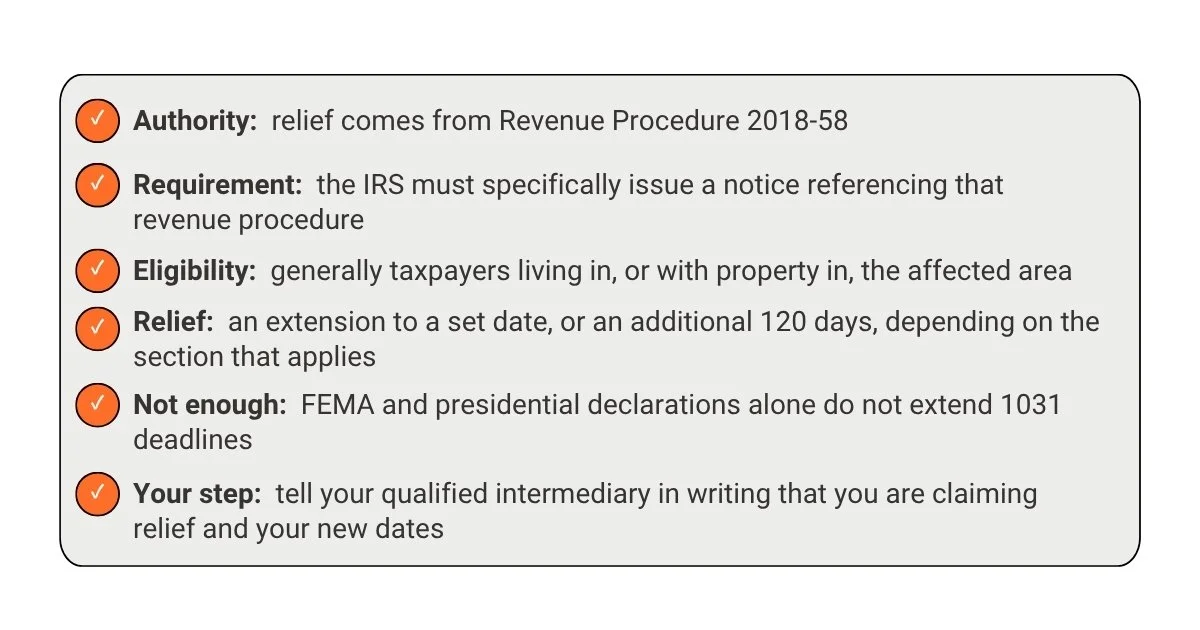
Aside from that tax-return-deadline interaction, there's essentially one exception to the otherwise rigid calendar-day rule: relief for taxpayers affected by a federally declared disaster, under Revenue Procedure 2018-58. When the IRS issues a disaster relief notice covering a specific event, eligible taxpayers, generally those living in or with property in the affected area, can receive additional time on the 45-day and 180-day deadlines, sometimes an extension to a specific date set in the notice, sometimes an additional 120 days, depending on which section of the revenue procedure applies and where the taxpayer was in the exchange timeline when the disaster occurred.
This relief isn't automatic just because a disaster happened somewhere. It requires the IRS to specifically issue a notice referencing Revenue Procedure 2018-58, and the taxpayer has to actually qualify as an affected taxpayer under that notice's terms. FEMA declarations and presidential disaster declarations alone don't automatically extend 1031 deadlines, the IRS notice is what matters. If you believe you may qualify, you also have to proactively tell your qualified intermediary in writing that you're claiming the relief and what your new deadlines are, otherwise the original deadlines still control.
The Reverse Exchange Timeline Runs the Same Way, Just Flipped
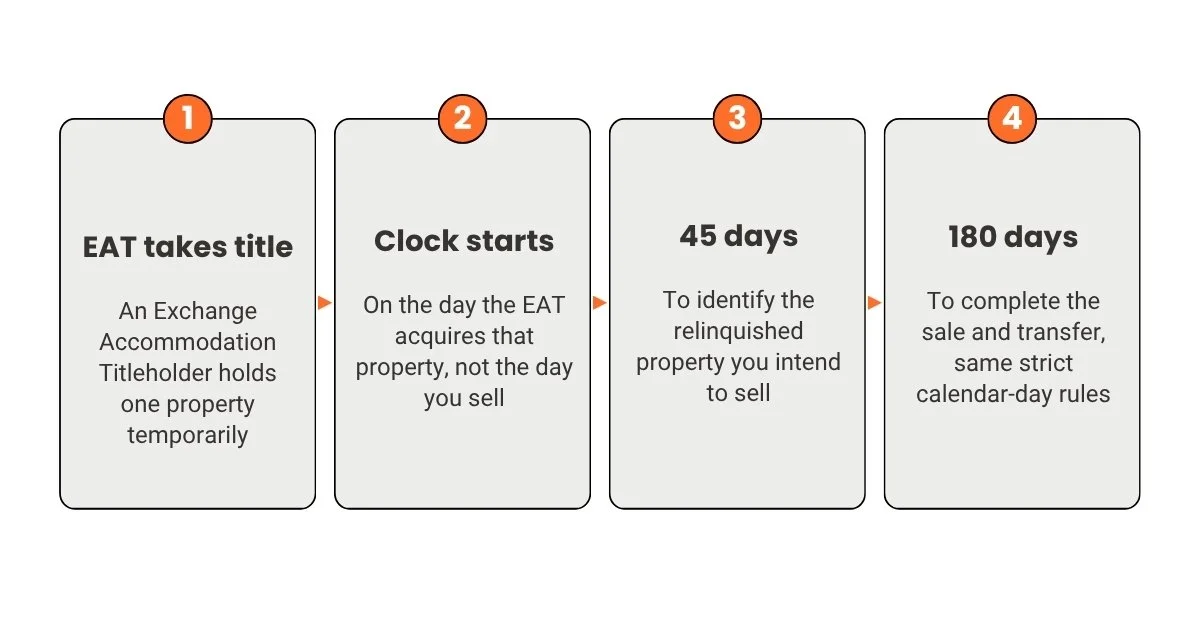
A reverse exchange, where you acquire the replacement property before selling the one you're giving up, uses the same 45-day and 180-day framework, just measured from a different starting point. Since you can't personally hold title to both properties at once under the safe harbor rules, an Exchange Accommodation Titleholder takes title to one of the properties temporarily. The clock starts the day the EAT acquires that property, not the day you eventually sell. From there, you have 45 days to identify the relinquished property, and 180 days to complete the sale and transfer, calendar days, same strict rules, same lack of weekend or holiday extensions.
A Worked Example
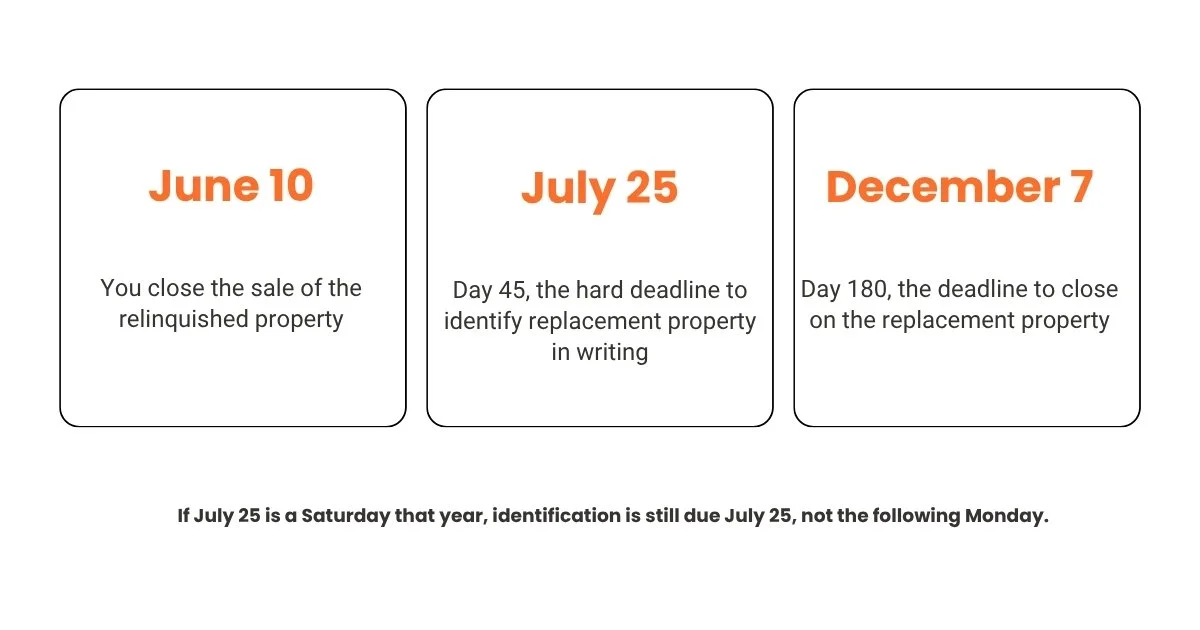
Say you close the sale of your relinquished property on June 10. Day 45 lands on July 25, your hard deadline to identify replacement property in writing. Day 180 lands on December 7, your deadline to close on the replacement, assuming your tax return deadline with extensions doesn't fall earlier. If July 25 happens to be a Saturday that year, your identification is still due by July 25, not the following Monday.
Frequently Asked Questions
-
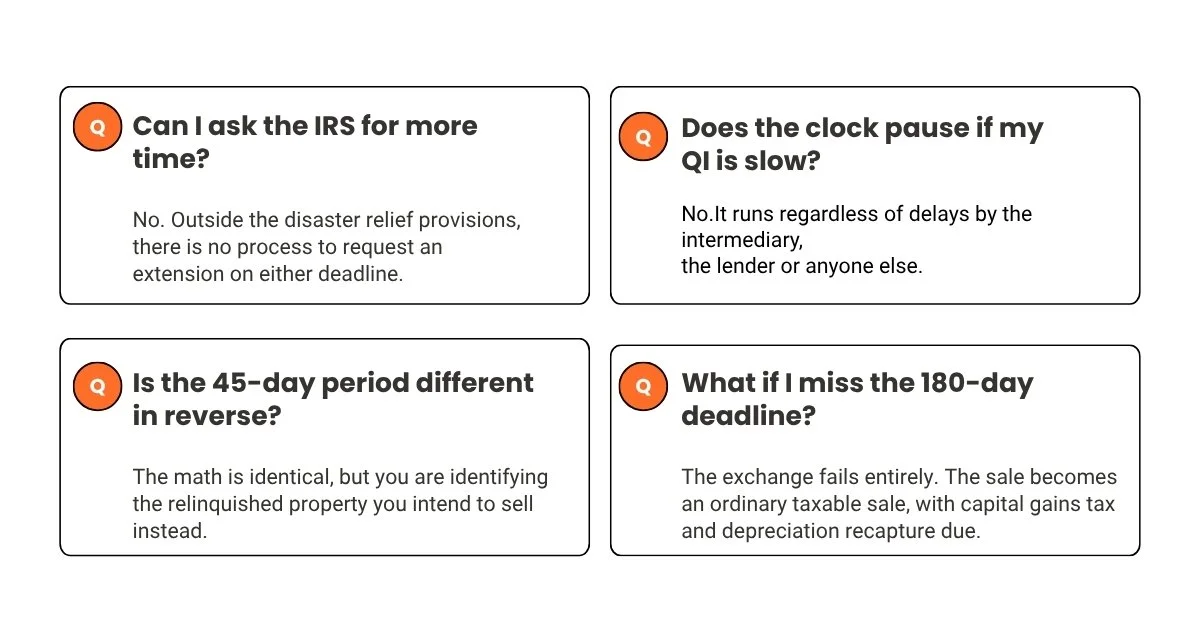
No. Outside of the specific disaster relief provisions under Revenue Procedure 2018-58, there's no process to request an extension on the 45-day or 180-day deadline. They're treated as firm statutory deadlines, not something the IRS grants case-by-case exceptions to.
-
No. The clock runs regardless of delays on the intermediary's, lender's, or any other party's side. This is exactly why engaging a qualified intermediary and starting your replacement property search early, ideally before your relinquished property even closes, matters so much.
-
The math is the same, 45 days, calendar days, no weekend extension, but what you're identifying is different. In a standard exchange, you identify replacement property. In a reverse exchange where the EAT is holding the replacement property, you're identifying the relinquished property you intend to sell within that same 45-day window.
-
The exchange fails entirely for Section 1031 purposes. The original sale is treated as an ordinary taxable sale in the year it occurred, meaning capital gains tax and depreciation recapture become due, the same as if no exchange had ever been attempted.
The 1031 exchange timeline leaves very little room for error, and almost no room for excuses once the clock starts. A tax professional can help you build a realistic plan before your relinquished property even closes.